Correcting Orange Tones Guide for Salon Color
Correcting Orange Tones Guide for Salon Color
That fresh, expensive-looking blonde can suddenly start reflecting orange in the mirror, especially around the mid-lengths and ends. This correcting orange tones guide explains what that warmth is telling you, why it is not always a toner problem, and how to choose a correction that keeps your hair looking polished rather than pushed too far.
Orange tones are common after lightening dark hair, refreshing faded highlights, or using a color at home that did not lift evenly. They can be frustrating, but they are also useful information. The right fix depends on your starting level, your color history, the condition of your hair, and the shade you actually want to see next.
Why Hair Turns Orange
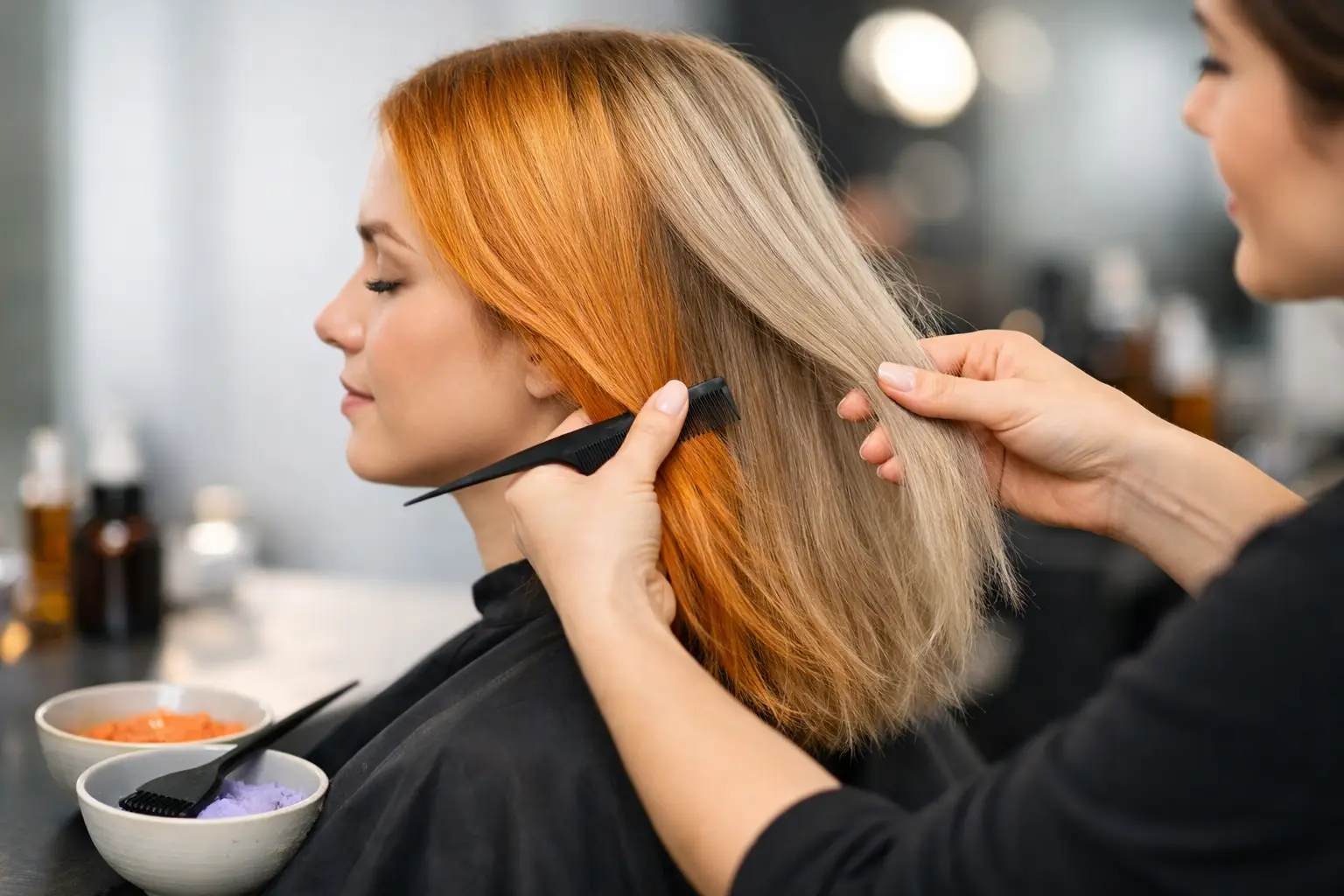
Hair has underlying warm pigments that become visible as it is lightened. Very dark hair moves through red and orange stages before it reaches yellow, then pale yellow. If the hair is lifted to an orange stage and the goal is a beige, ash, cool brown, or bright blonde finish, that orange has to be addressed deliberately.
This does not mean the hairdresser made a mistake every time warmth appears. Sometimes the hair has reached the safest possible level in one appointment. Lightening past that point can compromise elasticity, shine, and breakage resistance. A beautiful color correction often happens in stages, with hair health setting the pace.
Orange can also show up after the salon visit. Sun exposure, mineral-heavy water, heat styling, chlorine, and everyday washing can fade cool pigments faster than warm pigments. When an ash toner fades, the warm underlying lift has not appeared out of nowhere – it has simply become visible again.
Orange, Brassy, and Copper Are Not the Same Thing
The word “brassy” gets used for every unwanted warm tone, but the shade matters. Orange is deeper and stronger than yellow. It often appears in level 5 to 7 hair, where the hair has been lifted but is not yet light enough for a traditional bright blonde toner.
Copper, on the other hand, can be an intentional fashion choice. Rich copper and warm auburn shades are dimensional, vibrant, and far from a failed blonde. The question is not whether hair is warm. It is whether the warmth suits your chosen color direction.
The Color Wheel Fix for Orange Tones
Blue neutralizes orange. That is the basic color theory behind correcting orange tones, but the practical application requires more care than grabbing the darkest ash product available.
A blue-based toner, gloss, or demi-permanent color can soften orange and create a cooler result. However, it needs to be chosen at the right depth. Applying a very light ash toner over strong orange hair usually will not produce a clean blonde. It may fade quickly, turn uneven, or leave the hair looking muddy in some areas and warm in others.
For example, hair that has lifted to a medium orange may need more lifting before it can become a soft champagne blonde. If further lightening is not the healthy option that day, a stylist may recommend a beautiful cooler caramel, mushroom brown, smoky brunette, or dimensional bronde instead. This is not settling. It is choosing a result that works with the canvas while protecting the hair’s future.
When Blue Shampoo Helps
Blue shampoo can be useful for maintaining cool brunettes, dark blondes, balayage, and highlighted hair with orange tones. It deposits a small amount of cool pigment to reduce visible warmth between salon visits.
It is maintenance, not a major correction. Blue shampoo cannot lift hair lighter, remove a heavy orange band, or reliably fix uneven box dye. Leaving it on too long can also leave porous ends looking dull, slightly gray, or khaki. Start with one or two uses a week, follow the product directions, and alternate with a moisturizing shampoo.
If your hair is pale yellow rather than orange, purple shampoo is usually the better match. Purple counteracts yellow, while blue works against orange. Using the wrong one often leads to disappointment, even when the product itself is high quality.
When a Toner Is Enough and When It Is Not
A toner is a great option when the hair is already light enough and the unwanted warmth is mild. It can refine a fresh balayage, soften gold through a blonde, add a cooler reflect to brown hair, or bring faded highlights back into harmony with the base color. Glossing can also improve shine and make the finish look more intentional.
A toner alone is unlikely to solve the issue when orange is strong, patchy, or sitting over previously colored hair. This is especially true after repeated at-home dye, dark permanent color, or uneven lightening. Color does not simply erase color. Layering ash over orange can make the result darker without fully neutralizing the warmth, and the color may still fade unpredictably.
A professional consultation helps identify whether the hair needs a toner, a gentle lift, strategic highlights, a color remover, lowlights for blend, or a gradual plan across more than one visit. The most flattering route is not always the fastest route.
A Correcting Orange Tones Guide for Color History
Color history changes everything. Virgin hair usually responds more predictably than hair that has been colored, lightened, heat-styled heavily, or exposed to minerals. Even if your hair looks like one shade from a distance, it can hold several different layers of pigment.
Previously dark-colored lengths may reveal red-orange or orange bands when lightened. Old highlights can lift much faster than untouched sections. Porous ends may grab cool toner more strongly than healthy roots. These differences are why a tailored formula and careful sectioning matter so much in color correction.
Be honest about every product used in the last few years, including drugstore dye, color-depositing conditioners, toning masks, henna, and temporary sprays. There is no judgment in the salon chair. Accurate information gives your stylist the best chance of planning safely and achieving a more even result.
Hair Health Sets the Timeline
If the hair feels stretchy when wet, snaps easily, or has rough, dry ends, additional lightening may not be the smart next step. Your stylist may suggest a conditioning-focused appointment, a gloss, a carefully blended root shadow, or a cut that removes the most fragile areas before another lightening service.
That can feel slower than an instant platinum transformation, but it protects the hair you want to keep. Strong, glossy hair reflects light better and holds color more beautifully. A healthy-looking cool blonde or brunette is always more convincing than an overprocessed shade that looks flat and tired.
How to Keep Orange Tones From Returning
Once you have reached a color you love, the maintenance routine matters. Use a salon-quality shampoo and conditioner suited to colored hair, and add blue shampoo only when orange warmth begins to show. Too much pigment can make the finish look dull, so think of it as a targeted treatment rather than your everyday wash.
Heat protection is also essential. Flat irons, curling tools, and very hot blow-drying can speed up fading and leave lightened hair dry. If your water leaves buildup on taps or makes hair feel coated, mineral deposits may be contributing to dullness and warmth. A stylist can recommend the right clarifying approach without stripping your fresh toner.
Book gloss or toner refreshes before the color reaches the stage that annoys you. For many clients, that is every six to eight weeks, although it depends on washing habits, sun exposure, hair porosity, and the depth of the chosen shade. A planned refresh is generally simpler than waiting until warmth is intense.
If orange tones are making you avoid the mirror, resist the urge to keep layering home products over them. Bring clear photos of your ideal color, share your full color history, and let the condition of your hair guide the plan. Book an appointment at Twisted Scissors in Shop 4, 17 Blackwood Street, Mitchelton.