
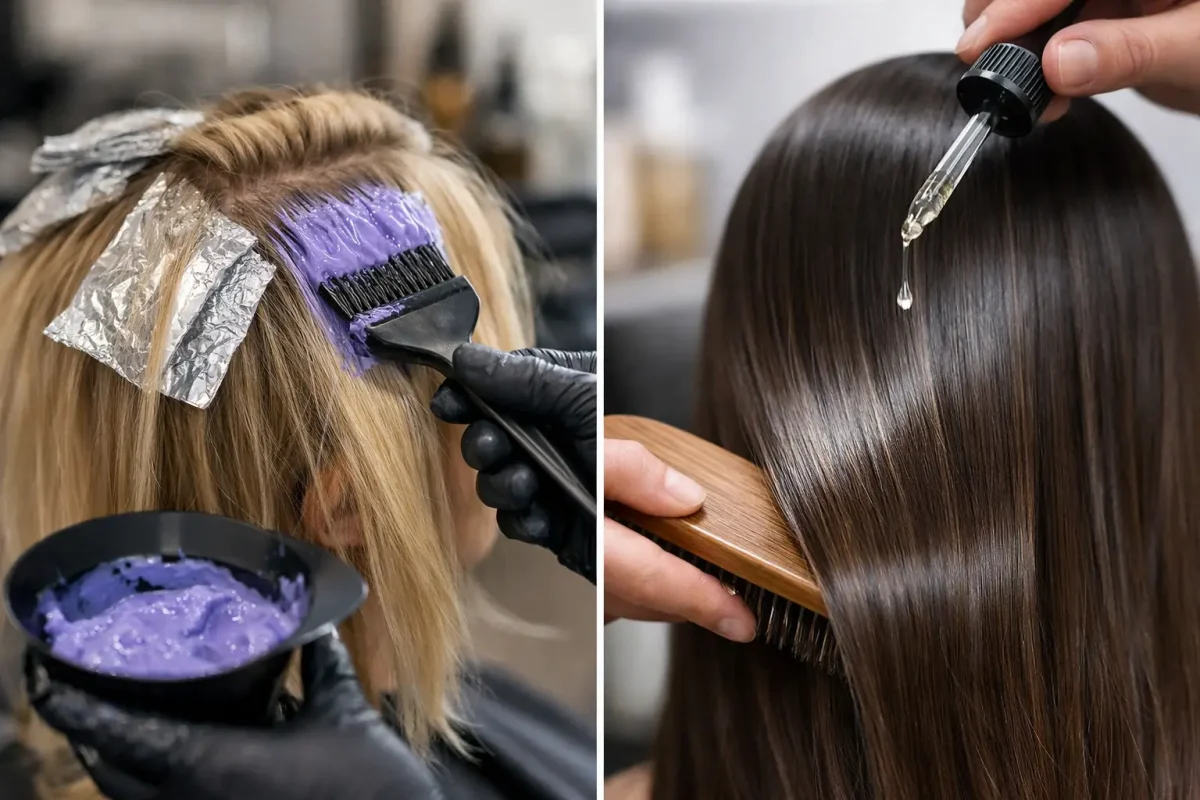
Fresh blonde can turn warm, highlighted brunette can lose its dimension, and a vivid shade can start looking less intentional between color appointments. That is usually when the toner versus gloss treatment question comes up. Both services can bring your color back to life without committing to a full color appointment, but they do different jobs and create different finishes.
The right choice depends on what you see in the mirror. Are unwanted yellow or orange tones showing through? Do you love your color but miss the reflective, just-colored shine? Is your hair feeling dry after lightening? A stylist can tailor either service to your hair, but knowing the difference makes it much easier to ask for the result you actually want.
What Is a Toner?
A toner is a color service designed to refine the tone of lightened, highlighted, or colored hair. It works by using carefully chosen pigments to neutralize or enhance underlying warmth. For example, a cool-toned toner can soften yellow in blonde hair, reduce orange through balayage, or make gray blending look cleaner and more polished.
Toner is not just for ash blondes. A warm beige toner can make bright highlights look creamy rather than icy. A rose, copper, or soft violet toner can shift a pale base into a fashion-forward shade without a dramatic permanent color change. The result is about control: making sure the tone of your hair looks deliberate, balanced, and flattering against your skin tone.
Most toners are applied after a lightening service, especially when the hair has been lifted with foils, balayage, or an all-over blonde session. Lightening exposes warm underlying pigments, and toner is the step that helps turn that raw lift into the blonde, beige, brunette, or creative shade you requested. It can also be booked between larger appointments when your color needs a quick tonal reset.
What Is a Gloss Treatment?
A gloss treatment focuses on shine, softness, and color refinement. It can be clear, which adds luminous reflection without noticeably changing the shade, or it can contain pigment to deepen, refresh, or subtly adjust your existing color. Think of it as a finishing service that makes hair look healthier and more polished.
If your brunette has faded from rich chocolate to a slightly dull, uneven brown, a tinted gloss can restore depth and richness. If your red is losing that expensive-looking vibrancy, a gloss can boost its warmth and shine. On blonde hair, a gloss may add a creamy, pearly, or sun-kissed finish while improving the overall feel of the hair.
Gloss formulas are often conditioning, which makes them especially appealing when hair feels a little dry or porous after color services. That does not mean a gloss repairs every form of damage, but it can make the hair surface feel smoother and look more reflective. For many clients, the visual difference is immediate: less dullness, more movement, and a smoother-looking finish from roots to ends.
Toner Versus Gloss Treatment: The Key Difference
The simplest distinction is purpose. Toner is usually chosen when the priority is correcting or directing a specific tone. Gloss is usually chosen when the priority is shine, softness, and refreshing the overall look of the color. The two can overlap, because a pigmented gloss can shift tone and a toner can leave hair looking glossy.
That overlap is why salon terminology can feel confusing. Different professional color lines and salons may use the words toner, glaze, and gloss a little differently. Rather than getting caught up in the label, focus on the result you want. A good consultation should translate words like “too brassy,” “too flat,” “more expensive-looking,” or “not quite blonde enough” into the right formula and application.
A toner may be the better fit when your highlights have become golden and you want them cooler, when a lifted section looks orange, or when you want to change the direction of a pale base toward beige, icy, strawberry, or pastel. It is more targeted in its color work.
A gloss may be the better fit when you like your current tone but want it to look fresher, when your natural or colored brunette needs depth, or when your hair is lacking shine after sun, heat styling, and regular washing. It is often the service to choose when your color does not need a major correction but still needs a visible boost.
How Long Do Toners and Glosses Last?
Neither option is meant to last forever. Toners and gloss treatments generally fade gradually over several weeks, although longevity depends on the formula, your hair’s porosity, your wash routine, and the shade itself. Very light, porous hair may grab pigment quickly and release it quickly too. Richer brunette or red refreshes may also fade sooner if hair is washed frequently.
At-home care matters. Use color-safe shampoo, avoid very hot water when possible, and keep heat styling sensible. Purple or blue shampoo can be useful for some blondes, but it is not an automatic replacement for a professional toner. Overusing it can leave hair looking overly smoky, uneven, or dull, particularly on porous ends.
A clear or tinted gloss can be a smart maintenance appointment between balayage or full-color visits because it keeps the overall look polished without repeatedly lightening the hair. That can be especially helpful if your goal is longer gaps between major color services while still looking put together.
Choosing Based on Your Color Goal
Picture the change you want before your appointment. If you are saying, “My blonde is too yellow,” “my balayage is too warm,” or “these highlights need to blend better,” start the conversation with toner. If you are saying, “My hair looks dull,” “my brown has faded,” or “I want the shine I had after my last color,” ask about a gloss treatment.
There are plenty of situations where the answer is both. After blonding, a stylist may use a toner to create the right shade and select a formula that also leaves a glossy finish. Before an event, a gloss may be paired with a trim and blowout for hair that looks freshly colored, even if you are not ready for a complete change.
Your current hair history matters just as much as your goal. Box color, previous dark color, vivid shades, mineral buildup, uneven lightening, and damaged ends can all affect the result. If the issue is a strong band of orange or an uneven color correction, a toner or gloss alone may not be enough. A stylist may recommend a more detailed color service first, then use toner or gloss as the final refining step.
Do These Treatments Damage Hair?
Professional toners and glosses are generally gentler than lightening services because they do not perform the same level of lift as bleach. Still, every color formula should be chosen with your hair’s condition in mind. Overprocessed hair can take color unevenly, and applying a cool pigment over very porous ends can sometimes create a result that is darker or smokier than expected.
This is where professional application makes a real difference. Your stylist can assess your base color, previous services, porosity, and desired maintenance level before choosing the shade and processing time. The goal is not simply to cancel warmth or add shine. It is to create color that suits you, wears beautifully, and keeps your hair looking and feeling its best.
The best treatment is the one that solves the problem you have now while supporting the color plan you want next. Book an appointment at Twisted Scissors in Shop 4, 17 Blackwood Street, Mitchelton.