
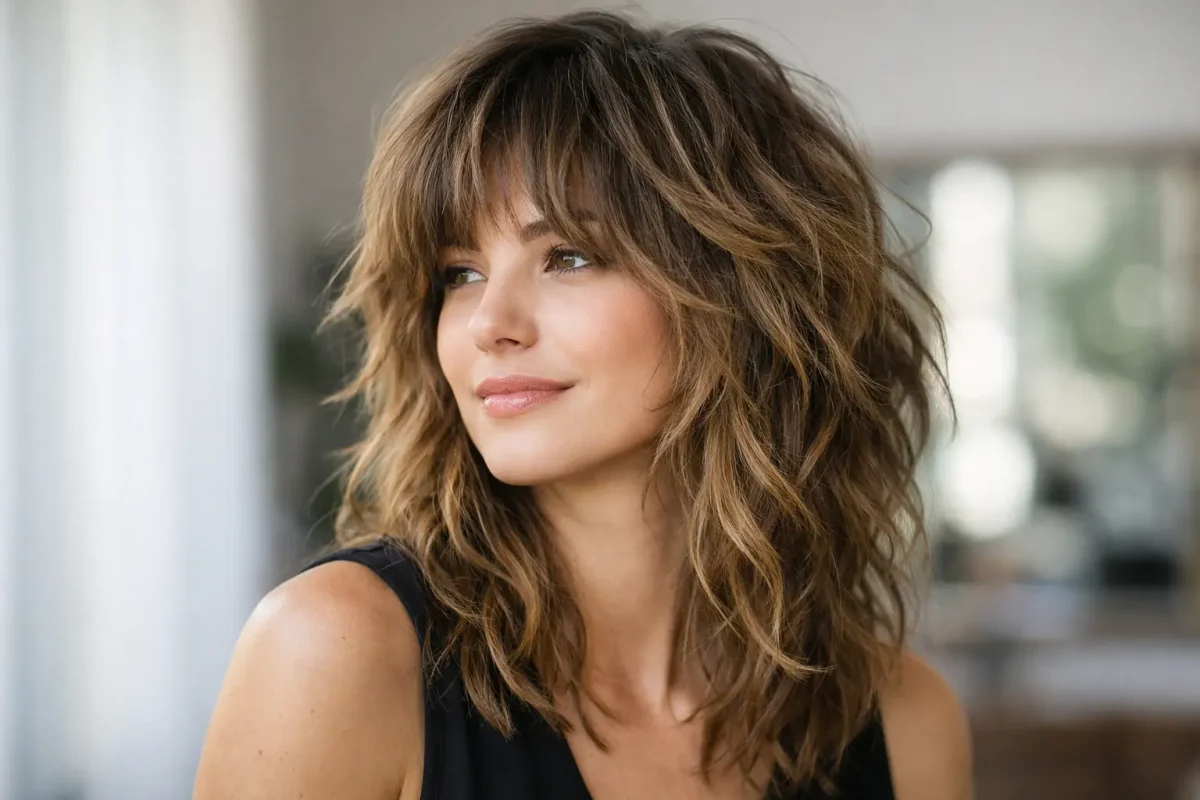
If your waves look great one day and strangely triangular the next, the cut is usually the problem – not your hair. A shag haircut for wavy hair works because it uses layers to remove bulk in the right places while keeping enough weight for the wave pattern to sit nicely. When it is done well, it gives you movement, shape, and that slightly undone finish that looks stylish without feeling overworked.
Why a shag haircut for wavy hair makes sense
Wavy hair sits in the middle ground. It is not pin-straight, and it does not always behave like curls either. That means heavy one-length cuts can make it look flat at the crown and puffy through the sides, while overly thinned cuts can leave it frizzy, stringy, or hard to control.
A shag solves a lot of that by building shape through layers. The shorter layers around the crown create lift, while the longer pieces keep softness through the ends. On wavy hair, that layering can encourage the natural bend to show up more clearly. Instead of fighting your texture every morning, you are finally working with it.
That said, not every shag is the same. The version that looks amazing on fine, loose waves may not suit thick waves with lots of density. The real trick is not asking for a trendy cut off a photo and hoping for the best. It is getting a shag that is adjusted to your wave pattern, density, face shape, and styling habits.
What the right shag looks like on wavy hair
The best shag haircut for wavy hair usually has soft, broken-up layers, face-framing around the cheekbones or jaw, and enough internal movement to stop the hair from looking blocky. It should not feel like random choppy sections. It should feel intentional, balanced, and easy to wear.
On loose waves, a shag can be a little more relaxed and airy. You can often get away with more separation and feathering because the texture is softer. On stronger waves, the shape needs more control. Too much layering can make the hair spring up wider than expected, especially in humidity.
Length matters too. A shorter shag has more edge and more volume, but it also needs a bit more daily styling if you want the layers to sit just right. A medium or longer shag is often easier for clients who want movement without committing to a full textured chop. It still gives shape, but there is enough length to tie it back or smooth it out when needed.
Should you get bangs with it?
Bangs can make a shag look even better, but they are not automatic. Curtain bangs are usually the easiest match for wavy hair because they blend into the rest of the cut and grow out well. They can soften the forehead area and connect beautifully into cheekbone layers.
A full fringe can work too, but it is more commitment. With waves, fringe length needs to be planned carefully because hair can shrink as it dries. If you like wash-and-go styling, a softer curtain or bottleneck fringe is often the safer choice.
Who suits a shag and who might want a softer version
A shag is especially flattering if your hair tends to feel heavy, wide, or shapeless. It can also work really well if you want more volume at the top and more movement around the face. If you love a modern, effortless look and do not want a perfectly polished finish every day, this cut usually fits that mood.
It may need a gentler approach if your hair is very fine and you are worried about losing fullness. In that case, the answer is not avoiding layers completely. It is using fewer, more strategic layers so the hair still looks full through the perimeter.
If your hair is damaged, over-lightened, or fragile at the ends, a shag can expose that quickly. Textured cuts rely on healthy-looking movement. Dry, see-through ends will make the cut feel unfinished instead of cool. Sometimes the best plan is to clean up the damage first, then build the shape.
What to ask for at the salon
The words you use matter because shag means different things to different stylists and clients. If you say you want a shag, but what you really want is soft texture and face-framing, that should be clear from the start.
Ask for a layered shape that works with your natural wave pattern, with volume at the crown and softness through the ends. Mention whether you want it subtle or more lived-in and edgy. If you style your hair minimally, say that too. A cut that looks incredible after round-brush styling may not behave the same way if you mostly air-dry.
Bring inspiration photos, but be realistic about what your own texture can do. A reference can show the vibe, fringe shape, or length you like, but your result should be customized to your hair. That is where professional advice really matters.
A note on over-layering
One of the most common mistakes with wavy shags is taking out too much weight. It can seem like more layers will mean more texture, but on wavy hair it can also mean puff, frizz, or ends that flick out unpredictably. Good shag cutting is about placement, not just removing bulk.
How to style a shag without overthinking it
One reason people love this cut is that it can look good without a full routine. But low-maintenance does not mean no-maintenance. A shag on wavy hair still needs the right products and a bit of method.
Start with lightweight moisture. Waves need hydration, but heavy creams can flatten the shape. A leave-in conditioner or soft curl cream is usually enough, followed by a mousse or gel if you want better hold and definition. Scrunch the product in while the hair is damp, then either air-dry or diffuse gently.
If you want more lift at the roots, flip your part while drying or use clips at the crown. If your fringe needs a little help, that section can be quickly shaped with a round brush or diffuser without styling the whole head.
Second-day hair often looks even better with a shag. A little water mist, a touch of light cream, and a quick scrunch can bring the waves back. Dry shampoo at the roots can also help revive volume without making the layers stiff.
Maintenance is easier than you might think
A shag grows out better than many blunt cuts because the texture is built into the shape. You are not relying on one super-clean line to make it work. Even so, regular trims matter if you want the fringe, crown layers, and face-framing to stay balanced.
Most clients do well with a trim every 8 to 12 weeks, depending on the length and how defined they like the shape. If you have bangs, you may want those refreshed sooner. Waiting too long can make the whole cut lose its lift and start feeling bottom-heavy again.
Pairing a shag with color
This is one of those cuts that really shows off dimensional color. Because the layers create movement, balayage, soft highlights, or richer tonal shifts have more room to stand out. The shape catches light differently, which gives the hair a more textured, modern finish.
If you are considering both a cut and color change, think about the overall effect you want. A shag with soft lived-in color feels easy and beachy. A darker glossy base with textured layers can feel more polished and dramatic. Bold fashion shades can also look fantastic on a shag because the movement breaks up the color in a really eye-catching way.
The biggest myth about shag cuts
A lot of people assume a shag is messy by default. It is not. A good shag is controlled texture. It should look relaxed, not accidental. The right one makes your waves look better, not wilder.
That is why customization matters so much. Face shape, density, porosity, and your usual routine all affect how the cut should be built. When those things are taken into account, a shag can be one of the most flattering and wearable cuts for wavy hair.
If your current cut feels too heavy, too flat, or too hard to style, this might be the change that finally makes your natural texture feel like an advantage. If you are ready for a shape that works with your waves instead of against them, book an appointment at Twisted Scissors in Bridgeman Downs.