
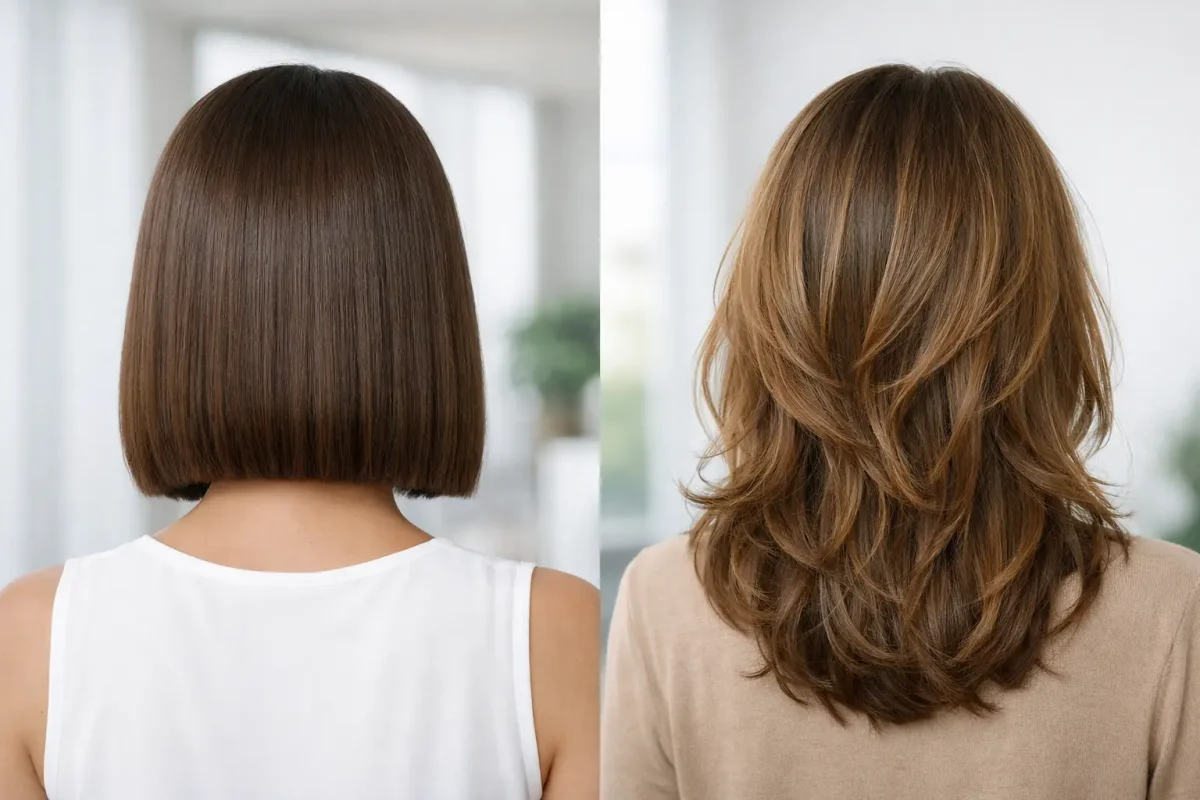
You can show a stylist ten saved haircut photos, but the real decision often comes down to one question: blunt cut vs layered cut. Those two cutting approaches change how your hair sits, moves, feels, and even how much time you spend styling it in the morning. If you are choosing between them, the best option is not the trendiest one. It is the one that works with your hair density, texture, face shape, and the way you actually wear your hair day to day.
Blunt cut vs layered cut: the real difference
A blunt cut creates a clean, solid shape. The ends are cut to fall at one strong line, which gives the haircut a fuller, sharper finish. Think polished bobs, sleek lobs, and heavier perimeter lines that make the hair look thicker.
A layered cut removes weight at different points through the hair. Instead of one solid edge, the haircut has movement and separation. Layers can be soft and subtle or obvious and dramatic, depending on the look you want. They can lift volume, reduce bulk, and help natural texture show up more clearly.
Neither is automatically better. A blunt cut is usually about strength, density, and precision. A layered cut is usually about softness, shape, and movement. The right choice depends on what you want your hair to do once you leave the salon.
When a blunt cut makes more sense
If your hair is fine or medium in texture and you want it to look thicker, a blunt cut is often the stronger option. Because the perimeter stays solid, the ends look denser instead of wispy. That is why blunt bobs and lobs are so popular for clients who want a fuller-looking shape without relying on heavy styling.
Blunt cuts also suit straight hair beautifully. On straighter textures, the clean line is easy to see, so the haircut looks intentional and crisp. If you like a sleek finish, a center part, or a smooth blowout, a blunt cut gives that polished result.
There is also a maintenance advantage for some clients. A blunt shape can be simple to style because the structure is built into the cut. If the haircut is done well, you may need less effort to make it look put together. The trade-off is that blunt shapes can lose their precision as they grow, so regular trims matter if you want to keep that sharp edge.
Who usually loves a blunt cut
Clients who want their hair to look thicker often do well with a blunt shape. It is also a smart choice if you prefer clean lines over shaggy texture, or if your goal is a modern, fashion-forward cut that looks strong rather than soft.
That said, a blunt cut is not always ideal for very thick hair unless it is customized carefully. Too much weight sitting at the bottom can make the shape feel heavy or triangular. In those cases, a stylist may keep the blunt outline but remove internal weight so the haircut still moves.
When a layered cut is the better fit
Layers are often the answer when hair feels bulky, flat, or hard to shape. By taking weight out in the right areas, a layered cut can create lift at the crown, softness around the face, or better balance through the lengths.
For thick hair, layers can make the hair easier to manage. They help stop the shape from feeling too dense or bottom-heavy. For wavy or curly hair, layers can encourage the texture to spring up and show more definition. For longer hair, they stop the cut from feeling one-length and dragging downward.
Layers are also useful if you like movement. If you want your hair to swish, bend, and have a softer finish around the face, a layered cut tends to give you more of that than a blunt cut.
The trade-off is that layers can sometimes make fine hair look thinner if they are overdone. That does not mean fine hair can never have layers. It just means the layering needs to be strategic and usually softer, with enough weight left through the ends.
Why layering is not one-size-fits-all
A lot of people hear the word layers and picture the same haircut. In reality, layers can be long, short, subtle, face-framing, invisible, or textured. A layered cut should be built around your hair type, not copied from someone with completely different density and texture.
That is where salon advice matters. The same layered shape that gives one client bounce can make another client feel frizzy, wide, or too thinned out. Good layering is precise, not random.
Blunt cut vs layered cut by hair type
If your hair is fine, a blunt cut usually gives the illusion of more thickness. A few minimal layers may still work, especially around the face, but too many can weaken the shape.
If your hair is medium density, you often have the most flexibility. You may suit a true blunt cut, soft invisible layers, or a blended shape that combines both. Your styling habits become a bigger factor here than the hair itself.
If your hair is thick, layers often help create balance and remove excess bulk. A fully blunt shape can still work, especially for shorter cuts, but it usually benefits from weight removal inside the cut so it does not feel too heavy.
If your hair is naturally wavy or curly, layers can bring out the pattern and stop the shape from becoming triangular. But they have to be placed correctly. Too much layering can create puffiness, while too little can make the hair sit flat at the top and wide at the bottom.
If your hair is straight, both options can work well. The difference is mostly visual. Blunt cuts look cleaner and more graphic, while layers create softness and movement.
Face shape matters, but not in a rigid way
Face shape can help guide a haircut, but it should not control it. A blunt chin-length bob, for example, can look incredible on one person and too severe on another, even if they technically share the same face shape. Features, neck length, hairline, and styling preference all matter too.
In general, blunt cuts create stronger visual lines. That can look striking and modern, especially if you like structure in your haircut. Layered cuts soften the outline and can help frame the cheekbones, jawline, or collarbone more gently.
If you are unsure, the middle ground often works well. Many of the best salon haircuts are not purely blunt or purely layered. They combine a strong outer shape with softer internal movement.
The styling question most people forget to ask
The better haircut is often the one that matches your routine. If you like wash-and-go hair and rarely heat style, the cut needs to work with your natural texture. If you love blowouts and smooth finishes, you can choose a shape that is designed to look best styled.
Blunt cuts can be low-fuss for some clients because the line does the work. On the other hand, if your hair tends to flick, wave, or swell at the ends, a blunt shape may need more smoothing to sit exactly how you want.
Layered cuts can make styling easier by reducing weight and helping the hair move. But some layered shapes show their best result when you spend a little time enhancing the texture or directing the shape with a round brush or styling tool.
This is why haircut inspiration photos only tell half the story. Two cuts may look similar in a picture but require very different effort at home.
Can you have both?
Yes, and this is often the smartest option. A lot of modern haircuts keep a blunt-looking perimeter while adding soft internal layers or face-framing pieces. That gives you fullness through the ends without the haircut feeling stiff or heavy.
This blended approach works especially well for clients who want a fuller look but still like movement. It is also great for longer bobs and lobs, where too much bluntness can feel blocky and too many layers can make the shape lose strength.
If you are torn between the two, ask for the result you want rather than insisting on haircut terms. Fuller ends, more bounce, less bulk, softer around the face, easier to air dry – those details help your stylist build the right cut for you.
How to choose the right cut for your next appointment
Start with what bothers you most about your current hair. If your ends feel thin, your shape disappears quickly, or you want your hair to look thicker, a blunt cut may be the answer. If your hair feels heavy, flat, puffy, or hard to style, layering may solve more than simply taking off length.
Then think about maintenance. Precision shapes usually need more regular reshaping. Softer layered cuts can sometimes grow out more gently, though that depends on the style. Finally, be honest about styling. The haircut that suits your real routine will always beat the haircut that looks best only on appointment day.
The best haircuts are not chosen by trend alone. They are tailored to your texture, your goals, and how you want to feel when you catch your reflection. If you want help deciding between a blunt cut and a layered cut, book an appointment at Twisted Scissors in Bridgeman Downs.
[…] that a quick fix can affect the balance of the shape. Blunt lines are less forgiving than layered cuts. Even a tiny uneven section can stand out, especially when your hair is straightened or tucked […]
[…] and cheekbones, while a slightly longer bob creates a softer, more versatile finish. Choose a blunt perimeter for a fuller-looking effect, or add light texture through the ends for a relaxed, lived-in […]