12 Ombre Hair Color Ideas to Try Next
12 Ombre Hair Color Ideas to Try Next
Some color looks amazing for two weeks and then turns into a maintenance job. Ombre hair color ideas stay popular for a reason – they give you dimension, personality, and a softer grow-out than all-over lightening. If you want a change that feels noticeable without signing up for constant root touch-ups, ombre is still one of the smartest ways to shift your look.
The best part is that ombre is not one fixed style. It can be subtle and natural, high contrast and dramatic, warm and glossy, or playful with fashion shades. The right version depends on your starting color, your haircut, your skin tone, and how much upkeep you actually want to deal with between appointments.
What makes ombre different from other color techniques?
Ombre works through a gradual transition from darker roots into lighter or brighter ends. That sounds simple, but the finish can vary a lot. Some ombre looks melt softly and almost blur into the mid-lengths. Others create a stronger contrast that feels more editorial.
Clients often confuse ombre with balayage, and there is some overlap. Balayage is a highlighting technique, while ombre is more about the finished effect. You can use balayage to create a soft ombre, but not every balayage is an ombre. If you like that deeper root with a clear lightening story through the ends, ombre is usually the better direction.
It is also a practical option for anyone who wants brightness without the strict maintenance schedule that comes with scalp-to-ends blonding. Because the root area stays deeper, regrowth is much less obvious. That said, lighter ends still need care. Dryness, brassiness, and split ends can show up fast if the hair is overprocessed or under-conditioned.
Ombre hair color ideas for different styles
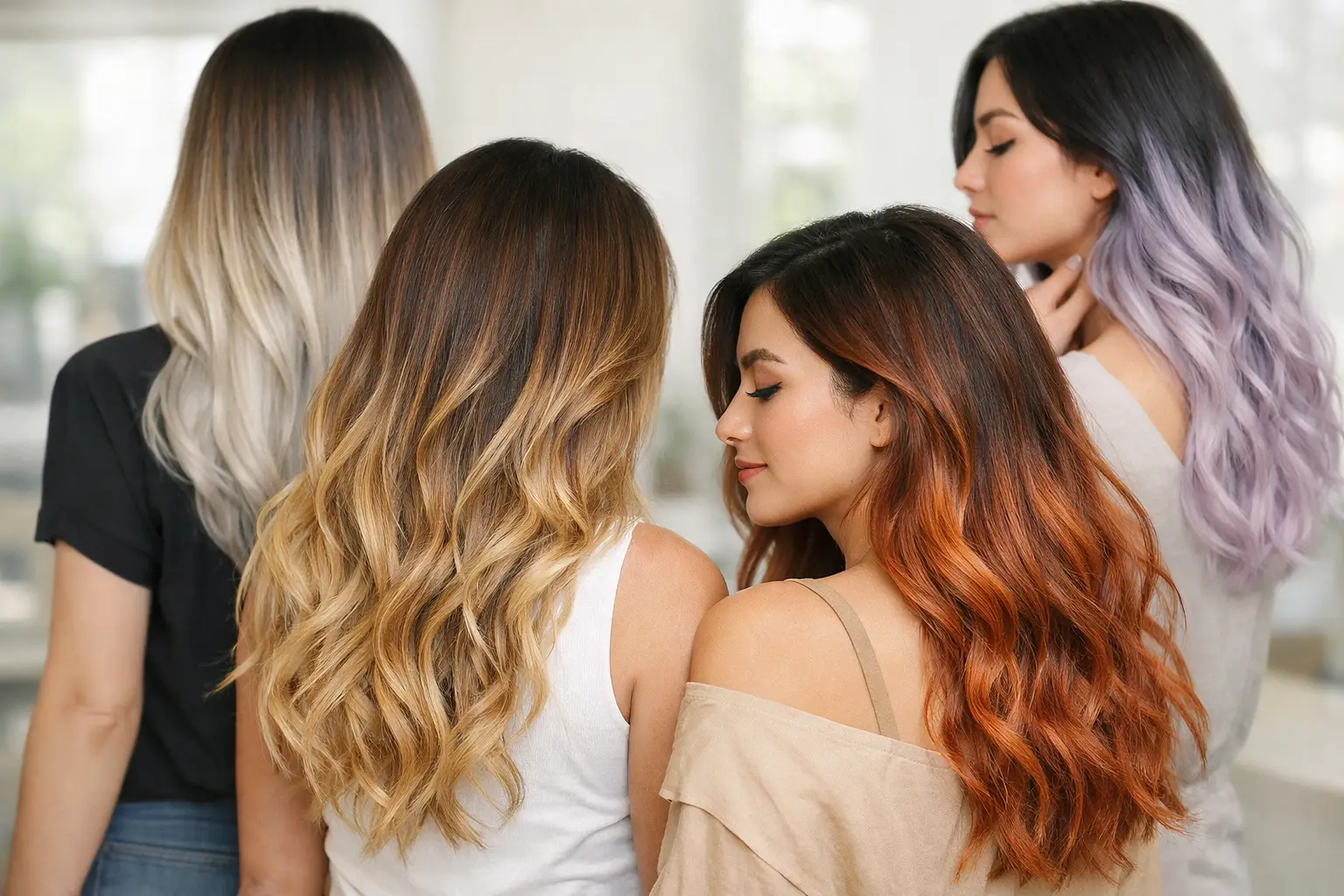
1. Soft brunette to honey ombre
This is one of the most wearable options if you want a natural shift. A rich brunette base fades into honey or caramel ends, creating warmth and movement without looking too dramatic. It suits long layers beautifully, but it can also make a lob look more textured and full.
This option tends to be flattering on a wide range of skin tones because the warmth in the ends adds softness around the face. It is also a good first step if you have never lightened your hair before and want something lower risk than a full blonde transformation.
2. Espresso to toffee ombre
If you love darker hair but want more depth, this version keeps things polished. The base stays deep and glossy, while the ends lift into a toffee or mocha tone. It is understated, expensive-looking, and especially strong on sleek cuts, blunt lobs, and long polished styles.
The trade-off is that subtle ombre needs precision. If the transition is too abrupt, it can read stripey instead of refined. Tone selection matters too. Too warm, and it may turn orange over time. Too cool, and it can look flat against the base.
3. Dark root to beige blonde ombre
For clients who want blonde without a harsh regrowth line, this is a favorite. The root remains deeper while the mid-lengths and ends shift into a creamy beige blonde. It has brightness, but it still feels lived-in and forgiving.
This works especially well if your natural color is in the dark blonde to light brown family. If your starting hair is very dark, reaching a clean beige blonde may take multiple sessions. Healthy lifting should always win over rushing to the palest result in one appointment.
4. Golden blonde ombre
Golden blonde ombre has a sunnier, brighter feel than cooler blondes. It can make the hair look shiny and full, especially when styled with soft waves. If you want that beachy finish without going fully platinum, this is often the sweet spot.
It does need some tone maintenance because warm blondes can tip too yellow if not balanced properly. The goal is glossy gold, not brass. A tailored toner and good home care make a big difference here.
5. Cool ash ombre
If you prefer your color a little moodier, cool ash ombre offers a more modern edge. Think smoky brunette roots blending into muted taupe, mushroom, or ash blonde lengths. It can look incredibly chic, especially on straight or softly textured hair.
This shade family is not for everyone. Cool tones can wash out some complexions, and they are also harder to maintain because unwanted warmth tends to reappear. If your hair naturally pulls red or orange, expect more toning support to keep it looking crisp.
6. Copper ombre
Copper ombre is having a real moment, and for good reason. It feels bold without being too niche, and it adds a lot of life to darker bases. A chestnut or brunette root melting into copper ends brings warmth, shine, and personality.
This is a great option if you want something fashion-forward that still feels wearable day to day. Keep in mind that red and copper tones fade faster than many other shades, so refresh appointments and color-safe products matter more here.
7. Auburn to cinnamon ombre
This is a softer cousin to copper. Auburn roots with cinnamon ends create warmth in a more muted, sophisticated way. It suits medium to long hair especially well and can make layered cuts look richer and more dimensional.
It is also ideal for clients who want a seasonal change without going dramatically lighter. You still get contrast and interest, but the overall result feels elegant rather than high-impact.
8. Rose brown ombre
If you like the idea of fashion color but want something subtle, rose brown is a smart middle ground. A brunette base shifts into rosy, mauve-brown ends that catch the light beautifully. It feels current, a little playful, and more grown-up than bright pink.
Because it sits between natural and creative color, it can fade differently depending on your hair porosity and how often you wash. The faded version can still be pretty, but if you want that fresh rosy tone to stay visible, maintenance matters.
9. Plum ombre
Plum ombre gives dark hair a richer, more dramatic twist. Deep roots paired with violet-plum ends create depth that is noticeable in sunlight and indoor lighting alike. It is one of the better choices if you want color that stands out without crossing into neon territory.
This shade can be surprisingly flattering because it has both cool and warm elements depending on the formula. It also tends to look great on darker bases, which means less aggressive lifting may be needed compared with very light fashion shades.
10. Pastel ombre
Pastel ombre can be beautiful, but it is not the low-maintenance option some people hope it will be. Whether you choose lavender, peach, blush, or icy blue, pastel ends require a very light starting point. That means the hair needs to be healthy enough to lift, and it needs ongoing moisture afterward.
The payoff is a soft, creative look that feels unmistakably fun. The challenge is fade. Pastels shift quickly, so they are best for clients who love change and do not mind regular refreshes.
11. Bold pink or violet ombre
If subtle is not your thing, a vivid ombre makes a statement fast. A natural root with bright pink, magenta, or violet through the ends keeps the look more wearable than all-over fashion color while still delivering impact.
This approach is great if you want self-expression without committing your whole head to a bright shade. It also gives you more flexibility when you are ready to change again, since the root area stays closer to your natural color.
12. Reverse ombre
Traditional ombre starts darker and gets lighter. Reverse ombre flips that idea, with lighter roots moving into deeper ends. It is less common, which is exactly why some clients love it. The result can feel softer around the face while still adding contrast through the bottom half of the hair.
It is not the easiest option to maintain, especially if your natural hair is darker than the root shade you want. But if you are after something different from the usual brunette-to-blonde transition, it is worth considering.
How to choose the right ombre for your hair
The best ombre is not just the one you saved on your phone. It has to work with your current hair condition and your real maintenance habits. If your ends are already dry or heavily processed, chasing the lightest possible finish may leave you with more damage than glow. Sometimes a slightly deeper target shade gives a better result overall.
Your haircut matters too. Ombre tends to show best when there is enough length to display the transition, but that does not mean you need very long hair. Bobs and lobs can look fantastic with a softer ombre placement, especially when the lightness is focused strategically through the lower half and front pieces.
Skin tone plays a role, but not in a rigid way. Warm tones often suit honey, caramel, gold, copper, and cinnamon shades. Cooler tones can look amazing with ash, beige, plum, and certain rose-based finishes. The right custom formula usually matters more than generic rules.
Keeping ombre looking fresh
Good ombre should grow out gracefully, but it still needs care. Lightened ends are older, more fragile hair, so they need moisture, heat protection, and regular trims to stay polished. Purple or blue toning products can help some shades, but they are not one-size-fits-all. Using the wrong one too often can actually make the color look dull.
Gloss appointments can also make a huge difference, especially if your ombre has turned brassy or flat. Sometimes you do not need more lightening at all. You just need the tone refined and the shine brought back.
If you are deciding between natural and fashion shades, be honest about your routine. Natural ombre tones usually fade more gracefully. Fashion shades are fun, but they ask more from both your hair and your schedule.
The best ombre looks intentional from root to tip, not just lighter on the bottom. If you want a result that suits your cut, your skin tone, and your upkeep preferences, book an appointment at Twisted Scissors in Mitchelton.