
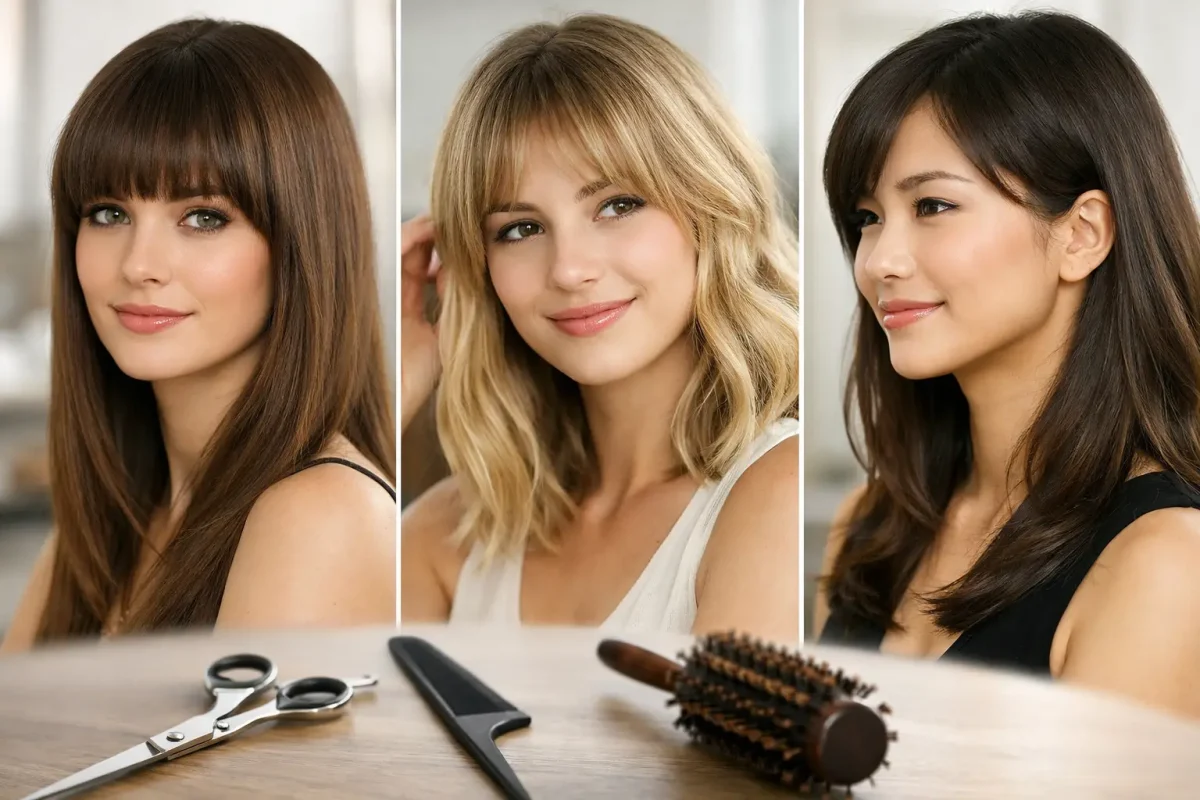
Bangs can change the entire feeling of a haircut before you have touched the length. They can make a bob feel sharper, give long hair more movement, soften strong features, or create a bold focal point around the eyes. The key to how to choose bangs style is not copying the fringe you saved on social media exactly. It is matching the idea behind it to your face, hair, styling routine, and personal style.
A great fringe should look intentional on both a freshly styled day and a realistic weekday morning. That is why a professional consultation matters. The right bangs are tailored to the way your hair naturally falls, not just the photo that inspired you.
Start With Your Face Shape, Not a Rulebook
Face shape is useful, but it is not a set of restrictions. Your features, hairline, and the overall cut matter just as much. Think of bangs as a way to direct attention and create balance, rather than a way to “fix” anything.
Oval and longer face shapes
Most bang styles work beautifully with an oval face, so the decision often comes down to the look you want. Blunt bangs create a statement and bring attention to the eyes, while soft curtain bangs add shape without feeling too committed.
If your face is longer, a fuller fringe that sits around or just below the brows can visually shorten the face. Wispy, very narrow bangs can sometimes make a longer face appear even longer, especially when paired with flat, length-heavy hair. Adding width at the sides through a curtain shape or face-framing layers usually creates a more balanced result.
Round face shapes
The best fringe for a round face is often one with softness and movement. Longer curtain bangs, bottleneck bangs, or side-swept bangs can lengthen the look of the face and highlight the cheekbones without covering everything up.
A straight, thick fringe is not automatically off limits. It simply needs the right proportions. Leaving it slightly longer, adding a soft curve at the edges, and keeping some texture through the ends can make it feel modern rather than overly boxy.
Square and heart-shaped faces
Square face shapes often suit feathered bangs that soften the forehead and jawline. A longer, airy fringe that blends into face-framing layers is especially flattering, as are curtain bangs that part naturally and curve away from the center.
For a heart-shaped face, the goal is often to balance a wider forehead with a narrower chin. Side-swept bangs and wispy curtain bangs are lovely choices because they add gentle width through the cheek area. Heavy, ultra-short micro bangs can make the upper face feel more prominent, though they can still work if you want a fashion-forward, graphic look.
How to Choose Bangs Style for Your Hair Texture
Your natural texture determines how much styling your fringe will need and how the finished shape will behave. A style that looks effortless on fine, straight hair may need a different cut and more daily work on thick curls.
Fine hair can look fuller with a blunt or softly textured fringe, especially when the section is not cut too wide or too deep. Taking too much hair into the bangs can leave the rest of the cut looking thinner, so balance is everything. A wispy fringe can be gorgeous, but it needs enough density to avoid separating into a few uneven strands.
Thick hair has the density for full, dramatic bangs, but it often benefits from internal weight removal. This allows the fringe to move instead of sitting like a solid shelf across the forehead. Curtain bangs and longer, layered fringe can feel lighter and are easier to blend into the rest of the haircut.
Naturally wavy hair is ideal for relaxed, textured bangs. The important part is cutting them with the wave pattern in mind. They may spring up as they dry, so a fringe that seems perfect when wet can become much shorter than expected. A longer starting point gives your stylist room to refine the shape once the hair is dry.
Curly bangs can look incredible, with soft volume and personality that no straightened fringe can replicate. They do need to be cut specifically for curl behavior. Curl pattern, shrinkage, density, and where each curl wants to sit all affect the final result. Avoid judging curly bangs by straight-hair rules, because they are meant to have lift, texture, and an individual shape.
Consider Your Hairline and Cowlicks
Your hairline is one of the most practical factors in choosing bangs. A strong cowlick at the front does not mean you cannot have a fringe. It means the cut needs a strategy.
A cowlick may push bangs to one side, make a center part split open, or cause a short fringe to lift. Depending on its direction and strength, a side-swept bang or longer curtain fringe may work better than a short, straight-across style. Sometimes, a skilled blow-dry is all that is needed. Other times, choosing a shape that works with the growth pattern will save you a lot of frustration.
Be honest about whether you part your hair in the middle, off-center, or deeply to one side. Your fringe should support your natural part. Forcing it into a different position every morning can turn a low-maintenance cut into a daily battle with a brush and hair dryer.
Match the Fringe to Your Styling Routine
Before committing, ask yourself one straightforward question: how much time do I genuinely want to spend styling my bangs?
Short, blunt bangs usually need more precision. They may need a quick daily blow-dry, especially in Brisbane humidity, and regular trims to keep the line clean. They are striking and polished, but they are not always wash-and-go.
Curtain bangs are generally more forgiving. They grow out softly, blend into layers, and can be restyled with a round brush, velcro rollers, or a quick pass of a blow-dryer. They are a smart choice if you like variety because you can wear them open around the face, pin them back, or blend them into the rest of your hair.
Long side bangs also offer flexibility, particularly if you are unsure about making a big change. You still get movement around the face, but you can tuck them behind your ear or incorporate them into an updo more easily than a short fringe.
Micro bangs are the highest-commitment option. They make a strong style statement and can look fantastic with pixie cuts, bobs, shags, and creative color. But because the length is so visible, even a few millimeters of uneven growth can change the shape. Choose them because you love the look, not because they seem like the easiest trend to try.
Choose a Bang Style That Fits Your Haircut
Bangs should never look like an afterthought. The strongest results happen when the fringe and haircut are designed as one.
A blunt bob paired with a clean, full fringe feels sleek and intentional. A shag works beautifully with choppy, piecey bangs because the texture continues through the whole cut. Long layers often suit bottleneck or curtain bangs, which create shape near the cheekbones before melting into the length.
If you wear your hair up often, talk about that during your appointment. A fringe can make a simple ponytail or bun look more styled, but some shapes are easier to pin back than others. Similarly, if you wear glasses, bring them along. The right bang length can frame your eyes and complement your frames, while the wrong length may constantly brush against them.
Bring Inspiration, Then Leave Room for Expertise
Reference photos are helpful because words like “wispy,” “curtain,” and “soft” can mean different things to different people. Bring a few images that show what you like, but try to choose people with similar hair texture and density to yours.
It is also useful to identify what you like in each photo. Maybe it is the eyebrow-grazing length, the fullness at the center, or the way the fringe blends into cheekbone layers. Your stylist can use those details to create a version that works for you, even if an exact copy would not.
A good fringe consultation includes your maintenance preferences, your regular part, your hair texture, previous chemical services, and whether you normally air-dry or heat-style. It also includes a realistic conversation about trims. Most bangs benefit from a tidy-up every two to four weeks, while longer curtain bangs can often stretch further between appointments.
The most flattering bangs are not necessarily the trendiest or shortest. They are the ones that make you feel like your haircut finally has the right shape for you. Ready to see what a well-cut fringe can do for your look? Book an appointment at Twisted Scissors in Bridgeman Downs.