
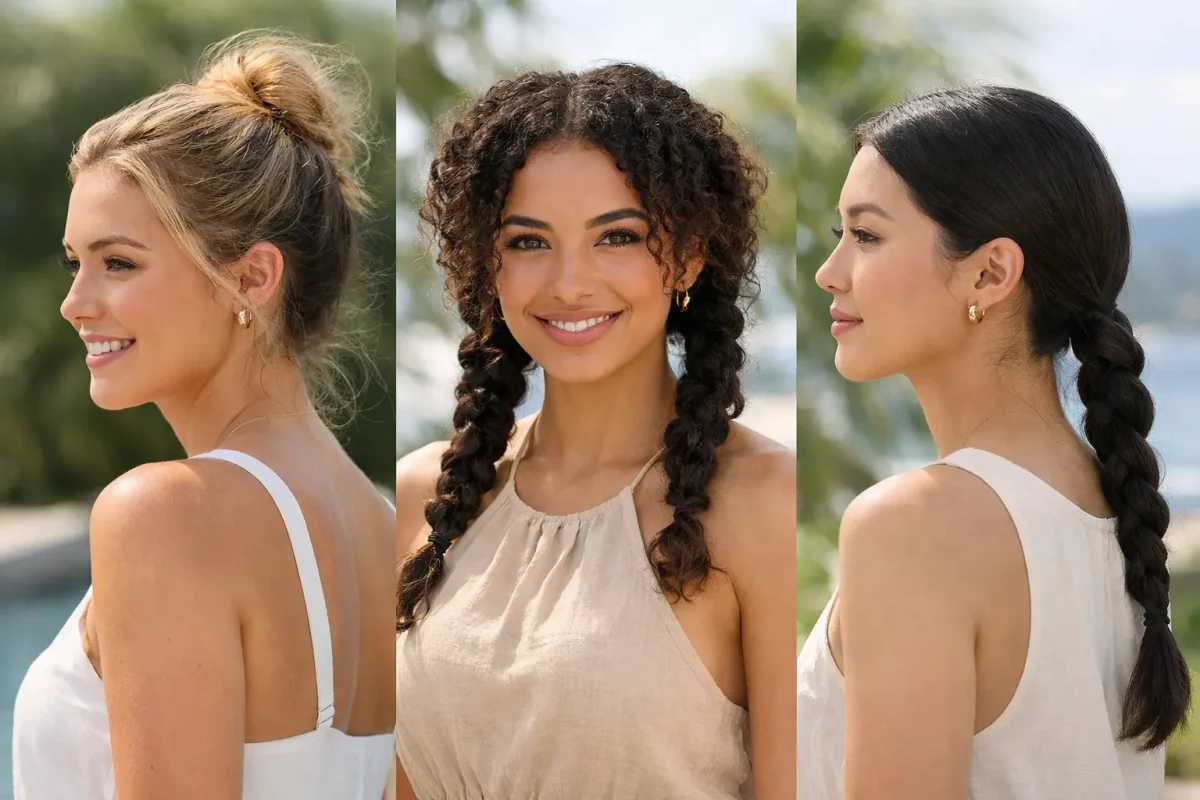
A Brisbane morning can make a freshly styled blowout feel questionable before the school run, commute, or first coffee. Humidity does not mean you have to settle for a permanent ponytail, though. The best hairstyles for humid weather work with your natural texture, keep the most frizz-prone areas controlled, and still look intentional when the air turns sticky.
The right choice depends on your hair density, curl pattern, length, and how much styling time you realistically have. A sleek low bun may be perfect for fine hair that loses shape quickly, while someone with dense curls may get better results from a defined half-up style. The goal is not to fight every bit of movement. It is to choose a cut and finish that make humidity look like part of the style.
Why Humidity Changes Your Hair
Hair pulls moisture from the air, especially when it is dry, porous, color-treated, or already a little damaged. That extra moisture can make strands swell, disrupting a smooth blowout, loosening waves, and creating a halo of frizz around the crown and hairline.
This is why a style that looks great in the salon can behave differently outdoors. The answer is not always more hairspray. A well-shaped haircut, enough hydration, a humidity-conscious product routine, and a style with some built-in texture will usually give you a better result than trying to force hair into a finish it cannot hold.
The Best Hairstyles for Humid Weather
1. A sleek low bun
The low bun is polished, quick, and reliably humidity-friendly. A center or soft side part gives it a clean finish, while a light smoothing cream helps keep the hairline controlled without making it stiff. Leave it neat for a refined look or pull out a couple of soft pieces at the front if you prefer something less formal.
This style suits medium to long hair particularly well. If your hair is very fine, avoid loading it with heavy oils before styling, as that can make the bun look flat rather than sleek.
2. A textured claw-clip twist
A claw-clip twist is one of the easiest ways to look put together on a humid day without overworking your hair. Twist the lengths up, secure them at the back of the head, and allow a little natural texture around the face. It is ideal for second-day hair and works beautifully when a perfectly smooth finish is not realistic or desired.
Choose a clip that feels secure without pulling. Constant tension is not kind to the scalp or fragile ends, especially if your hair has been lightened or colored.
3. Braided ponytail
A braid gives a standard ponytail more staying power and makes frizz look deliberate rather than accidental. Start with a mid or low ponytail, then create a classic three-strand braid, a loose pancake braid, or a rope braid depending on the finish you like.
For thicker hair, this style keeps weight off the neck while reducing tangling in warm weather. A small amount of flexible styling cream through the lengths before braiding can keep the braid smooth without removing all its texture.
4. High ponytail with soft volume
A high ponytail is practical, but it does not need to look like a gym-only option. Keep some lift at the crown, wrap a small section of hair around the elastic, and use a soft brush or comb to smooth only the surface. The contrast between a polished crown and a full ponytail feels current and holds up well when the day gets humid.
The trade-off is tension. Do not wear a tight high ponytail every day, particularly if you notice soreness around the hairline. Alternate the placement and choose snag-free elastics.
5. Defined natural curls
For curls and coils, humidity can be friend rather than enemy when the hair is properly hydrated and defined. Start with a moisture-rich leave-in product, layer a curl cream or mousse, and finish with a gel that creates a light cast while drying. Once fully dry, gently soften the cast with clean hands for touchable definition.
Avoid brushing out dry curls before heading out. That is one of the fastest ways to turn beautiful definition into a cloud of frizz. A curl-friendly layered cut can also remove excess bulk and help your natural shape sit better between appointments.
6. Half-up, half-down with a clip or mini bun
The half-up style solves the classic humid-weather problem: hair around the face starts expanding first, while you still want to wear some length down. Secure the top section with a clip, barrette, or small bun and leave the bottom half in its natural wave, curl, or lightly styled texture.
This option is especially flattering for lobs and longer layered cuts. It keeps your face open while preserving movement through the ends, which means humidity has less chance of ruining the whole look.
7. Loose textured waves
Loose waves can absolutely work in humid weather, provided you do not expect them to stay glossy and perfectly uniform. Rather than curling every section tightly, create a few larger bends with a curling iron or flat iron, then brush them through lightly and add a texture spray.
Think relaxed, lived-in movement rather than pageant curls. This is a better choice for hair that naturally has some wave, while naturally straight hair may need a stronger hold product and still may soften through the day.
8. A blunt bob with a tucked finish
A sharp bob is a smart humid-weather cut because there is simply less hair to manage. A blunt shape gives the ends visual density, and tucking one or both sides behind the ears helps keep the style neat when the air starts affecting the front pieces.
Bobs do require regular shaping to keep their strong line. If your hair expands significantly in humidity, ask for a cut that takes your natural texture into account rather than copying a pin-straight reference photo exactly.
9. A French braid or Dutch braid
A full braid is a genuinely useful option for long days, outdoor events, and hair that tends to puff up quickly. French and Dutch braids secure the hair from the roots down, so they control the crown as well as the ends. Wear one braid down the back for simplicity or create two for a sportier, more playful finish.
Do not braid soaking-wet hair tightly. Hair is more vulnerable when wet, and it needs to dry fully to avoid an uncomfortable, uneven result.
10. A low textured ponytail
A low ponytail with a little volume at the crown offers a softer alternative to a slick bun. Create a loose part, gently gather the hair at the nape, and let the ponytail keep its natural bend. Pulling out a few face-framing pieces can look great, but do it intentionally and use a tiny amount of styling cream so they do not become wispy within an hour.
This is also a lovely way to show off dimensional color. Balayage, soft highlights, and rich tones often look especially beautiful when the ponytail reveals the movement through the lengths.
11. A pixie with textured definition
Short hair is not immune to humidity, but a modern pixie can be very easy to style through a Brisbane summer. Work a small amount of matte paste, styling cream, or lightweight gel through damp or dry hair, directing the texture where you want it. A little pieceiness makes the style forgiving, so it still looks good if the finish softens later.
The key is a cut with a clear shape. When a pixie grows out without regular maintenance, humidity can exaggerate awkward sections around the crown and fringe.
12. A scarf-wrapped updo
A scarf can elevate a simple bun, braid, or ponytail while helping keep shorter layers in place. Choose a lightweight fabric, wrap it around the base of your style, or use it as a headband with a low bun. It is a practical option for days when you need your hair completely off your face but want more personality than a basic elastic.
Keep the wrap comfortable rather than tight. The best accessory is one you can forget you are wearing.
Styling Habits That Make a Real Difference
Humidity-proof hair starts before the final style. Use a shampoo and conditioner suited to your hair’s needs, but be careful not to over-cleanse if your hair is dry or color-treated. When hair lacks moisture, it often reaches for moisture in the air, which can make frizz worse.
Apply products to damp hair in layers: a lightweight leave-in for hydration, then a styling product for your desired result. Creams are often helpful for smoothing and soft texture, mousses add airy hold, and gels give curls or sleek styles more structure. Use heat protectant whenever you blow-dry or heat-style, because repeated damage can make humidity harder to manage over time.
Finally, let your hair cool completely before leaving the house. Hair that is still warm from a blow-dry or curling iron has not fully set, so Brisbane’s moisture-rich air can undo the styling work quickly. Carrying a mini smoothing product or a few bobby pins is sensible, but try not to keep touching your hair throughout the day. Hands transfer moisture and oils, and constant fussing usually creates more frizz.
A good humid-weather style should feel like you, not like a helmet. If you would like a cut, color, or style tailored to Brisbane humidity, book an appointment at Twisted Scissors in Bridgeman Downs.