Can Hair Dye Cause Allergy? What to Watch For
Can Hair Dye Cause Allergy? What to Watch For
A new shade should feel exciting, whether you are refreshing soft brunette dimension, going brighter with balayage, or finally trying a vivid color. But can hair dye cause allergy? Yes. While most color appointments are straightforward, hair dye can trigger an allergic reaction in some people, sometimes even after years of coloring without a problem.
That does not mean you have to give up on beautiful hair color. It does mean that itching, burning, swelling, or a rash should never be brushed off as the price of a fresh transformation. Knowing the difference between mild scalp sensitivity, irritation, and a true allergy helps you make smarter choices before your next appointment.
Can hair dye cause allergy symptoms?
Hair dye allergies are usually caused by an ingredient your immune system has become sensitized to. The best-known trigger is para-phenylenediamine, often called PPD, which is commonly used in permanent darker dyes because it helps create long-lasting color. Related ingredients, fragrances, preservatives, and some color additives can also be a problem for certain clients.
A reaction may happen the first time you use a product, but it is more common after repeated exposure. Your body can become sensitized gradually, so having colored your hair many times before without trouble is not a guarantee that you will never react. This is one reason a stylist should always ask about previous color experiences rather than assuming an established color routine is automatically risk-free.
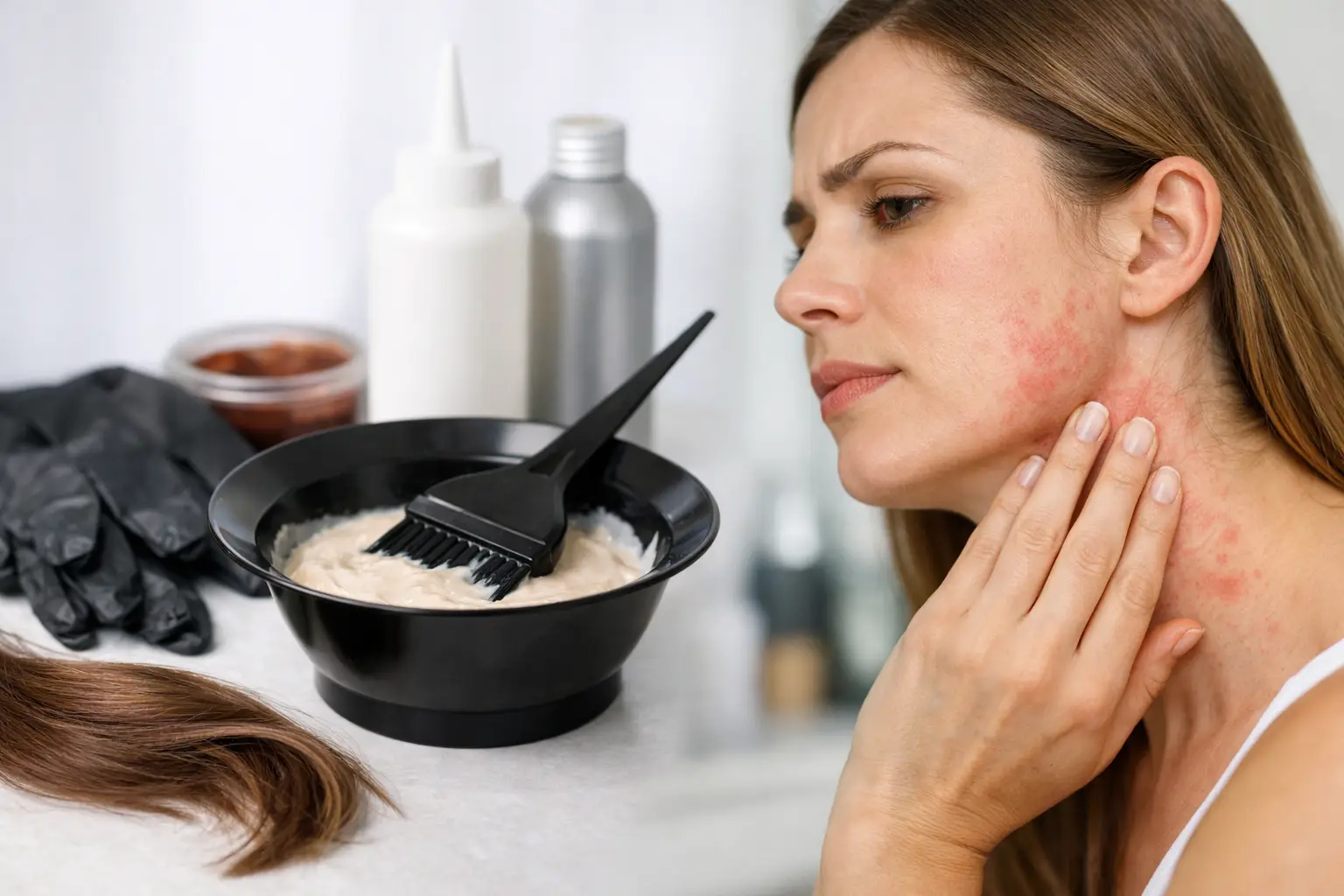
Symptoms often show up within hours, though they can take up to 48 hours to develop. Watch for persistent itching or burning, redness around the hairline, ears, neck, or scalp, a rash, swelling of the eyelids or face, blistering, or weeping skin. The reaction can extend beyond the scalp because dye may come into contact with the skin around the face and neck during application and rinsing.
A mild tingling sensation from a lightening service is not the same as an allergy, but discomfort should still be taken seriously. Bleach and high-lift color can irritate the scalp, particularly if the skin is already dry, scratched, sunburned, or compromised. The key difference is that irritation usually stays local and settles relatively quickly, while an allergic reaction can become more intense, spread, and involve swelling or a rash.
When a hair dye reaction needs urgent care
Do not wait it out if you develop swelling of the lips, tongue, throat, or face, trouble breathing, wheezing, dizziness, faintness, or widespread hives. These can be signs of a serious allergic reaction and need urgent medical attention.
For less severe symptoms, stop using the product and rinse the hair and scalp thoroughly with lukewarm water. Avoid applying more dye, toner, bleach, or strongly fragranced products over irritated skin. A pharmacist or medical professional can advise on the most appropriate treatment, especially if the rash is painful, blistered, spreading, or not improving.
If you believe you have had a true dye allergy, speak with a doctor or dermatologist before coloring again. It is tempting to switch brands and hope for the best, but ingredients can overlap between products. A proper assessment gives you clearer guidance than trial and error.
Why “natural” does not always mean allergy-safe
This is where hair color labels can get confusing. A product described as natural, botanical, gentle, ammonia-free, or vegan may still contain ingredients capable of causing irritation or an allergic reaction. Ammonia-free color can be a good option for some hair goals, but it is not automatically PPD-free or suitable for every sensitive scalp.
Henna also deserves a closer look. Pure henna is different from products sold as black henna or pre-mixed henna color. Black henna may contain PPD, sometimes in high amounts, and can lead to strong reactions. A temporary black henna tattoo can also sensitize someone to PPD, increasing the risk of a reaction when they later use conventional hair dye.
The safest choice depends on your history, the exact ingredients, your desired result, and the condition of your scalp. Covering gray, creating a cool dark brunette, lifting to blonde, and adding a temporary fashion shade all rely on different color systems. There is no one-size-fits-all substitute, which is why an honest consultation matters.
Patch tests are useful, but not foolproof
A patch test checks whether a small amount of a specific color formula causes a visible skin reaction before a full service. It is a sensible precaution, particularly for first-time color clients, anyone changing formulas or brands, and anyone who has experienced sensitivity before. The test must be done with enough time to observe the area properly, usually 48 hours before the appointment, following the product manufacturer’s directions.
Still, a clear patch test does not promise that a full color service will be reaction-free. The scalp is different from the skin used for a patch test, formulas may be mixed differently for different services, and allergies can develop later. Think of the patch test as one layer of risk reduction, not a permission slip to ignore symptoms.
Be upfront if you have eczema, psoriasis, a sensitive scalp, seasonal allergies, asthma, previous reactions to cosmetics, or a history of black henna tattoos. These factors do not always rule out color, but they change the conversation. Your stylist can assess what is realistic, recommend a test where appropriate, and avoid putting color onto a scalp that is actively irritated.
How to lower the risk before your color appointment
Start by protecting your scalp. Avoid scratching, exfoliating, or using harsh scalp treatments just before a color service. It is also wise not to color hair immediately after sunburn, since compromised skin is more likely to sting and react.
Share the full picture during your consultation. Mention any past itching, swelling, rashes, or burning after color, even if it seemed minor at the time. Bring the name of a product you reacted to if you have it, or a photo of the ingredient list. Details help your stylist make informed decisions rather than guessing.
At home, resist the urge to apply leftover box dye after a reaction or to cover it with another shade. Re-exposure can make an allergy worse. This is especially relevant when a color result feels urgent before an event, but healthy skin has to come first. There are times when waiting, treating the scalp, and revisiting your color plan is the most stylish option.
Choosing color with confidence
Professional color is not just about selecting a gorgeous shade. It is also about evaluating your hair history, scalp condition, maintenance expectations, and the products being used. A careful consultation can help identify whether a dimensional balayage, a gloss, strategically placed highlights, or a lower-contact color approach better suits your comfort level and goals.
If you have had a confirmed allergy, do not assume every coloring option is off the table, but do not make assumptions in the other direction either. Your doctor or dermatologist should guide the medical side, while your stylist can help translate that advice into a realistic salon plan. Sometimes that may mean avoiding certain formulas, choosing a different service, or embracing a beautiful cut and style while your scalp recovers.
Great color should leave you feeling polished and confident, not uncomfortable or worried about what may happen next. If you are unsure about a previous reaction or want a personalized conversation before changing your color, book an appointment at Twisted Scissors in Shop 4, 17 Blackwood Street, Mitchelton.