
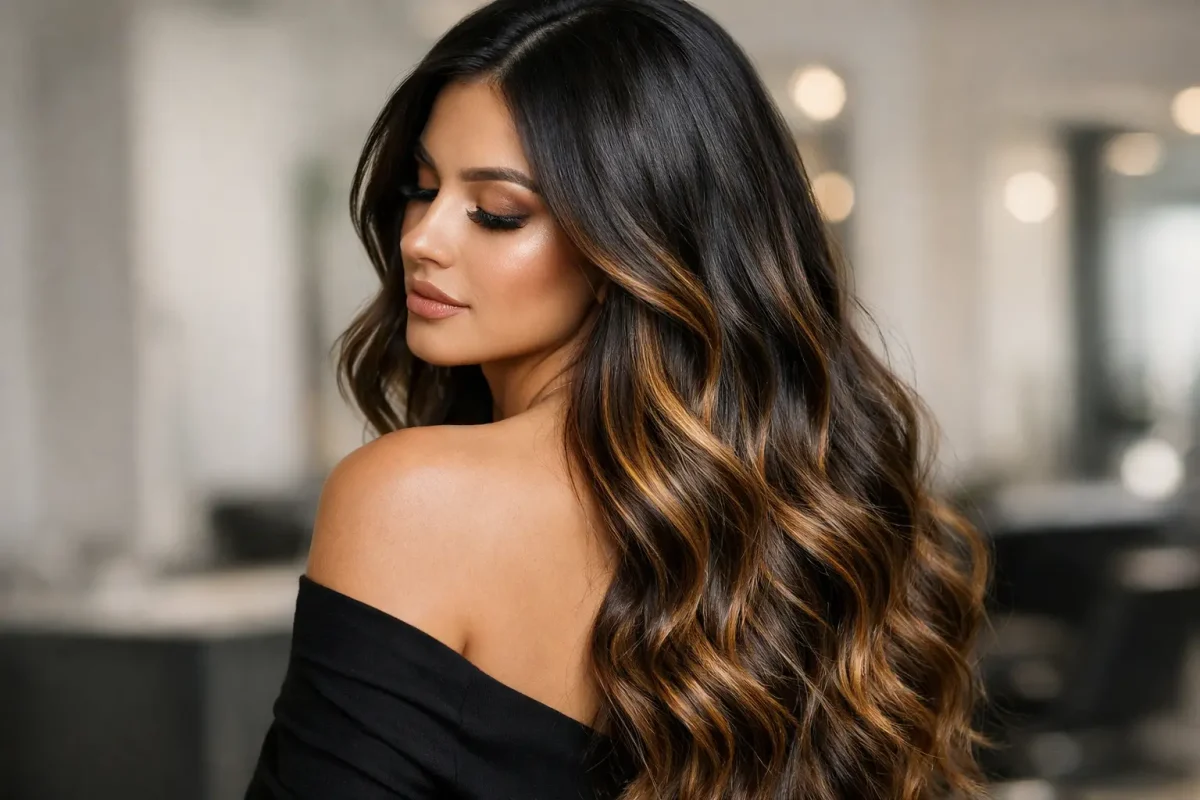
Dark hair can look glossy, rich, and striking on its own – but when it catches the light with the right ribbons of dimension, it shifts from beautiful to seriously head-turning. That is why balayage for dark hair stays so popular. It gives you movement, depth, and brightness without the hard regrowth line that comes with more traditional foil highlights.
For a lot of clients, the appeal is simple. They want a color change that feels noticeable but still wearable. They want something softer than an all-over lightening service, easier to maintain than solid blonde, and more customized than a one-formula color. Balayage sits right in that sweet spot.
Why balayage for dark hair works so well
Balayage is a hand-painted lightening technique designed to create a gradual, blended finish. On dark hair, that matters even more because strong contrast can either look stunning or look stripey very quickly. A well-placed balayage avoids that harsh effect by concentrating brightness where it flatters the haircut, the face shape, and the natural fall of the hair.
The biggest strength of balayage on brunette and black hair is that it can be tailored to how subtle or bold you want to go. Some clients want just a few caramel pieces through the mid-lengths and ends so the hair looks brighter outdoors. Others want a much higher-impact result with beige, mocha, or toffee ribbons that give a fuller transformation. Both count as balayage, but the planning behind them is different.
It is also a smart option if you want lower-maintenance color. Because the lightness is painted in a softer pattern and usually kept off the root area, the grow-out tends to be more forgiving. That does not mean zero upkeep, but it usually means fewer obvious touch-up lines.
The best shades for dark hair
Not every light shade suits every dark base. This is where balayage becomes more technical than a lot of clients expect. The goal is not just to make the hair lighter. The goal is to make it lighter in a way that complements your skin tone, your base color, and the condition of your hair.
For very dark brown hair, warm brunette tones often look the most natural and expensive. Think caramel, cinnamon, chestnut, or golden mocha. These shades reflect light beautifully without pushing the hair too far too fast.
If your natural hair is closer to medium brown, you usually have more flexibility. Honey, beige brunette, soft toffee, and bronde pieces can all work well, depending on how much lift your hair can achieve in one session.
For naturally black hair, patience matters. Trying to force pale blonde in one appointment can leave the hair dry, brassy, or uneven. Rich espresso melt tones, dark caramel, and warm cocoa balayage often give a far more polished result than chasing an icy finish too soon.
Cool-toned balayage can work on dark hair, but it generally takes more control and sometimes more than one lightening session. Ashy pieces sound great in theory, yet dark hair naturally lifts warm. If someone promises a cool blonde balayage on deep brunette hair in a single easy step, that is usually where disappointment starts.
What to expect in the lightening process
This is the part many people do not see on social media. Balayage for dark hair is not just painting on color and rinsing it out. Dark bases contain stronger underlying warm pigment, so lifting them cleanly takes skill, timing, and realistic expectations.
In many cases, your first balayage appointment is about building the foundation. The stylist may focus on breaking up the dark base, adding movement, and creating a balanced pattern of brightness rather than making every section dramatically lighter. That is often the reason the result looks better long-term. Hair that is over-lightened too fast can lose shine and softness, which defeats the whole point.
Toning also plays a major role. Once the hair is lifted, the toner refines the result into something intentional. Without that step, the color can lean too orange, too gold, or simply unfinished. The right toner keeps the balayage flattering rather than brassy.
Balayage vs highlights on dark hair
If you are deciding between balayage and traditional highlights, the difference is mostly about finish and maintenance. Highlights tend to create a more uniform pattern from top to bottom. They can be a great choice if you want a brighter result right from the root area.
Balayage usually looks softer and more lived-in. It creates brightness in a more organic way, with deeper shadow left between lighter sections. On dark hair, that softer transition is often what makes the color look modern instead of blocky.
Neither method is automatically better. It depends on your goal. If you want a bold overall blonde effect, traditional foils or a mix of foils and balayage may be the better route. If you want dimension, softness, and easier grow-out, balayage is often the stronger choice.
Haircuts that make balayage stand out
Balayage looks best when the cut and color support each other. On long layers, the lightened pieces can create a flowing, ribbon-like effect through the ends. On a lob, balayage can add shape and movement, especially around the front. Even on a blunt cut, carefully placed brightness can stop dark hair from looking flat or too solid.
Face-framing pieces are especially popular because they brighten the overall look without needing a full high-contrast service. If you want the effect of being lighter without committing to heavy all-over lightening, that front section can do a lot of work.
Texture matters too. Waves and soft bends show off balayage beautifully because they reveal the placement of the lighter pieces. Straight hair can still look stunning, but the color placement has to be extra clean because everything is more visible.
The maintenance side no one should gloss over
Balayage is lower-maintenance than some color services, but it is not maintenance-free. If your hair is dark and has been lightened, you still need to protect that work.
Purple shampoo is not always the answer for brunettes with balayage. In some cases, a blue-toned formula is more useful for controlling orange warmth. That said, overusing pigment shampoos can leave the hair dull, so they are best treated as maintenance tools, not daily products.
Hydration is non-negotiable. Lightened hair usually needs more moisture and more support to stay smooth and reflective. A good routine with a nourishing conditioner, a weekly mask, and heat protection goes a long way.
Gloss appointments can also make a huge difference between full balayage sessions. If your color starts looking faded, dry, or too warm, a refresh tone can bring it back without needing to re-lighten everything.
When balayage might not be the best option
Sometimes the best advice is not yes right away. If your hair has heavy box dye buildup, very uneven previous lightening, or significant dryness, balayage may need to wait or be adjusted. Dark hair that has been repeatedly colored can lift unpredictably, and that affects how clean and even the final result will be.
If your goal is very light blonde from root to end, balayage may also not be the most efficient path. A different blonding strategy could make more sense. The best color plan depends on your starting point, your hair history, and how much upkeep you are realistically willing to do.
This is also why inspiration photos need a little caution. Two people can both ask for caramel balayage and get completely different results based on natural base color, density, previous color, and haircut. Good consultation matters more than a trendy photo.
How to get the most flattering result
The best balayage for dark hair usually starts with a clear conversation about tone, contrast, and maintenance. Do you want soft dimension or a brighter transformation? Do you like warmth, or do you prefer a more neutral finish? Are you happy coming in for glosses, or do you want something that grows out with minimal salon visits?
Those details shape the result just as much as the lightener does. A flattering balayage should look like it belongs on you. It should fit your lifestyle, your cut, and the amount of styling you actually do at home.
Done well, dark hair balayage does not try to fight the richness of your natural shade. It works with it. That is what gives it that expensive look – contrast in the right places, brightness with intention, and enough softness to keep the hair looking healthy.
If you are ready for balayage for dark hair that feels tailored, modern, and realistic to maintain, book an appointment at Twisted Scissors in Bridgeman Downs.