
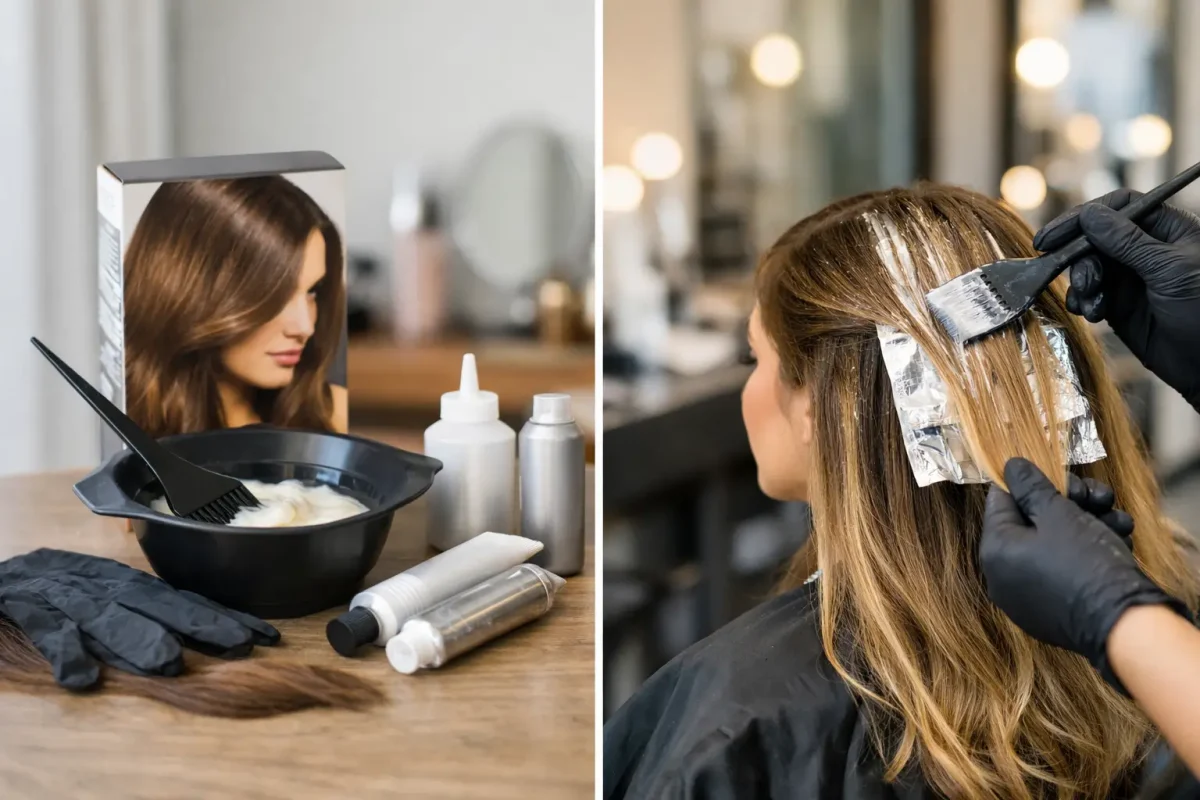
That $12 box can look very convincing when your roots show up right before the weekend. But box dye vs salon color is not just a question of price. It is a question of predictability, hair condition, maintenance, and whether you want a quick patch or a result you actually love in daylight.
For some people, box dye seems like the easy fix. It is on the shelf, it promises glossy color, and the instructions make it sound foolproof. Sometimes it does the job well enough. But if you have ever ended up with bands of color, overly dark ends, hot roots, or dry hair that suddenly feels rougher than usual, you already know there is more going on than the front of the package suggests.
Box dye vs salon color: the real difference
The biggest difference is not that one puts color on hair and the other does not. Both do. The difference is how tailored the formula is, how the hair is assessed before color goes on, and how much control there is during the process.
Box dye is made for mass use. It has to work on a wide range of hair types, starting shades, textures, and conditions. That means the formula is designed as a broad guess. It cannot account for whether your mids are porous, your ends have old balayage, your roots are virgin hair, or your last toner faded unevenly.
Salon color is mixed for the hair in front of the stylist. That sounds simple, but it changes everything. A professional looks at your starting level, undertone, previous color history, gray percentage, texture, porosity, and goal shade. Then the formula, developer strength, placement, and timing are adjusted to suit you.
That customization is why salon color tends to look more even, more dimensional, and more expensive. It is also why it usually grows out better.
Why box dye often goes wrong
Box dye is not automatically disastrous. If someone has healthy, untreated hair and wants to stay close to their natural shade, a basic all-over color can sometimes work out fine. The problem is that most real-life color situations are not that simple.
Previously colored hair does not process the same as natural hair. Dry ends grab pigment faster. Resistant grays need a different approach than soft natural regrowth. Warm undertones can push brunette shades redder than expected, and blonde shades can turn brassy fast.
Then there is the developer. Most box dyes use a one-size-fits-most strength because the brand cannot personalize it. That can mean more lift than you need, more dryness than you expected, or color that deposits unevenly from roots to ends.
One of the most common salon corrections starts with someone repeatedly applying box dye through the full length every time they touch up roots. Over time, the ends become overloaded with pigment. The result is darker mids and ends, flat-looking color, and hair that no longer reflects light the way healthy color should.
If you are trying to go lighter at home, the risk climbs even higher. Color does not lift color well, and boxed lighteners often expose warmth without giving you enough control to balance it properly. That is when orange, yellow, or patchy blonde enters the chat.
What salon color gives you that a box cannot
The first advantage is accuracy. A stylist does not just pick “light brown” or “dark blonde.” They formulate based on depth and tone. That is how you get beige instead of brass, rich brunette instead of flat brown, or copper that looks intentional rather than accidental.
The second advantage is placement. Not every head of hair needs one all-over formula. Sometimes roots need one mix, mids need another, and ends need a gloss instead of permanent color. Sometimes the best result comes from highlights, lowlights, balayage, or a root smudge rather than a single-process application. Those options create movement and softness that box dye cannot realistically replicate.
The third advantage is hair health. Professional color is not magic, but it is more controlled. A stylist can avoid unnecessary overlap, choose a gentler approach where possible, and recommend the right aftercare based on what your hair can handle. That matters a lot if your hair is already dry, bleached, curly, fragile, or color-treated.
The cost question people really mean
When clients compare box dye vs salon color, they are usually asking whether salon color is worth the extra money. That is fair. Box dye is cheaper upfront. There is no denying that.
But upfront cost and actual cost are not always the same thing. If a box dye leaves your hair too dark, too warm, patchy, or damaged, fixing it is usually more expensive than getting it done professionally in the first place. Color correction takes time, product, and care. It is one of the most technical services in a salon for a reason.
There is also the maintenance factor. A professionally chosen shade often fades more gracefully because it was formulated with your base and undertone in mind. That means fewer surprise tones appearing after a few washes and less temptation to keep layering more color over the top.
If your goal is low-maintenance hair, salon color often gives you more strategic options. Soft balayage, lived-in blonding, dimensional brunettes, and well-blended gray coverage can all be designed to grow out more naturally than a flat all-over box shade.
When box dye might be acceptable
There are a few situations where box dye can be a reasonable short-term choice. If you are covering a small amount of gray, staying very close to your natural shade, and your hair has not been previously lightened or heavily processed, you may get a decent result.
Even then, decent and great are not the same thing. The margin for error gets smaller if your hair is long, thick, highlighted, porous, or uneven to begin with. If you care about tone, shine, dimension, and condition, professional color usually wins.
A better middle ground for some people is not necessarily permanent box dye at all. Depending on your goals, a gloss, toner, or targeted root service may be enough. That is one reason salon advice matters. Not every issue needs a major appointment.
When salon color is the smarter move
If you want to go lighter, cover stubborn grays, shift from warm to cool, correct uneven color, or try a fashion shade, salon color is the smarter move. The same goes if your hair has old highlights, previous box dye, bleach, or visible damage.
This is especially true for creative shades and modern dimensional color. Soft ribbons of blonde, blended brunettes, vivid copper, pastel tones, and bold fashion colors all rely on controlled prep and precise placement. The finished look depends just as much on technique as it does on the formula.
A salon is also the right place if your hair matters to you beyond the next two weeks. Good color should work with your cut, your skin tone, your maintenance habits, and your lifestyle. It should still make sense after a few washes, not just for the first mirror selfie.
How to decide what is right for your hair
Start with honesty. What is your hair history over the last two years? Not just your ideal shade, but every box, gloss, bleach session, highlight, and toner. Hair keeps receipts.
Then think about your actual goal. Are you trying to hide regrowth for now, or do you want a polished result that feels current and flattering? Are you happy with one flat shade, or do you want dimension and softness? Do you want the cheapest option today, or the least stressful option over the next few months?
That is usually where the answer becomes clear. If the goal is quick coverage and your hair is simple to work with, box dye may feel tempting. If the goal is beautiful color with fewer surprises, salon color is usually the better investment.
One more thing matters here: trust. A good color appointment is not about being talked into something bigger than you need. It is about getting the right service for your hair, whether that is a full transformation or a subtle refresh.
Hair color should feel exciting, not like a gamble. If you want personalized advice and a result that suits your hair, skin tone, and maintenance routine, book an appointment at Twisted Scissors in Bridgeman Downs.