
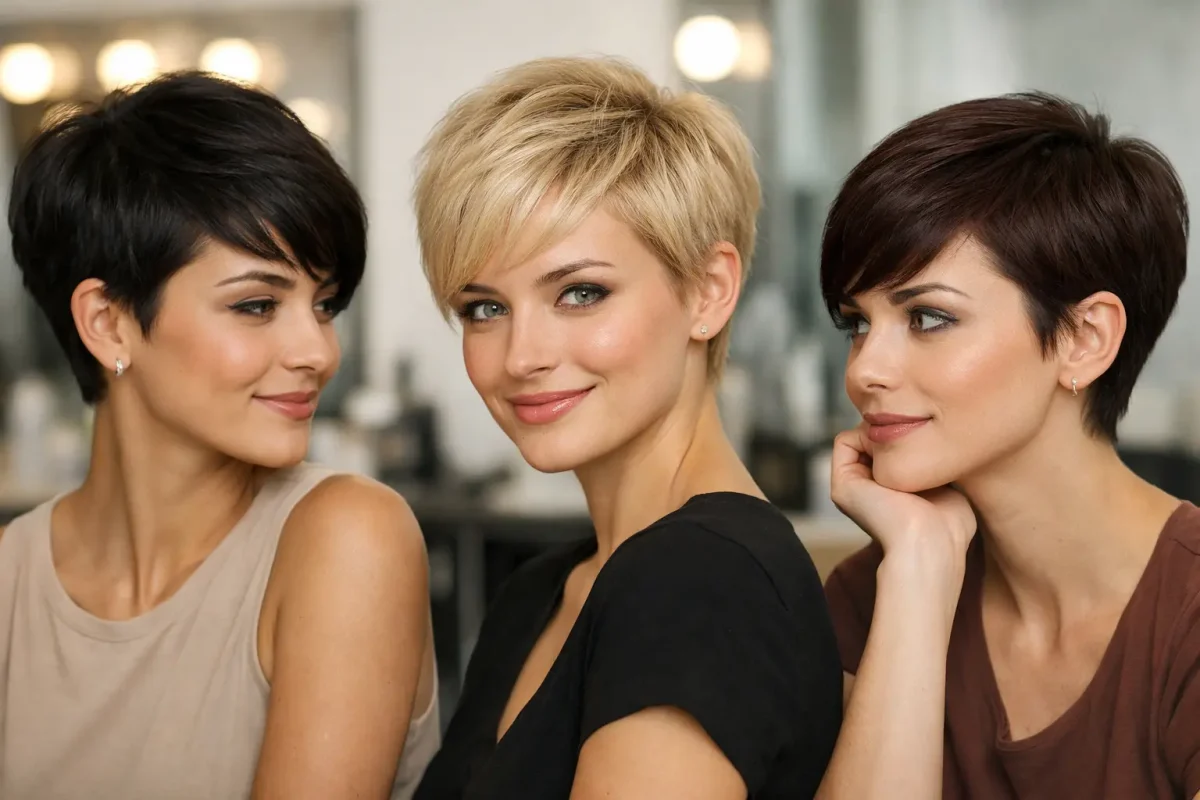
A pixie cut can make your cheekbones look sharper, put your eyes front and center, and turn a daily styling routine into something much quicker. It can also feel like a big change when you are used to having length to hide behind. Knowing how to choose a pixie cut comes down to more than face shape. Your hair texture, growth patterns, styling habits, and the version of yourself you want to see in the mirror all matter.
Start With the Shape You Want to Create
Face shape is a helpful starting point, not a rulebook. A well-cut pixie is customized through the length at the crown, softness around the ears, fullness at the sides, and the direction of the bangs. The aim is not to force your face into a particular category. It is to create balance while highlighting the features you love.
If your face is rounder, a pixie with height through the crown and a little extra length on top can create a more elongated effect. A soft side-swept bang can also break up width at the cheeks without making the cut feel severe. Very close sides can look striking, but a stylist may leave more softness around the temples if you prefer a gentler finish.
For oval faces, there is plenty of flexibility. You might suit a polished, close-cropped pixie, a textured crop with piecey bangs, or a longer pixie that can tuck behind the ears. Square or heart-shaped faces often look great with texture, movement, and softer edges around the hairline. A wispy fringe or longer pieces near the jaw can balance a stronger forehead or jawline.
The best way to approach face shape is to talk about what you want to emphasize. Love your eyes? Consider a textured fringe. Want to show off your neck and earrings? A tapered nape can be beautiful. Prefer a softer, less exposed feeling? A longer pixie with sideburn detail and sweeping bangs may be the better first step.
How to Choose a Pixie Cut for Your Hair Texture
The same pixie reference photo can behave very differently from one head of hair to another. Fine hair often benefits from strategic layering that creates lift without removing too much density. A blunt-looking perimeter with soft internal texture can make fine hair appear fuller, especially through the crown.
Thick hair can carry a dramatic pixie beautifully, but it may need thoughtful weight removal to avoid a bulky, helmet-like shape. The right technique keeps the cut light and touchable while retaining enough structure for it to sit well between appointments. If your hair is coarse, a slightly longer pixie can offer more control and prevent the ends from springing outward.
Naturally wavy or curly hair brings a different kind of personality to a pixie. Rather than fighting the texture, choose a shape that lets it move. A curly pixie with longer layers on top can look effortlessly modern, but the length needs to account for shrinkage when the hair dries. Ask for the cut to be assessed in its natural texture, not only when it is blown smooth.
Growth patterns matter just as much. A strong cowlick at the front or crown is not a reason to skip a pixie, but it should guide the design. Working with the natural direction of your hair usually produces an easier, better-looking result than trying to force it flat every morning.
Be Honest About Your Styling Routine
Short hair is often described as low-maintenance, but that depends on the pixie you choose. It may take less time to wash and dry, yet a sharply defined crop can need more frequent salon visits to keep its shape. A soft, textured pixie is generally more forgiving as it grows, while an undercut or tightly tapered style can look noticeably different after a few weeks.
Think about what you genuinely enjoy doing in the morning. If you want to wash, add a little product, and go, ask for a cut that sits well with minimal effort. If you like styling your hair and enjoy changing the finish, a longer pixie gives you more options. You can wear it sleek and tucked one day, then add volume and texture the next.
Your product comfort level matters too. Most pixies look their best with a small amount of styling support, whether that is a lightweight mousse for lift, a cream for softness, or a matte paste for separation. A good stylist can show you exactly how much to use. With short hair, a pea-sized amount often goes much further than expected.
Choose Your Length With the Grow-Out in Mind
There is no single pixie cut. A cropped French-inspired style, a classic short-back-and-sides cut, a long pixie, and a shaggy bixie all sit under the same broad label, yet they create very different looks.
A longer pixie is an excellent option if you want a noticeable change without going ultra-short immediately. It typically has enough length around the face to tuck behind the ears, with a softer nape and more movement through the top. It also offers a smoother transition if you decide to grow it into a bob later.
A shorter pixie makes more of a statement. It can feel fresh, polished, and wonderfully freeing, particularly if you are ready to showcase your facial features. The trade-off is that the shape is more precise, so regular trims are part of keeping it looking intentional.
When discussing length, do not focus only on the first week after your appointment. Ask how the cut will look at four, six, and eight weeks. A skilled stylist can build in a grow-out plan from the beginning, so your hair evolves gracefully rather than simply losing its shape.
Think About Bangs, Sideburns, and the Nape
These smaller details have a huge impact on whether a pixie feels like you. Bangs can be micro-short and editorial, soft and feathered, or long enough to sweep across the forehead. Longer bangs offer versatility and can make a first pixie feel less exposing. Short bangs are bolder and can create a striking frame around the eyes.
Sideburns can be close and clean, softly tapered, or left longer to create definition near the cheekbones. At the nape, you may prefer a neat taper, a softer natural hairline, or a subtle undercut. Bring these details into the consultation, because they change both the overall mood and the upkeep of the cut.
Use Color to Give Your Pixie More Dimension
A pixie is one of the best cuts for showing off beautiful color work. With less length, highlights, tonal shifts, and bold shades are easier to see. A soft root melt can add depth to fine hair, while delicate face-framing brightness brings attention to the eyes. Rich brunette dimension, warm copper, icy blonde, vivid fashion color, and pastel tones can all transform the mood of the same basic shape.
Color should support the cut rather than compete with it. Heavily textured layers often look especially good with dimensional color because the movement catches the light. If you are going very short after a major color service, your stylist can also assess the condition of the ends and create a plan that keeps your hair looking healthy.
Make Your Consultation Specific
Reference photos are useful, but bring more than one. Choose images that show the front, side, and back of cuts you like, plus one or two examples of what you do not want. Tell your stylist whether you want polished, playful, soft, edgy, classic, or deliberately undone. Those words are more useful than simply saying you want something short.
It also helps to mention how often you are comfortable booking trims, whether you wear glasses, how you usually part your hair, and any areas you tend to hide. Your stylist should assess your texture, density, natural movement, and face-framing preferences before recommending a shape. The right pixie is not copied from a photo. It is built around you.
A pixie cut should feel like a choice that makes getting ready more exciting, not a style you have to negotiate with every morning. Book an appointment at Twisted Scissors in Shop 4, 17 Blackwood Street, Mitchelton.