
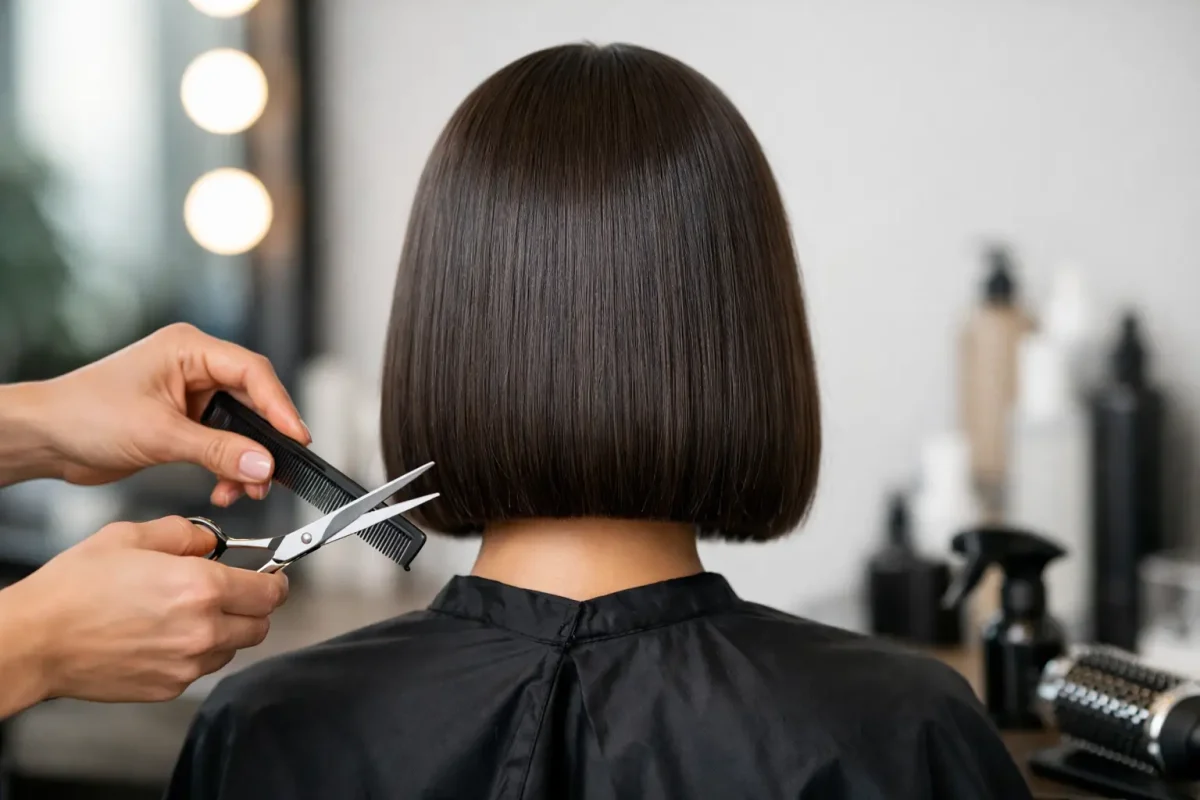
A blunt cut only works when the line looks intentional. Whether you wear a jaw-length bob, a collarbone lob, or long hair with a clean perimeter, blunt cut maintenance tips make the difference between a polished, high-fashion finish and ends that start to look uneven, bulky, or tired.
The appeal of a blunt cut is its precision. There are no heavily feathered ends to disguise dryness or a missed trim. That strong, solid edge puts the focus directly on the condition of your hair, your styling habits, and the quality of the original cut. The good news is that maintaining it does not need to mean spending every morning with a round brush and heat tools. A few smart habits will keep the shape looking fresh until your next appointment.
Blunt Cut Maintenance Tips That Protect the Shape
The most reliable way to maintain a blunt cut is to book regular trims before the ends begin to split. For most clients, that means every six to eight weeks. If your hair is fine, lightened, heat-styled often, or prone to breakage, six weeks is usually the better choice. Strong, healthy, naturally low-maintenance hair may hold its line closer to eight weeks.
Waiting too long can change the whole look of the cut. Split ends creep upward, creating a softer and more see-through perimeter. Once that happens, more length may need to come off to restore the clean edge you wanted in the first place. A small, consistent trim is often the easiest way to keep your length while protecting the style.
Avoid at-home trimming unless you are dealing with a genuine emergency and understand that a quick fix can affect the balance of the shape. Blunt lines are less forgiving than layered cuts. Even a tiny uneven section can stand out, especially when your hair is straightened or tucked behind the ears.
Keep Your Ends Healthy Between Appointments
A blunt cut looks fullest when the ends are smooth and hydrated. This is particularly true for a one-length bob or lob, where dry ends can make the cut appear wider, rougher, or thinner than it really is.
Use a shampoo and conditioner suited to your hair type, rather than choosing products based only on a trend or a fragrance. Fine hair often needs lightweight moisture so it does not collapse at the roots, while thick, coarse, curly, or color-treated hair may benefit from richer conditioning. Apply conditioner mainly through the mid-lengths and ends, where hair needs it most.
After washing, press water out with a soft towel or microfiber wrap instead of rubbing. Rough towel drying lifts the cuticle and can create frizz around a crisp shape. Follow with a leave-in conditioner or a small amount of lightweight serum on the ends. The goal is softness and shine, not a coated or greasy finish.
Heat styling needs a little strategy
Blunt cuts often look beautiful with a smooth blowout, a sleek flat-iron finish, or soft bends through the mid-lengths. Heat can help create that glossy, deliberate look, but repeated high temperatures are one of the fastest ways to compromise the ends.
Always use heat protectant before blow-drying, curling, or straightening. If you use a flat iron, work with fully dry hair and take controlled sections rather than passing over the same piece repeatedly. One slower, precise pass at a sensible temperature is kinder to your hair than several rushed passes at maximum heat.
If your ends begin to feel stiff or look dull, give them a few lower-heat days. Air-dry with a smoothing cream, create an easy tucked-behind-the-ear style, or add texture with heatless methods. A blunt cut does not need to be pin-straight every day to look good.
Style for Movement Without Losing the Line
One common concern with a blunt cut is that it can feel heavy or flat. The answer is not always more layers. Often, it is about changing the way you dry and style your hair while keeping the perimeter intact.
For a smooth finish, direct the blow-dryer downward along the hair shaft and use a nozzle attachment if you have one. This helps lay the cuticle flatter and gives the ends a neater appearance. A paddle brush is excellent for sleek, straightforward styling, while a medium round brush can add a little bend and lift without turning the cut into a full-volume blowout.
If you prefer a more relaxed look, add loose waves through the middle of the hair and leave the ends straighter. This is especially flattering on a blunt bob or lob because it keeps the bottom line visible. Curling the ends under too tightly can make a sharp cut look dated or overly rounded, while curling every inch can obscure the shape completely.
For short blunt cuts, pay attention to your part. A center part emphasizes symmetry and creates a modern, graphic effect. A softer side part can add movement and reduce the feeling of weight at the front. There is no single correct choice. It depends on your face shape, natural growth patterns, and whether you want a more structured or effortless finish.
Sleep and Everyday Habits Matter More Than You Think
A crisp haircut can lose its polish through everyday friction. Cotton pillowcases, tight elastics, high-collar clothing, and constant hair tucking can all create knots and stress at the ends.
If you wake up with flattened roots or bent ends, try sleeping on a satin or silk-style pillowcase and loosely securing longer hair with a soft scrunchie. Avoid tight topknots, especially when hair is wet, as they can leave a stubborn bend across a blunt line. For bob and lob lengths, simply brushing your hair through before bed and keeping it loose may be enough.
Be mindful of the way you detangle, too. Start at the ends and gradually work upward with a wide-tooth comb or gentle brush. Pulling from the roots through a knot puts pressure on the very ends you are trying to preserve. If your hair tangles frequently, a leave-in detangler can be more useful than repeatedly brushing dry hair.
Color Can Change How a Blunt Cut Behaves
A blunt cut and fresh color are a striking combination. Glossy natural tones make the line look especially healthy, while balayage, highlights, fashion shades, and high-contrast color placement can draw attention to the shape. But color services also need a thoughtful maintenance routine.
Lightening can leave hair more porous, which may make the ends feel drier and cause the perimeter to lose its sharp appearance sooner. Use salon-recommended care for color-treated hair, keep heat protection non-negotiable, and do not overuse purple or blue toning products unless your stylist has advised it. Toning shampoos are useful, but too much can leave some hair types feeling dry or dull.
If you have a bold color, remember that frequent washing affects vibrancy as well as hair condition. Washing less often when practical, using cooler water, and choosing color-safe products can help your shade stay brighter while keeping the cut looking smoother.
Know When Your Cut Is Asking for a Refresh
Your blunt cut is ready for attention when the ends no longer sit in a clear line, the back starts to flip out unpredictably, or your usual styling routine suddenly takes much longer. You may also notice that your hair feels heavier at the bottom but thinner at the very edge. These are signs that growth, wear, or damage is changing the balance of the cut.
Do not feel you need a major restyle every time. A maintenance appointment can simply refine the perimeter, rebalance the weight, and bring back that clean finish. If you are thinking about growing out a bob or changing from a blunt lob to something softer, a stylist can adjust the shape gradually so it remains flattering at every stage.
The best blunt cut is not one that looks perfect only when you leave the salon. It is one tailored to your texture, your styling routine, and the amount of upkeep you genuinely enjoy. Book an appointment at Twisted Scissors in Shop 4, 17 Blackwood Street, Mitchelton.
[…] go a little longer between appointments if the ends remain healthy. If you are growing your hair, small, consistent trims are usually more productive than waiting until the ends feel thin and then needing a major […]