
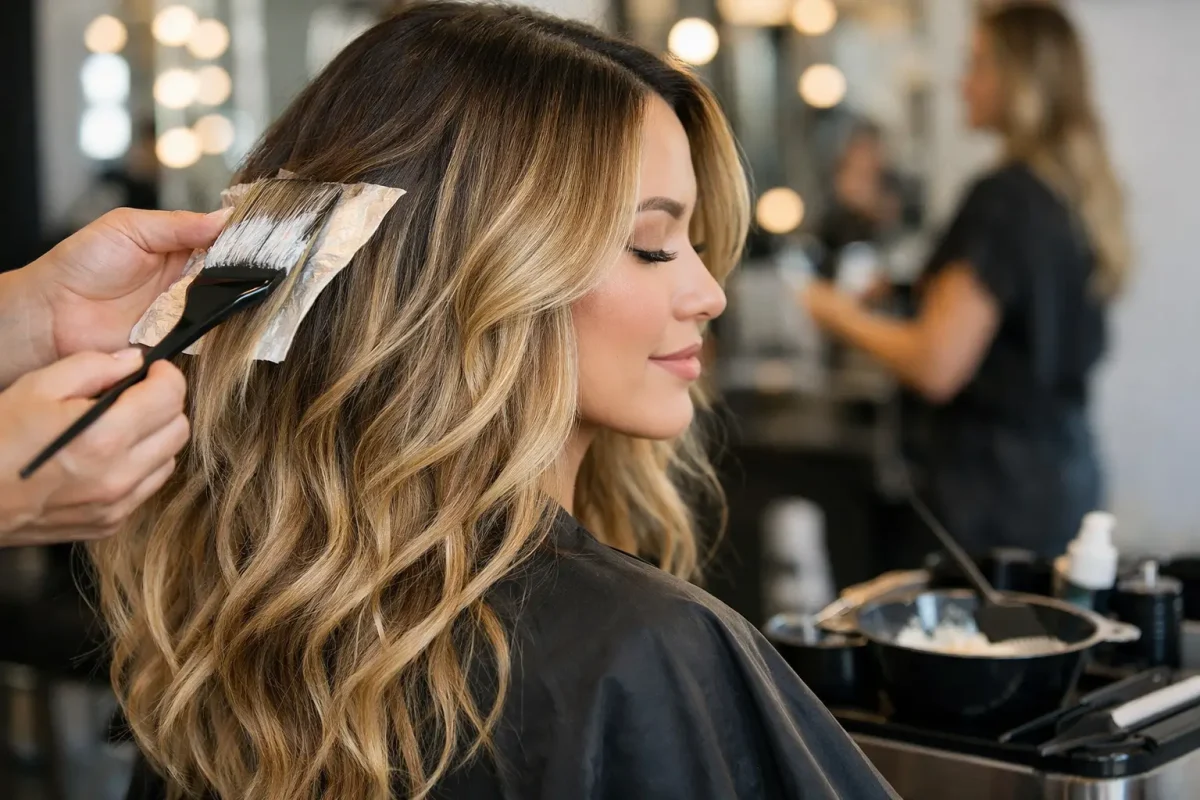
Fresh color should not leave you counting down the days until obvious regrowth appears. The appeal of a great McDowall balayage salon is color that looks bright, dimensional, and deliberately placed from day one, then continues to grow out softly between appointments. Whether you want a barely-there sunlit effect or a noticeably lighter transformation, balayage is about creating color that works with your hair, your features, and your actual routine.
Balayage is often described as low-maintenance, and it can be. But low-maintenance does not mean no maintenance, and it does not mean every inspiration photo requires the same process. The best result starts with an honest conversation about where your hair is now, how light you want to go, and how much time you want to spend maintaining the look.
What makes balayage look natural?
Balayage is a hand-painted highlighting technique. Rather than applying lightener in a uniform pattern from the roots to the ends, a stylist places brightness where it will create movement and softness. The color is usually more diffused at the root, with stronger lightness through the mid-lengths and ends.
That placement is why balayage can look so effortless. It can mimic the subtle variation found in naturally lightened hair while still being customized. A softer face frame can lift the complexion. Fine ribbons through the crown can make the hair appear fuller. Brighter ends can add impact without creating a solid block of blonde.
The technique is not limited to blonde. Brunettes can add caramel, honey, cinnamon, or cool beige dimension. Darker hair can wear rich espresso-to-mocha transitions. Clients who prefer cooler tones may choose ashier beige or smoky brown, while warmer golden tones can make the hair look especially luminous. The right direction depends on your natural base, previous color, skin tone, and personal style.
Choosing a McDowall balayage salon experience that fits your hair
A balayage appointment should feel personal, not like selecting a color from a menu and hoping for the best. Before any lightener is mixed, your stylist needs to understand your color history. Permanent color, dark box dye, previous highlights, toners, smoothing treatments, and even a recent swim-heavy holiday can affect how hair lifts.
This matters because hair does not always lighten evenly. Previously colored lengths may reveal warmth, while untouched roots may lift more quickly. Trying to force both areas to the same pale shade in one session can compromise the hair’s condition. Sometimes the smartest plan is a gradual lightening journey that builds brightness over two or three appointments.
That approach is not settling for less. It is how beautiful color stays beautiful. Healthy hair reflects light better, holds toner more evenly, and feels more polished when styled. If a dramatic change is possible safely, your stylist can map out the service. If it needs a staged approach, you should leave knowing what can be achieved now and what the next appointment will bring.
Your inspiration photo is a starting point
Bring photos you love, but look beyond the overall shade. Notice the depth at the roots, the amount of brightness around the face, and whether the model’s starting color and hair texture resemble yours. A photo of icy blonde balayage on naturally light brown hair may need a very different process on dark, previously colored hair.
A useful consultation also covers what you do not want. If you dislike warmth, want to keep your natural depth, or prefer no bold money piece around the face, say so. Clear details help create a result that feels like you rather than a copy of someone else’s color.
Balayage, highlights, and ombre are not the same thing
These services are often grouped together, but their finish can be quite different. Traditional foiled highlights tend to create more consistent lift from closer to the root. They are a strong choice when you want an overall brighter blonde look, more even coverage, or a tighter highlight pattern.
Balayage offers a softer, more painted effect. It is ideal for people who like dimension and a grown-in root area, though it can still be bold when enough brightness is added. Many modern looks use a combination of hand painting and foils. The technique matters less than the finished result, and a stylist may use both to achieve brightness without losing softness.
Ombre usually has a more noticeable transition from darker roots to lighter ends. It can be subtle and blended or deliberately high-contrast. If your goal is a seamless, natural-looking lift throughout the hair, balayage may be the better fit. If you love a darker top and a clear gradient toward lighter ends, ombre could suit your style more closely.
The maintenance reality behind lived-in color
One of balayage’s biggest advantages is the softer regrowth line. Because the color is blended away from the scalp, you are not tied to frequent root touch-ups in the same way as all-over blonde or traditional highlights. For many clients, a full balayage refresh every three to six months is realistic.
The exact timing depends on the level of brightness, the way your hair grows, and how crisp you want the tone to look. A bright blonde may benefit from a toner and gloss appointment between larger color services. A warmer brunette balayage can often be refreshed less frequently. Face-framing pieces may also be touched up sooner if you love that brighter pop around the front.
At home, the priorities are simple: protect the tone, protect the condition, and protect your investment. Use salon-quality shampoo and conditioner suited to colored hair. If your balayage has been lightened significantly, alternate a moisturizing mask with a bond-supporting treatment as recommended for your hair. Heat protectant is essential before blow-drying, curling, or straightening, especially on lighter ends.
Purple shampoo can help some blondes keep unwanted yellow tones under control, but it is not an everyday fix for everyone. Overuse can leave porous hair looking dull or slightly violet. If your color is turning brassy quickly, a professional toner may be more effective than repeatedly adding stronger purple products at home.
Why a cut and finish complete the color
Balayage is designed to show movement, so the cut and styling make a real difference. Long layers can emphasize ribbons of brightness, while a blunt lob can make a softly blended color look modern and polished. A textured shag can bring out contrast and dimension, particularly with warmer balayage tones.
The finish is also where you see the placement properly. Soft waves reveal the depth between darker and lighter sections, while a smooth blowout shows off the blend and shine. Your stylist can recommend a shape that complements the color and explain how to recreate a version of the finish at home without overworking your hair.
Make your appointment work harder for you
Arrive with clean, dry hair if requested, and avoid heavy dry shampoo or root cover-up products beforehand. Tell your stylist about every color process your hair has had, including at-home products. This is not about judgment. It is essential information for choosing the safest formula and setting realistic expectations.
If you are considering a major change, allow enough time. Color correction, first-time lightening, and long or thick hair can require a longer appointment than a standard refresh. Rushing the process is rarely worth it. A thoughtful appointment gives your stylist time to blend, tone, treat, and finish the hair properly.
The most flattering balayage is not necessarily the palest or most dramatic version on social media. It is the one that gives you the brightness you want while keeping your hair feeling healthy, wearable, and unmistakably your own. Book an appointment at Twisted Scissors in Bridgeman Downs for a balayage plan tailored to your hair and style.