
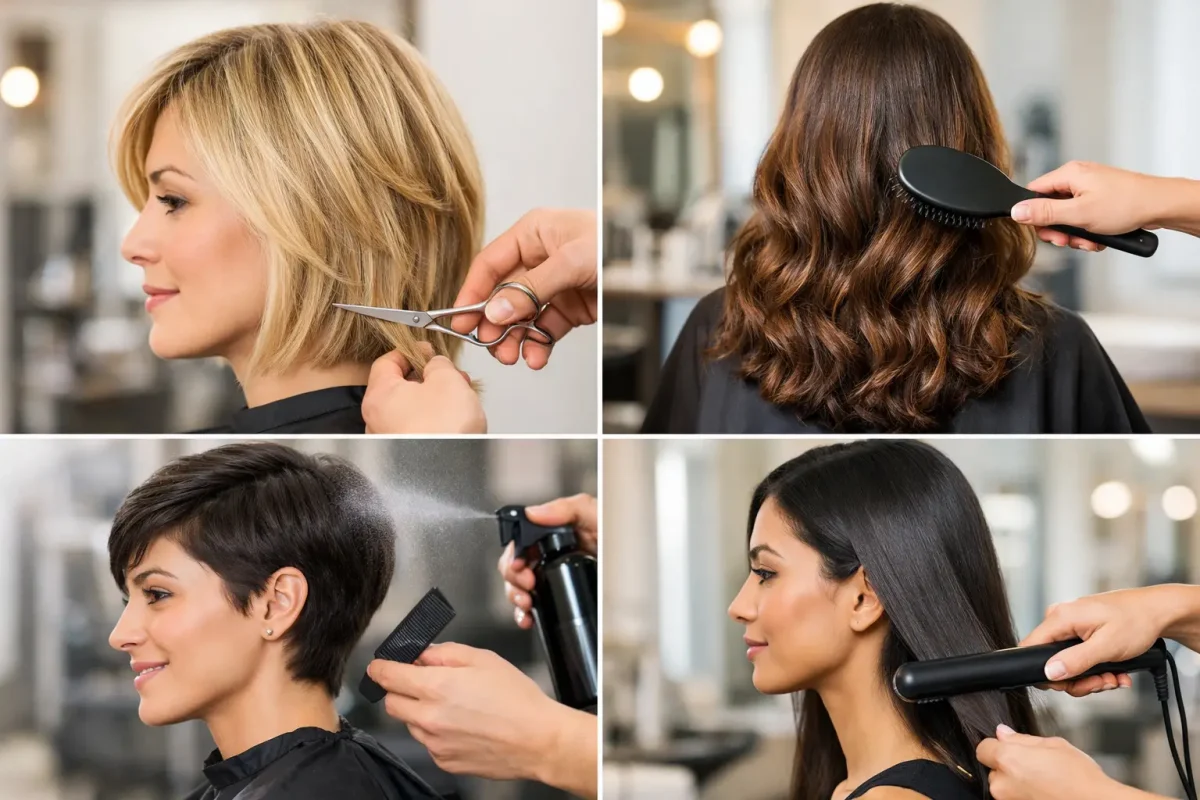
A great haircut should still look intentional three weeks after your appointment, not only when you leave with a fresh blowout. This women’s haircut maintenance guide is about protecting the shape your stylist created, working with your natural texture, and knowing when a quick at-home adjustment is helpful versus when it is time to sit back in the salon chair.
The right maintenance routine is not the same for every cut. A sharp bob needs different attention than soft layers, and a short pixie has a much tighter timeline than long hair with subtle face-framing. Your hair density, growth pattern, color history, styling habits, and how much time you genuinely want to spend in the morning all matter.
Start With the Maintenance Level of Your Cut
Before booking your next trim, look at the structure of your haircut. Styles with crisp perimeter lines show growth quickly. A blunt bob, micro bangs, or close-cropped pixie can lose its intended shape in a matter of weeks because there is very little softness to disguise uneven growth.
Layered cuts are usually more forgiving. Long layers, shags, and lived-in lobs can grow out beautifully when the internal shape is right, although they can start to feel heavy, flat, or disconnected if trims are delayed for too long. The goal is not to cut hair as often as possible. It is to refresh the shape before it stops working for you.
A realistic trim schedule
Most short, precision-led cuts benefit from a reshape every four to six weeks. This includes pixies, sharp bobs, cropped shags, and bangs that sit in a very specific place. If you love a polished, graphic line, staying close to this schedule makes daily styling far easier.
Bobs and lobs often sit comfortably at six to eight weeks. The exact timing depends on whether your bob is blunt and structured or textured and relaxed. Fine hair may need earlier appointments because the ends can quickly look wispy, while thick hair may become bulky through the sides or nape as it grows.
For medium-to-long layered hair, eight to 12 weeks is often a good starting point. If you heat-style frequently, wear lightened color, or are growing out a previous cut, you may need a trim sooner to prevent split ends from traveling upward. On the other hand, healthy hair with a soft, low-maintenance shape can sometimes go longer without compromising the look.
Bangs are the exception. They grow fast because they are front and center. A professional bang trim between full appointments can keep them out of your eyes without changing the rest of your haircut.
Wash for Your Scalp, Not a Calendar
Overwashing can leave hair dry, fluffy, and harder to style, especially if it is colored, bleached, naturally textured, or prone to dry ends. But stretching washes too far can create scalp buildup, flatten roots, and make a carefully shaped cut look lifeless. There is no magic number of wash days that suits everyone.
Pay attention to what your scalp does. If your roots look oily and your hair separates into pieces by day two, washing more often may be the practical choice. Use a gentle shampoo focused on the scalp, then apply conditioner mainly through the mid-lengths and ends. If your scalp stays comfortable but your ends are dry, you may be able to wash less frequently and use a small amount of leave-in conditioner or lightweight oil where needed.
Product buildup is another common reason a haircut stops behaving. Dry shampoo, texture spray, hairspray, and smoothing creams can be brilliant styling tools, but too much residue weighs hair down. Use a clarifying wash occasionally when your usual shampoo no longer feels as effective, then follow with a nourishing conditioner or mask. If your hair is heavily lightened or fashion colored, choose products that support your color and ask your stylist how often clarifying is appropriate.
Style the Shape You Already Have
The easiest way to maintain a haircut is to stop fighting it. Your stylist can create a beautiful silhouette, but using the wrong technique at home can flatten volume, pull out texture, or make layers appear uneven.
For bobs and blunt cuts, direct the blow-dryer downward along the hair shaft to encourage shine and keep the ends smooth. A round brush can add bend, but it does not need to create a full salon blowout every day. If your ends flick outward, try drying the root area first, then use low heat to guide the ends under or deliberately style them into a soft, modern flip. Fighting a cowlick with maximum heat rarely works for long. Changing your part or drying the hair in the direction it naturally wants to fall usually works better.
For shags, layered cuts, and textured lobs, a little imperfect movement is part of the appeal. Apply a light mousse, curl cream, or texture product to damp hair, then scrunch or twist selected pieces as it dries. Over-brushing these cuts can make them look puffy rather than piecey. A wide-tooth comb, fingers, or a quick refresh with a curling iron on just a few face-framing sections is often enough.
Short hair responds well to styling products, but quantity matters. Start with a pea-sized amount of paste, cream, or pomade, warm it between your hands, and work it through dry or almost-dry hair. You can always add more. Starting with too much product makes short layers separate and look greasy much faster.
Protect Ends Between Appointments
Split ends cannot be permanently repaired, despite what a label may promise. Treatments can temporarily smooth their appearance and improve softness, but trimming is the only way to remove the split. The best maintenance strategy is limiting the damage that creates them in the first place.
Use heat protectant whenever you blow-dry, curl, or straighten. Keep hot tools at a temperature that suits your hair rather than automatically turning them to the highest setting. Fine, lightened, or fragile hair generally needs less heat than thick, resistant hair. Slow, controlled passes also give better results than repeatedly going over the same section.
At night, loose hair is less likely to tangle and break than hair secured in a tight elastic. A soft scrunchie, loose braid, or low bun can help, particularly for longer cuts. Silk or satin pillowcases may reduce friction for some hair types, although they are not a substitute for a healthy cutting schedule and good heat habits.
If your hair is colored, maintenance becomes a balancing act. Lightened ends may need extra moisture, while roots can still get oily. Rich masks and oils are useful, but place them where the hair is dry rather than coating the scalp. Color-safe care helps preserve your shade, and healthy-looking ends make every haircut look more expensive.
The Women’s Haircut Maintenance Guide to Avoid DIY Regret
Trimming your own hair can be tempting when bangs are touching your lashes or one side seems to flip differently. For a very small fringe adjustment, it may feel harmless, but home cutting becomes risky quickly. Hair shifts as it dries, curly and wavy hair can spring up unexpectedly, and a tiny correction can turn into an uneven line before you know it.
Avoid cutting wet bangs yourself, especially if you wear them textured or have a cowlick. Wet hair looks longer, so the final result can be much shorter than intended. Do not use household scissors either. Their blunt, uneven edge can damage the hair and create a ragged finish.
Instead, use styling to buy a little time. Blow-dry bangs from side to side first to soften a part or cowlick, then direct them into place. For longer fringe, a small round brush or flat iron can create a gentle bend that lifts hair away from the eyes. If the shape is truly gone, a quick professional cleanup is the kinder choice for your hair.
Know When Your Cut Needs Professional Attention
Your haircut is asking for an appointment when styling takes much longer than it used to, the ends feel thin or rough, layers no longer blend, or the silhouette has become too heavy in one area. You may also notice that your usual products have stopped working. Often, the issue is not the product at all. It is simply that the haircut needs its structure restored.
Bring a few notes to your appointment: what has been easy, what has been frustrating, how often you are actually styling, and whether you want to grow your hair out or keep the same shape. This gives your stylist useful direction. A small adjustment to the weight, fringe, face frame, or perimeter can make a familiar cut feel fresh without requiring a dramatic change.
The most maintainable haircut is one that suits your real routine, not the routine you wish you had on a busy weekday morning. Book an appointment at Twisted Scissors in Shop 4, 17 Blackwood Street, Mitchelton.