
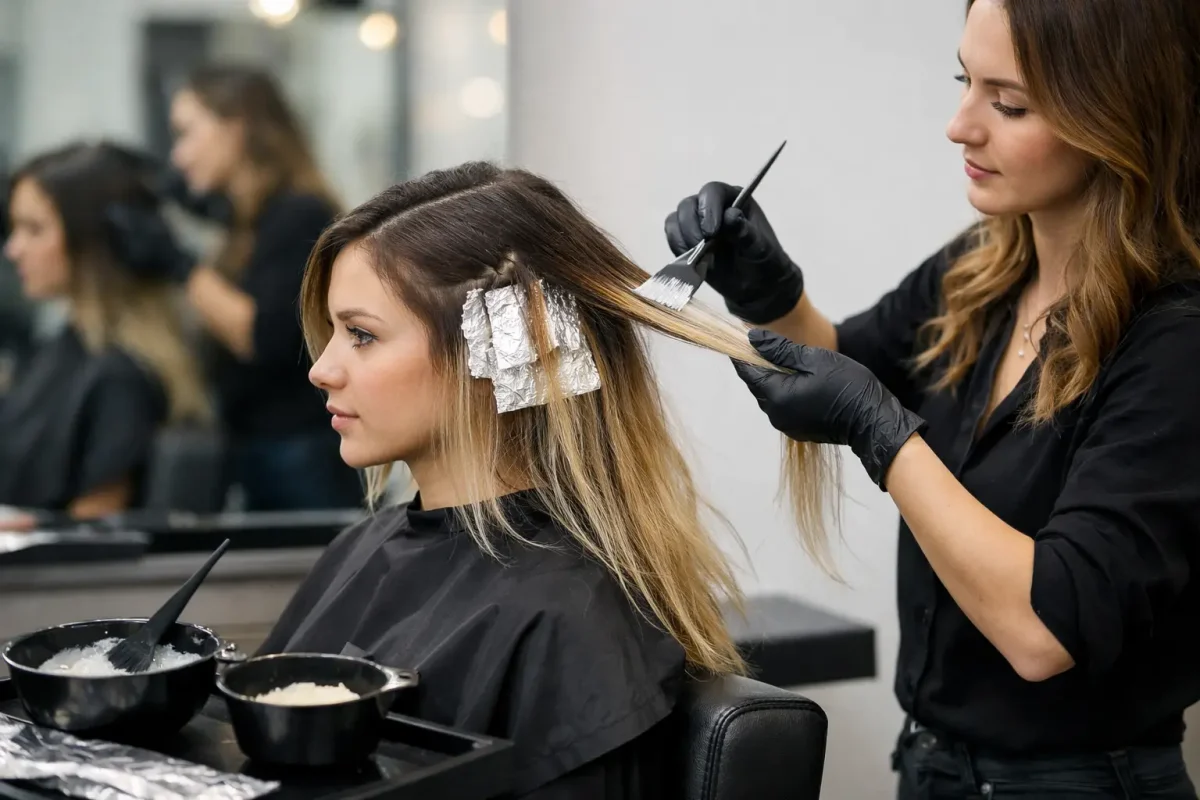
Bad color usually shows up all at once. Maybe your blonde turned yellow, your brunette went too dark, or a DIY shade grabbed patchy through the mids while the ends stayed dull and dry. The salon colour correction process is designed for exactly this kind of problem – not just changing the tone, but working out what went wrong, what your hair can safely handle, and what result is realistic in one appointment.
Color correction is different from a standard color service because it starts with problem-solving. A stylist is not simply applying a prettier shade over the top and hoping for the best. She is looking at the current color, your hair history, porosity, condition, previous box dye or salon work, and the level of correction needed to get you closer to your goal without pushing your hair too far.
What the salon colour correction process actually involves
The salon colour correction process usually begins with a detailed consultation. This is where honesty matters most. If your hair has had permanent dye, toner, bleach, henna, color remover, or repeated heat styling, that history changes the plan. Hair can look one way on the surface and behave very differently once lightener or color is applied.
Your stylist will normally assess a few key things straight away. She will check how dark the artificial pigment is, whether the unwanted tone is warm, muddy, green, or banded, and whether the hair feels strong enough for lifting or needs a gentler approach. She will also look at whether the issue is all over or concentrated in certain areas like the roots, mid-lengths, or ends.
From there, a correction plan is built. Sometimes that plan is simple, like re-toning over faded highlights or softening brassiness with the right gloss. Other times it is much more technical, such as removing built-up dark dye, correcting uneven lift, or blending harsh lines from old bleach work. This is why color correction rarely fits into a one-size-fits-all appointment.
Why color correction can take more than one visit
One of the biggest surprises for clients is that correction is often a staged service. That can feel frustrating if you want a fast fix, but it is usually the reason the end result looks better and the hair stays healthier.
Hair has limits. If it is heavily dyed dark and you want to go significantly lighter, trying to force that change in a single session can lead to breakage, rough texture, or a finish that still looks uneven. In many cases, the smarter option is to lift gradually, refine the tone, rebuild the condition, and then continue at the next appointment.
This is especially true with box dye. Store-bought color often contains dense, stubborn pigment that does not lift in a clean or predictable way. Two people can use the same box and get very different correction needs depending on how often they have reapplied it, how porous their hair is, and what shades were underneath before.
A good stylist will tell you what is possible now, what will need time, and where the trade-offs are. You may be able to get lighter quickly but lose softness and shine, or you may choose a slightly deeper result now to keep the hair in stronger condition.
Common problems a salon color correction can fix
Not every correction means a dramatic transformation. Sometimes the issue is subtle but still bothers you every day in the mirror. Common correction appointments include removing brassiness, fixing patchy color, softening overly dark ends, blending banding, correcting green or muddy tones, and balancing over-lightened blonde.
There is also a big difference between correcting tone and correcting level. Tone refers to the warmth or coolness you see – gold, orange, red, ash, beige, violet. Level refers to how light or dark the hair is. If your hair is the right depth but the wrong tone, that may be fixed with glossing or toning. If it is too dark overall, that usually requires a more involved process.
This is why photos help, but only to a point. A reference image can show the vibe you want, but your current canvas decides how close you can get in one session. A stylist has to work with the hair in front of her, not just the inspiration picture.
The key stages of the salon colour correction process
Most corrections move through a few core stages, even though the formulas and techniques vary from client to client. First comes clarifying the goal. That means deciding whether the priority is lighter, darker, cooler, richer, more even, or simply healthier-looking.
Next comes preparing the hair. In some cases, that involves a detox or clarifying treatment to remove buildup. In others, it means strand testing to see how the hair reacts before committing to a full correction. This step can reveal whether old pigment will budge, whether the hair lifts too warm, or whether fragile areas need to be protected.
Then comes the actual corrective service. Depending on the issue, that may involve lightening selected areas, color balancing, filling hair that has gone too light, toning, root shadowing, lowlighting, or applying a targeted gloss. Correction is often about using multiple techniques in one appointment rather than a single all-over formula.
After that, the stylist refines the result. This is where the color gets polished so it looks intentional rather than simply less wrong. It might mean softening contrast, adjusting brightness around the face, or choosing a tone that suits your skin and maintenance preferences.
The final stage is home care and a maintenance plan. This matters more than many people realize. Corrected hair can fade, shift warm, or feel dry if it is not looked after properly. The right shampoo, heat habits, wash frequency, and follow-up toning appointments can make the difference between a correction that lasts and one that quickly slips backward.
What affects timing, cost, and results
Color correction is usually priced and timed differently from regular color for one reason – it is more technical. The amount of product used, the number of steps involved, the length and density of your hair, and the unpredictability of previous color all affect the appointment.
Long, thick hair with years of dark dye buildup will usually take more time than short hair with a fresh toner issue. Hair that is healthy and evenly colored is also easier to work with than hair that has bands, overlapping bleach, or very porous ends.
Results depend on condition as much as technique. If the hair is compromised, your stylist may need to protect it by adjusting the target shade or spacing out the process. That is not a compromise in skill. It is a sign that the correction is being handled professionally.
How to prepare for a correction appointment
Come in with clean information, not just clean hair. Try to remember what has been used on your hair over the past year, especially permanent color, bleach, toners, and box dye. If you have photos of your hair in natural light before the problem started, those can be useful too.
It also helps to be clear about what you do not like. Saying your hair feels too warm, too flat, too dark on the ends, or stripey through the front gives your stylist more to work with than simply saying you hate it. The more precise the problem, the better the plan.
Be open to a result that suits your hair now, not just your ideal hair later. Sometimes the best first correction is a soft, blended brunette, a cleaner beige blonde, or a more dimensional finish that buys time for the hair to recover before the next step.
Aftercare matters just as much as the service
Freshly corrected hair needs a little respect. Gentle cleansing, less heat, and color-safe products help preserve tone and condition. If your stylist recommends moisture, bond support, or a purple or blue shampoo, that advice should match your hair’s specific needs rather than follow a trend.
It is also worth adjusting expectations around washing. If you shampoo too often, expensive corrective toning can fade quickly. If you use very hot tools every day without protection, dryness and dullness show up faster, especially on previously lightened hair.
Good correction should make your hair look more balanced, more intentional, and easier to wear. Great correction also gives you a maintenance plan that feels realistic for your lifestyle.
If your color is not sitting right and you want expert advice without the guesswork, book an appointment at Twisted Scissors in Bridgeman Downs.