
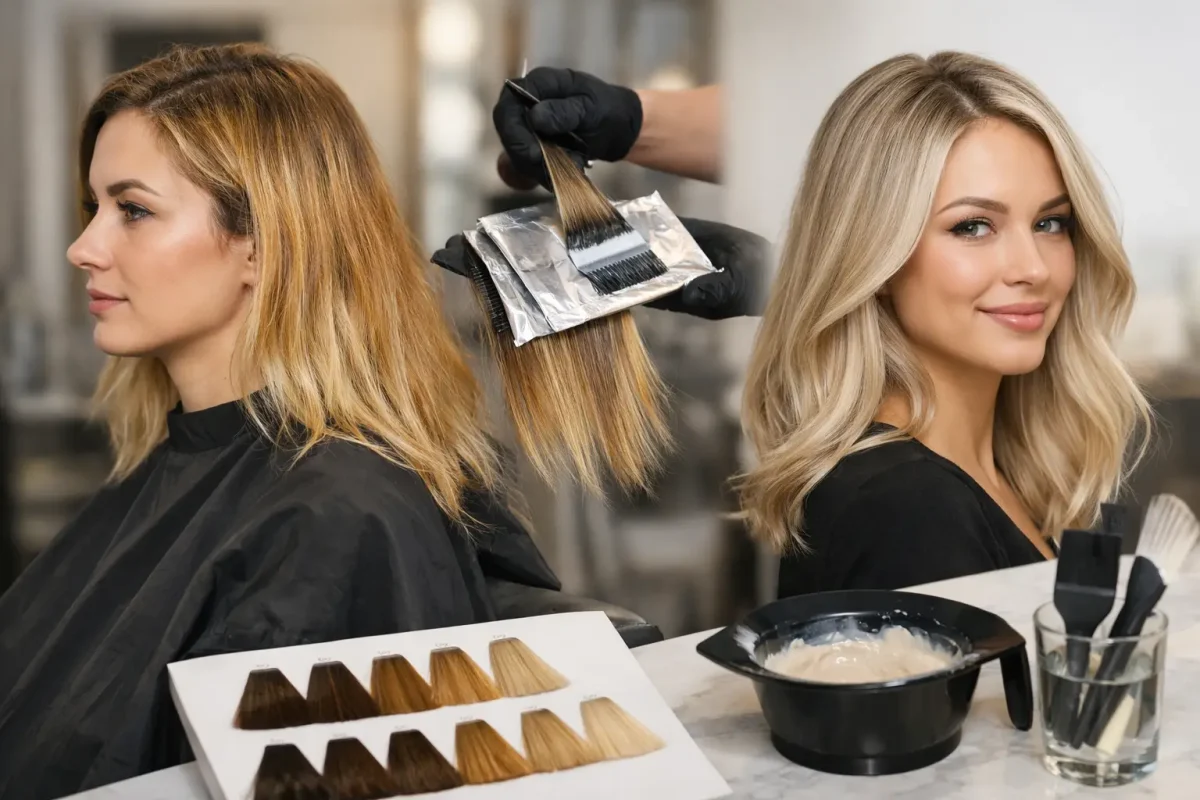
You usually know something is off before you can explain it. Maybe your blonde turned yellow-orange a week after a DIY gloss. Maybe your roots grabbed too dark, your mids stayed warm, and your ends look flat. A good hair color correction guide starts there – with the reality that correcting color is rarely one quick fix, and the best result depends on what is already on your hair.
Color correction is one of those salon services that sounds simple from the outside and highly technical once you are in the chair. That is because stylists are not just changing color. They are reading your hair history, spotting uneven porosity, working around old dye, and deciding how far your hair can safely go in one appointment. If you want a result that looks polished and still feels healthy, that process matters.
What color correction really means
Hair color correction is the process of fixing unwanted tone, uneven color, excessive darkness, patchiness, banding, or results that do not match your goal. Sometimes that means removing artificial pigment. Sometimes it means adding missing warmth back in before going darker. Sometimes it is less about lifting and more about balancing what is already there.
This is why color correction is not the same as a standard all-over color or toner appointment. Corrective work is custom. Two people can walk in with what looks like the same brassy blonde and need completely different solutions because one has old box dye underneath and the other has over-processed porous ends.
The biggest mistake people make is assuming the visible problem is the whole problem. Orange hair might need toning, but it might also need more lift first. Hair that looks too dark might need a remover, or it might need a softer approach with highlights to break up the density. The plan changes with the condition of the hair and the chemistry sitting on it.
A practical hair color correction guide for common problems
The most common correction issue is unwanted warmth. Brassiness can show up as yellow, gold, orange, or red depending on how dark the starting level was and how much lift the hair actually achieved. Toning can help, but only if the hair is light enough first. If there is too much underlying warmth left in the hair, toner alone will not magically turn orange into a clean beige blonde.
Banding is another big one. This is when you can see obvious stripes or sections through the hair – often darker mids, lighter roots, or old color lines that never blended out. Banding usually needs careful section-by-section work, not a single formula painted everywhere. It takes patience because the stylist is trying to create an even canvas without overprocessing the most delicate areas.
Then there is color that has gone too dark. This often happens after repeated at-home dyeing, layering semi-permanent shades, or refreshing brunette too often. Dark artificial pigment can be stubborn, especially red and black tones. A correction may involve a color remover, selective lightening, or a staged approach over multiple appointments. Trying to rip dark dye out in one session is exactly how hair gets pushed too far.
Patchy fashion colors are another category entirely. Vivids, neons, and pastels are fun, but they fade unevenly and can leave behind surprising undertones. Blue can go green. Pink can hang on in some areas and vanish in others. Correcting fashion shades is often about neutralizing what remains before building a cleaner new tone on top.
Why box dye makes correction harder
Box dye is not impossible to correct, but it does complicate things. The formulas are designed as one-size-fits-most, and hair is never one-size-fits-most. You might have virgin roots, porous ends, faded mids, and old highlights all on the same head. Box dye does not adjust for that.
The real issue is unpredictability. The dye can deposit unevenly, lift unexpectedly, or leave behind heavy artificial pigment that reacts differently when lightener is applied later. Even when the shade on the box looks soft and natural, the result underneath can be much warmer or darker than expected.
That does not mean you have ruined your hair forever. It just means correction needs a more thoughtful plan. Usually, the healthiest path is not the fastest one.
What happens during a professional consultation
A proper color correction appointment starts before the first bowl is mixed. Your stylist needs your color history, even the parts you think do not matter. Old box dye, glosses, henna, temporary color masks, and chlorine exposure can all affect the result.
This is also where realistic goals get set. If your hair is dark brunette with years of artificial dye and you want icy blonde, the honest answer may be that it will take more than one session. That is not a sales tactic. It is a hair integrity decision.
Expect your stylist to assess elasticity, porosity, tone, previous lightening, and the overall strength of your hair. In some cases, a strand test is the smartest move. It shows how the hair reacts before committing to a full correction, which can save both your hair and your expectations.
The trade-off between speed and hair health
If there is one thing every hair color correction guide should make clear, it is this: pushing too hard too fast usually costs more in the long run. Hair can only handle so much chemical stress in one sitting. Once it starts to feel gummy, weak, or overly porous, your options narrow quickly.
Healthy-looking color almost always beats dramatic damage. That can mean accepting a softer blonde for now, a warmer brunette than originally planned, or a transition shade that gets you to your final goal more safely. The polished result people notice is not just the color itself. It is the shine, movement, and condition.
This is especially true if your hair is already compromised by repeated lightening, heat styling, or overlapping permanent color. Sometimes the smartest corrective move is to rebuild the foundation first, then continue the transformation once the hair is stronger.
Aftercare matters more than most people think
Freshly corrected hair needs support at home. Without the right aftercare, brassiness returns faster, vivid tones fade unevenly, and stressed hair starts to feel rough. Use salon-recommended products for color-treated hair, be careful with very hot tools, and do not assume purple shampoo is the answer to every blonde problem.
Toning shampoos can help maintain brightness, but overusing them can make the color look dull, flat, or oddly murky. It depends on your shade and your porosity. A clean beige blonde needs different maintenance than a bright copper or a pastel rose.
Water quality matters too. Minerals can grab onto light hair and shift the tone faster than you expect. If your blonde starts looking brassy even with good products, hard water may be part of the story.
When to stop trying to fix it yourself
A lot of people try one more toner, one more gloss, or one more dark blonde box thinking it will even everything out. Usually, that just creates more layers to remove later. If your hair is uneven, overly warm, too dark, or starting to feel fragile, more guesswork is rarely the move.
The best time to book a correction is before the problem gets bigger. Small issues are easier to solve. A slightly warm balayage refresh is very different from correcting months of overlapping dye and home toners.
If you are in Bridgeman Downs, Aspley, Albany Creek, McDowall, or Carseldine and your color is not doing what you wanted, professional correction can save time, stress, and a lot of unnecessary damage. The goal is not just to fix what went wrong. It is to get your hair back to a place where it looks intentional, feels healthy, and works with your style instead of against it.
Great color correction is part chemistry, part strategy, and part restraint – knowing when to push forward and when to protect the hair first. If you are ready for a plan that makes sense for your hair, book an appointment at Twisted Scissors in Bridgeman Downs.