
You sit down for a color appointment thinking you want “lighter,” and then the question comes – balayage or foils? That is where a lot of people get stuck. The balayage vs foils difference matters because these techniques can create very different results, upkeep routines, and overall vibes, even when the goal sounds similar.
If you have been saving inspo photos and wondering why some blondes look soft and sun-kissed while others look brighter and more defined, the answer usually comes back to technique. Balayage and foils are both professional lightening methods, but they are not interchangeable. The right one depends on how much contrast you want, how often you are happy to maintain it, and what your hair can realistically handle.
What is the balayage vs foils difference?
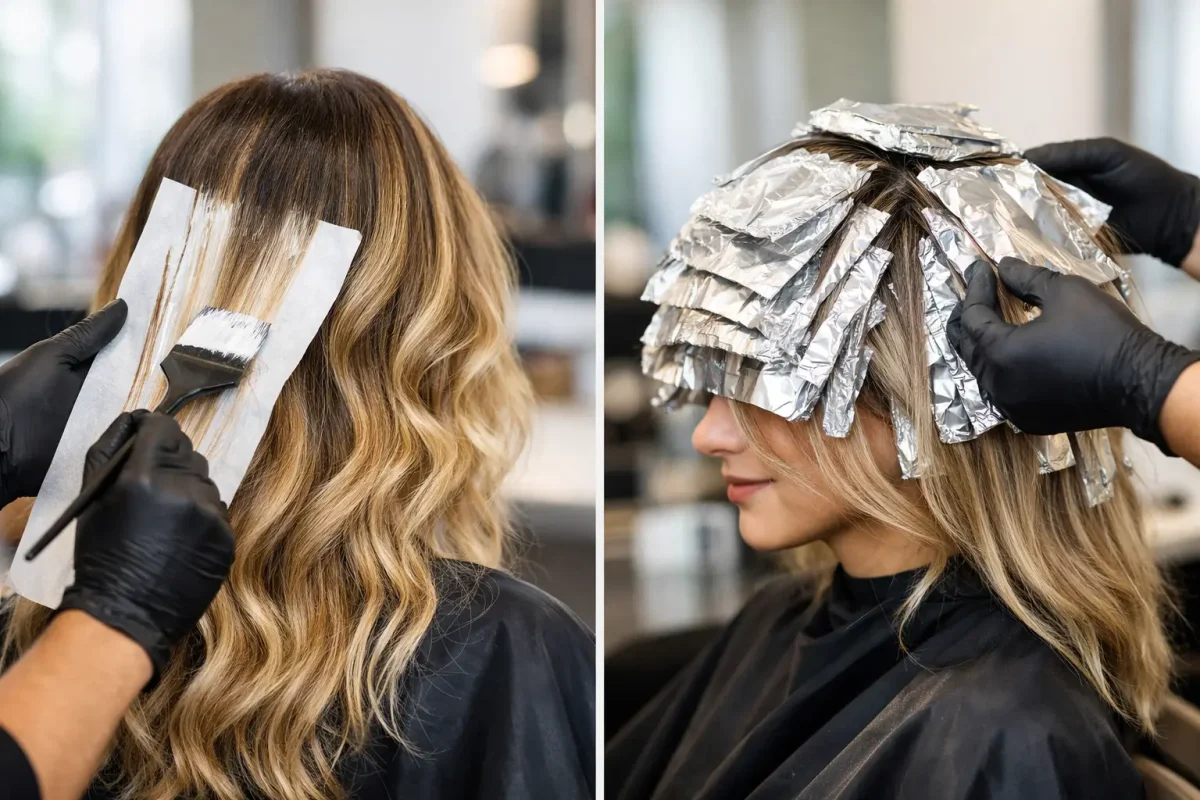
At the simplest level, balayage is a hand-painted lightening technique, while foils use sectioned pieces of hair wrapped in foil to lift color more precisely. That sounds straightforward, but the result on the hair is where the real difference shows.
Balayage usually creates a softer, more blended finish. Your stylist paints lightener onto selected sections, often focusing more through the mid-lengths and ends, with a gradual transition from darker roots into lighter pieces. That is why balayage is often described as lived-in or low-maintenance. It is designed to grow out with less obvious regrowth.
Foils are more structured. Hair is woven or sliced into neat sections, then wrapped to process. This allows for more lift from root to end and a more uniform pattern of highlights. If you want brightness closer to the scalp, stronger contrast, or an all-over lighter look, foils are often the better fit.
How balayage looks on the hair
Balayage tends to look softer and more natural because the painted pieces are placed exactly where light would hit the hair. It can be subtle or bold, but it usually keeps some depth between the lighter ribbons. That depth is part of what makes it feel dimensional rather than solid blonde.
This technique works especially well if you like a grown-in, beachy finish or want your color to look expensive without needing constant touch-ups. On medium to longer hair, balayage can create movement and make waves or layers stand out beautifully.
That said, balayage is not automatically better if you want to go very bright. A lot of people show a photo of an icy, near-root blonde and ask for balayage, but that look often needs foils, or at least a foil-assisted balayage, to get enough lift and consistency.
How foils look on the hair
Foils create a cleaner, brighter result. Because each section is enclosed, the lightener can process more efficiently and often lift more evenly. This makes foils ideal if you want a classic highlighted look, finer ribbons throughout the hair, or a more dramatic blonde transformation.
Foils can also be customized. They are not limited to chunky highlights or old-school stripey color. Done well, foils can be soft, fine, bright, blended, bold, or somewhere in between. The technique gives your stylist a lot of control over placement, density, and lift.
If your goal is to lighten from closer to the root, cover a lot of hair in one session, or break up darker natural color with consistent brightness, foils are often the more effective route.
Balayage vs foils difference in maintenance
This is usually the deciding factor.
Balayage is generally lower maintenance because the root area is more diffused. As your hair grows, you do not get a hard line of regrowth in the same way. That makes balayage a good choice if you prefer to stretch your appointments or want color that still looks intentional after a few months.
Foils usually need more regular upkeep, especially if the highlights start close to the scalp. Once your natural regrowth comes through, the contrast is more noticeable. If you love a fresh, bright, polished blonde, that maintenance can be worth it. But it is better to go in knowing what your future appointments will likely look like.
Toning is separate from both techniques, and it matters more than many people realize. Whether you choose balayage or foils, your tone can shift over time due to washing, heat styling, sun exposure, and water quality. That means you may still want glossing or toning appointments between larger lightening services.
Which one causes more damage?
There is no automatic winner here. The amount of damage depends on your starting color, your hair history, the strength of the lightener, how much lift is needed, and how the service is performed.
Balayage is sometimes seen as the gentler option, but that is not always true. If your stylist needs to push balayage hard to get a lot of lift on dark hair, it can still be demanding on the hair. Foils can sometimes lift more efficiently, which may actually make them the smarter technical choice for certain results.
The bigger issue is matching the technique to the goal. Trying to force balayage to do what foils are better at can lead to disappointment or unnecessary stress on the hair. The healthiest color service is usually the one that is realistic for your hair type, current color, and long-term plan.
If your hair has previous box dye, heavy dark color, bleach history, or dryness through the ends, that should shape the plan too. A good stylist will factor in condition before chasing brightness.
Who should choose balayage?
Balayage suits clients who want a softer finish, visible dimension, and less frequent maintenance. It is a strong option if you like that effortless, blended look rather than obvious highlight placement.
It also works well if you want your first lightening service to feel more forgiving. Because it usually keeps more natural depth and softness at the root, the grow-out is easier to live with. For many busy clients, that is a major advantage.
Balayage is especially flattering when you want brightness through the mid-lengths and ends, when you wear your hair with texture or waves, or when you want a sunlit result rather than a full blonde statement.
Who should choose foils?
Foils are the better fit if you want maximum brightness, more even lightness, or highlights starting closer to the root. They are also ideal if you want to shift your hair lighter in a more noticeable way or refresh existing blonde that has become too dark or flat.
If your inspo photos show a lot of blonde, cooler tones, or a very refined highlight pattern, foils may get you there faster and more accurately. They are also useful for fine-tuning specific areas like the hairline or crown where brightness placement really changes the overall look.
Foils make sense when precision matters most. They are not automatically higher maintenance in a bad way. They just suit people who enjoy a fresher, more polished color schedule.
Can you combine balayage and foils?
Absolutely, and this is often the best answer.
A lot of modern color work uses both techniques together. Your stylist might use foils for brightness around the face and through key sections, then add balayage for a softer melt through the ends. This combination gives you lift where you need it and a more natural blend where you want softness.
For many clients, mixed techniques create the most customized result. Hair is not one-size-fits-all, and the best color plans rarely come from choosing a trend word off a menu. They come from looking at your base color, haircut, density, condition, and how you actually wear your hair day to day.
How to choose the right one for your appointment
Bring photos, but be open to a professional translation of those photos. Two images can look similar at first glance and still require very different techniques.
Think about your maintenance habits honestly. If you know you do not want frequent touch-ups, say that upfront. If you want to be very blonde and are happy to maintain it, that matters too. Also consider how you usually style your hair. Soft painted color often shines with movement, while foil work can look striking whether your hair is sleek, curled, or up.
Most of all, focus on the outcome rather than the buzzword. Asking for balayage because it sounds low-maintenance can backfire if what you really want is root-to-end brightness. Asking for foils when you actually want soft, scattered ribbons can lead to a look that feels too structured. The technique should serve the result, not the other way around.
Good color is rarely about picking the trendy term. It is about choosing the method that suits your hair, your style, and your real-life maintenance. If you want expert advice on the right lightening approach for your hair, book an appointment at Twisted Scissors in Bridgeman Downs.