
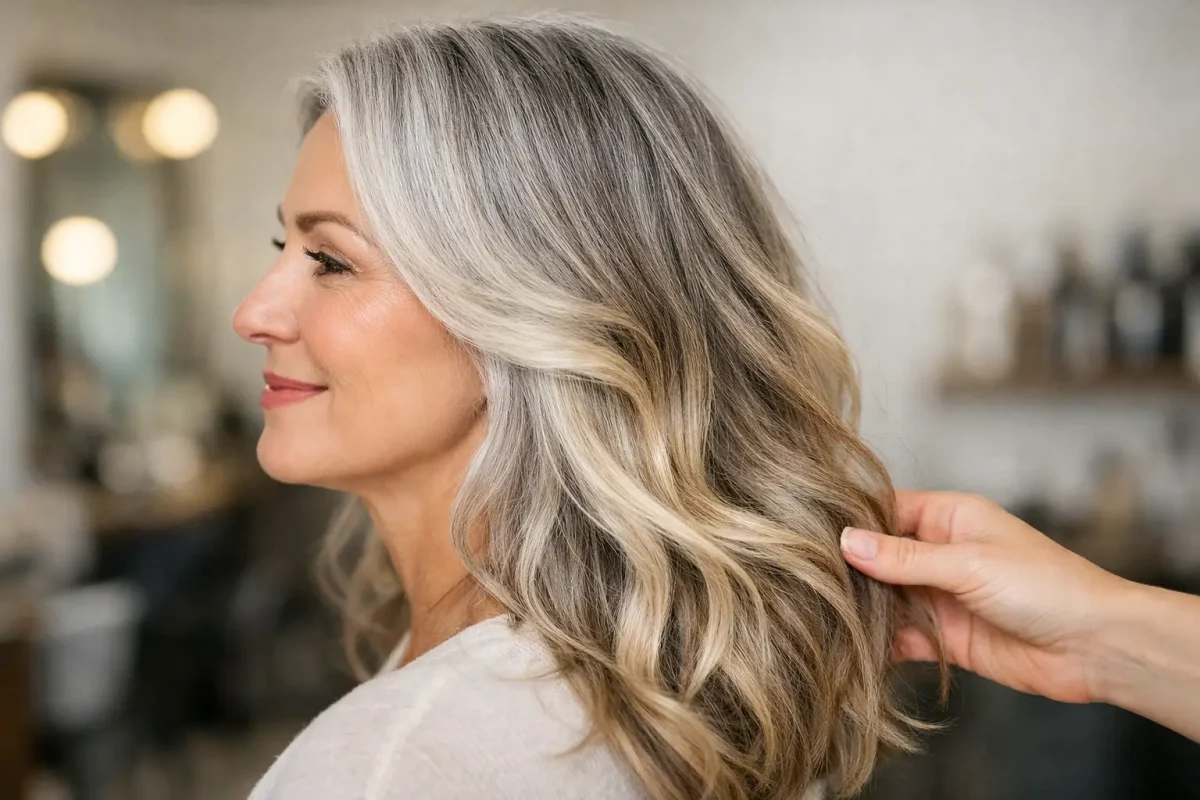
The first time gray starts showing up around your part or hairline, the usual all-over color suddenly feels like a bigger commitment. That is why so many clients ask, is balayage good for grey hair? The short answer is yes, often it is – but only when the placement, tone, and amount of gray are assessed properly.
Balayage can be a smart option for softening gray rather than trying to cover every strand with a solid block of color. It creates dimension, helps blur the contrast between natural regrowth and colored hair, and usually grows out more gently than traditional root-to-end color. But it is not a one-size-fits-all fix, especially if your goal is full gray coverage.
Is balayage good for grey hair or better for blending?
This is the key distinction. Balayage is usually better for gray blending than complete gray coverage.
If you only have a scattering of grays, or if your gray is concentrated around the temples and front hairline, balayage can make those pieces look intentional and softer. By weaving lighter and slightly brighter ribbons through the hair, your natural gray can sit more naturally alongside the rest of your color. Instead of seeing one stark silver strand against a darker base, the eye sees movement and dimension.
If your hair is already 50 percent gray or more, balayage may still work beautifully, but the plan needs to be more thoughtful. At that stage, some clients want to embrace the gray with a brighter, cooler blend. Others still want a richer brunette or blonde look with less visible gray. Those are two different color goals, and balayage alone may not deliver both.
Why balayage can work so well on gray hair
The biggest advantage is the grow-out. Traditional permanent root color creates a more obvious line as your hair grows. Balayage is painted in a softer, more diffused way, so there is less of a harsh demarcation line. That matters if you want color that looks polished without feeling tied to constant touch-ups.
It also gives fine or aging hair a visual boost. Gray hair can sometimes look flatter or drier because it reflects light differently. Balayage adds contrast and dimension, which can make the hair look fuller and more alive. For clients who feel like their old all-over dark color has started looking heavy, this softer approach can be much more flattering.
Another reason it works is flexibility. Balayage can be customized to support your natural gray pattern rather than fighting it. If your gray is brightest at the front, your stylist can place lightness there to make the transition look intentional. If your lengths have old color on them, balayage can help break that up without forcing you into a dramatic all-over correction.
When balayage is not the best choice
Balayage is not magic, and this is where realistic expectations matter.
If you want every gray hair hidden from root to end, balayage is probably not enough on its own. Because balayage is a hand-painted highlighting technique, it does not saturate every strand at the root the way permanent single-process color does. You will still see some gray, especially at the scalp, unless your service includes a root color or gloss designed for extra blending.
It can also be tricky on very dark hair with a high percentage of resistant gray. In that case, simply adding painted lighter pieces may make the contrast at the roots stand out more, not less. Sometimes the better approach is combining balayage with a root smudge, gray blending gloss, or selective lowlights to create a more balanced result.
Hair condition matters too. Gray hair can be coarse, dry, or wiry, while previously colored ends may be more fragile. If the hair is already compromised, lifting it for balayage may need to happen gradually. A good stylist will prioritize hair health over chasing a bright result in one appointment.
The best balayage ideas for gray hair
The most flattering balayage for gray hair usually depends on your base color, your gray percentage, and whether you want to disguise gray or lean into it.
For brunettes, soft caramel, beige, or cool mocha ribbons can break up the contrast and make grays look less obvious. The result is often richer and softer than flat dark color. Going too warm, though, can create a brassy effect next to natural gray, so tone selection matters.
For dark blondes and light brunettes, beige blonde or mushroom tones tend to blend beautifully with emerging gray. These shades create a softer transition and can make the overall color look more expensive and natural.
For blondes, balayage can help gray look almost like part of the highlight pattern. Cooler blondes, pearl tones, and soft neutral glosses usually give the most seamless finish. If the hair is naturally warm, your stylist may still leave some warmth in the formula so the final result does not look dull or over-toned.
For clients embracing silver, balayage can be used in reverse too. Instead of covering gray, the service can brighten selected pieces and tone the rest so the grays look intentional, luminous, and blended with the existing color.
Is balayage low maintenance for gray hair?
Usually yes, but only compared with more solid color services.
Balayage tends to be lower maintenance because the regrowth line is softer. Many clients can go longer between major lightening appointments. That said, gray hair still changes how color behaves. You may need glosses in between to keep tones fresh, reduce brassiness, or soften the look of new silver regrowth.
Maintenance also depends on your target result. If you are happy with a lived-in, dimensional look, balayage can be very manageable. If you want your gray to stay heavily disguised and polished at all times, you may still need more regular appointments than you expect.
At-home care makes a difference too. Gray hair is often drier and can pick up yellow or dull tones from heat, minerals, and environmental exposure. Using salon-recommended products for moisture and tone protection helps your balayage stay cleaner and shinier for longer.
What to ask for at your consultation
If you are considering balayage for gray hair, the best consultation question is not simply, can balayage cover my gray? Ask what kind of gray result is actually realistic for your hair.
A stylist should look at where your gray sits, how much you have, whether you have old color present, and how often you want to maintain it. Someone with 15 percent gray around the face needs a different formula and placement plan than someone who is 60 percent gray through the crown.
It also helps to be clear about your goal. Do you want to hide gray as much as possible? Soften it? Brighten everything so the gray blends in? Grow out old permanent color more gracefully? Those goals can all involve balayage, but not in the same way.
Photos help, but be careful with inspiration pictures. The most useful reference is one that matches your starting level, texture, and gray amount – not just a color you like on someone else.
So, is balayage good for grey hair?
Yes, balayage is good for grey hair when your goal is soft blending, dimension, and a more forgiving grow-out. It is especially effective if you want a modern color result that works with your natural gray instead of constantly battling it.
Where people get disappointed is expecting balayage to behave like full root coverage. It usually will not. For some clients, the perfect answer is balayage alone. For others, the best result comes from pairing balayage with a root blend, gloss, or strategic lowlights.
The smartest color plan is the one that suits your hair, your maintenance preferences, and the way your gray is actually coming in. If you want expert advice on blending gray in a way that still feels fresh and flattering, book an appointment at Twisted Scissors in Bridgeman Downs.