
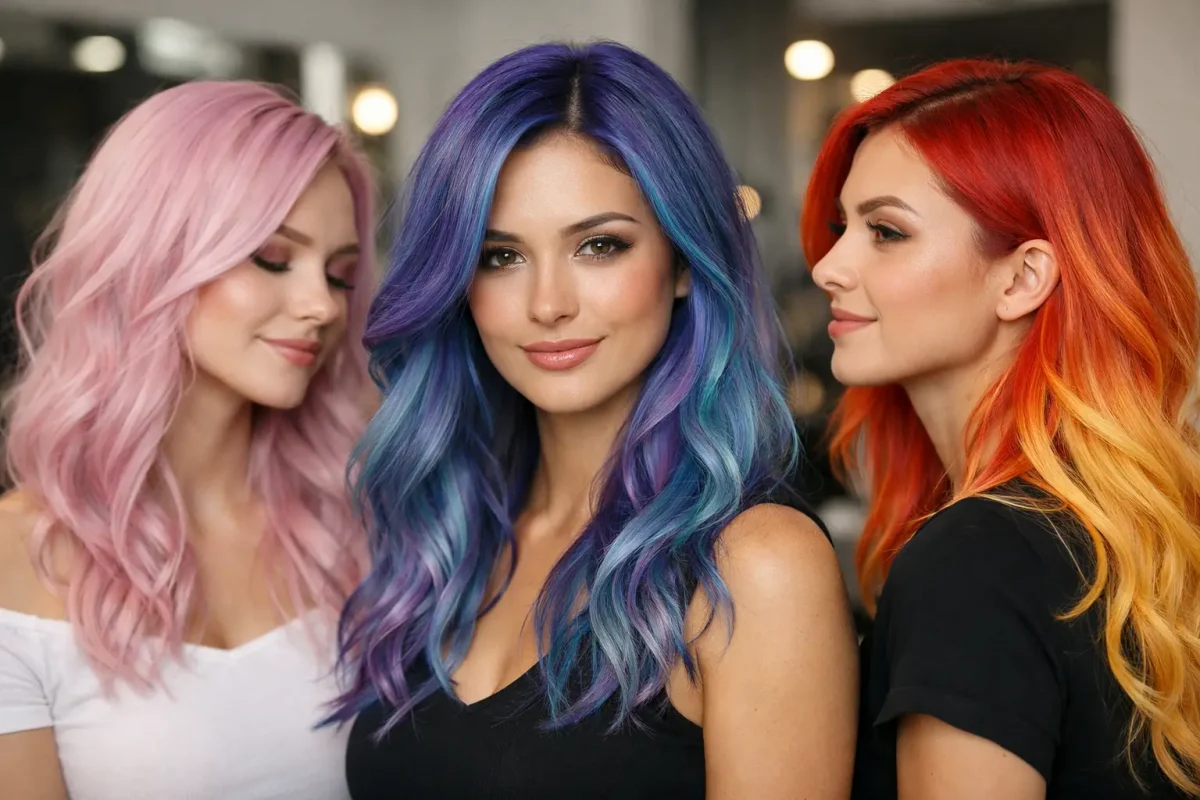
A brilliant pink fringe, a soft lilac melt, or a flash of copper can make a familiar haircut feel completely new. This guide to creative hair color is for anyone who wants that change to look intentional, flattering, and healthy, rather than like a shade that looked great online but never quite worked in real life.
Creative color is not one look. It can be a barely-there pastel, a rich jewel tone, a vivid neon panel, or a dimensional blend that sits beautifully alongside your natural base. The best result starts with choosing a color plan that suits your complexion, lifestyle, maintenance comfort level, and current hair history.
What Counts as Creative Hair Color?
Creative hair color refers to shades beyond traditional blondes, brunettes, reds, and natural gray blending. Think bright blue, magenta, emerald, lavender, peach, silver, cherry red, or a custom mix made specifically for you. It can cover your whole head, appear as face-framing pieces, live underneath your natural color, or be worked through a balayage-style placement.
There is no rule that says creative color must be loud. A smoky rose brown, a deep violet that only catches the light, or a soft peach glaze can feel expressive without becoming the first thing people notice from across the room. On the other hand, if you have been saving neon green or split-dye inspiration photos for months, there is room for that too.
The key difference is placement and commitment. A hidden panel or colored money piece gives you a lower-commitment way to experiment. A full fashion-color transformation makes a stronger statement, but it also usually asks more of your hair and your maintenance routine.
Choosing a Shade That Feels Like You
The best shade is not always the one currently trending. It is the one that works with your features, wardrobe, and how often you realistically want to return for appointments.
Warm complexions often look fantastic with copper, coral, peach, golden rose, and warm reds. Cooler complexions can suit violet, blue, berry, icy pink, and silver tones beautifully. That said, undertones are a guide, not a restriction. A skilled colorist can adjust the depth and warmth of a shade so it feels harmonious rather than harsh.
Your natural hair color matters as well. Deep jewel tones such as navy, plum, burgundy, and teal can create a noticeable effect on darker hair, especially in sunlight, without always requiring the lightest possible base. Pastels and clear neons are different. They generally need hair to be lifted very light first, often to a pale yellow blonde, so the final shade looks clean instead of muddy.
Consider your haircut before deciding on placement. A sharp bob can look striking with a solid cherry red or a graphic color block. Long layers show off a blended rainbow melt or dimensional vivid balayage. A shag with fringe gives face-framing color and peekaboo panels plenty of movement. Color should work with the cut, not compete with it.
The Lightening Step: Why It Changes Everything
Most bright and pastel shades are not designed to lighten hair. They deposit pigment. If your hair is dark and you apply lavender over it, the result may be extremely subtle or barely visible. To get a true pastel, bright yellow, pale blue, or bubblegum pink, the hair usually needs controlled pre-lightening first.
This is where professional assessment matters. Lightening can be a careful, gradual process, particularly if you have previously used box dye, dark permanent color, henna, heavy buildup, or have fragile ends. One person may reach their goal in a single appointment, while another needs several sessions to protect the condition of their hair.
A good color plan prioritizes hair integrity over rushing. Pushing hair too far can lead to dryness, breakage, uneven porosity, and color that fades patchily. Sometimes the smartest first appointment is a richer version of your dream shade, such as deep violet instead of pale lilac, while the hair is lightened progressively over time.
Be upfront about your color history. It is not about judgment. It helps your stylist choose the safest formulas, manage expectations, and avoid unwelcome surprises during the appointment. A photo of your goal color is useful, but photos of your hair in natural daylight can be just as helpful.
A Guide to Creative Hair Color Placement
Where the color goes has a major effect on the final look and on how often you will need maintenance. Full-head color delivers maximum impact, particularly with vivid shades or a complete pastel transformation. It is also the option that shows regrowth most clearly if your natural base is much darker.
For something softer, creative balayage places color through selected mid-lengths and ends, creating movement with more forgiving grow-out. A color melt blends two or more tones together, such as cobalt into violet or peach into rose gold, for a more fluid finish.
Face-framing pieces are ideal when you want your color to brighten your features and show in photos. Underlayers and peekaboo sections are a favorite for clients who want a playful reveal that can be more subtle when hair is worn down. Color blocking uses bolder sections for a graphic, fashion-forward effect, often paired with a clean, modern cut.
Your day-to-day styling should influence this choice. If you usually wear your hair up, an underlayer may be visible more often than you expect. If you rarely heat-style or curl your hair, choose a placement that still looks intentional with your natural texture.
Keeping Vivid Color Looking Fresh
Fashion shades fade. That is normal, and it does not mean the original appointment was unsuccessful. Creative pigments sit differently from many natural-looking colors, and shades such as pastel pink, soft blue, and bright red can fade faster than deeper tones.
How you care for your hair at home makes a real difference. Wash less often where possible, use cool to lukewarm water, and choose color-safe products that are free from harsh cleansing ingredients. Hot water opens the cuticle and can send fresh color down the drain sooner than you would like.
Heat also deserves attention. Use a heat protectant before blow-drying, straightening, or curling, and keep tools at a sensible temperature. Chlorine, salt water, and long periods in strong sun can shift or fade color, so protect your hair when swimming and rinse it as soon as possible afterward.
Some shades benefit from a color-depositing conditioner between appointments. This can be useful, but it is worth using the right tone and following professional guidance. An incorrect product can make a pastel look dull, push a blonde section too purple, or leave uneven pigment on porous ends.
Expect maintenance to depend on your chosen look. A bright full-head fashion color may need refreshing every four to six weeks. A hidden panel, deep jewel tone, or creatively placed balayage may allow more time between major appointments, with a toner or gloss refresh keeping the finish looking polished.
Plan for the Real-Life Version of Your Color
The best creative color consultation includes the practical details. How much time do you have for appointments? Are you happy to use specialized home care? Do you swim regularly? Are you trying to grow out previous color? Do you need your hair to look more understated on certain days?
These questions do not take the fun out of a transformation. They make it more likely that you will love the color after the first week, not just on the day it is applied. If low maintenance is a priority, a rooted blend, lived-in placement, or richer fashion shade may suit you better than an all-over pastel.
Creative color should feel personal, not prescriptive. Bring your inspiration, be honest about your routine, and stay open to a tailored version that respects your hair’s condition. The right plan can turn a bold idea into a color you enjoy wearing every day.
For personalized advice and creative color designed around your hair, book an appointment at Twisted Scissors in Bridgeman Downs.