
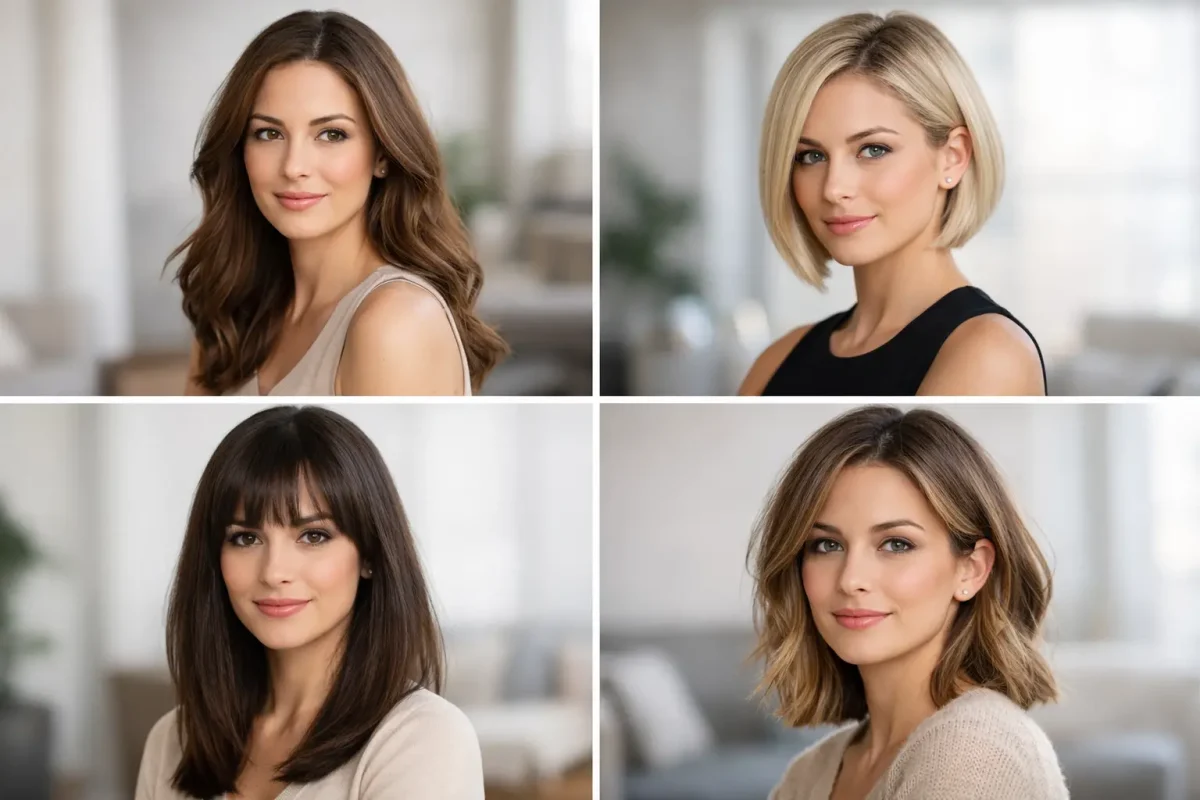
An oval face shape gives you more room to play than most, but that does not mean every cut will feel equally right. If you are asking which haircut suits oval faces, the best answer starts with your hair texture, daily styling habits, and the features you want to bring forward. A great cut should look balanced from every angle, then still feel like you when you leave the chair.
Oval faces are generally a little longer than they are wide, with a softly rounded hairline and jaw. That natural balance works beautifully with everything from a sharp pixie to long, airy layers. The real styling opportunity is choosing a shape that adds personality without hiding the face.
Which Haircut Suits Oval Faces Best?
The most flattering haircut for an oval face is usually one that keeps proportion around the cheekbones, jaw, or collarbone. You do not need to use hair to make your face look narrower or longer. Instead, you can choose where to create movement, volume, and definition.
A chin-length bob can put the focus on a strong jawline. Long layers can soften dense hair while keeping its length. A fringe can make the eyes the focal point. The right choice depends less on a single face-shape rule and more on the finish you want: polished, undone, bold, low-maintenance, or something in between.
1. A collarbone-length lob
The lob is a reliable favorite for good reason. Sitting around the collarbone, it frames an oval face without making it appear longer. It can be worn sleek for a clean, modern finish or styled with loose texture for a relaxed look.
For finer hair, a blunt or softly beveled lob makes the ends look fuller. For thicker hair, invisible layers or a little internal weight removal can stop the cut from sitting too wide. It is also long enough to tie back, which matters if your routine needs to be quick on busy mornings.
2. A classic bob with a strong line
A bob can look striking on an oval face, especially when it lands between the chin and jaw. A blunt bob creates a confident, fashion-forward shape and pairs beautifully with solid color, rich brunette tones, or a bright statement shade.
The trade-off is maintenance. A sharp bob tends to need regular trims to keep its line looking intentional. If you prefer a softer grow-out, a lightly textured bob or a French-inspired shape with gentle movement may suit you better.
3. Long layers with face framing
If you love keeping your length, long layers are one of the easiest ways to refresh your hair without a dramatic change. Face-framing pieces beginning around the cheekbones or lips give the cut shape and prevent long hair from looking heavy or flat.
This option is particularly useful for thick hair, where well-placed layers can release bulk and encourage natural movement. On fine hair, layering needs a lighter hand. Too many short layers can make the ends look sparse, so a stylist may keep the baseline fuller and add only a few strategic pieces around the face.
4. A soft shag or modern wolf-inspired cut
Oval faces carry a shag exceptionally well because the cut is designed around texture and movement rather than strict symmetry. Shorter layers through the crown, soft pieces around the cheeks, and wispy ends create an effortless, lived-in shape.
This is a great choice for naturally wavy or curly hair, since the cut gives the texture room to do its thing. It can also work on straighter hair, but you may need styling products and a little heat styling to bring out the layered effect. A shag is not necessarily high-maintenance at the salon, but it does ask you to embrace a less polished finish day to day.
5. A pixie with length on top
A pixie cut can make an oval face look beautifully open and defined. Keeping extra length through the top or fringe gives you styling flexibility: swept back, textured forward, softly side-parted, or piecey and playful.
The key is tailoring the shape to your hair density and growth pattern. Very fine hair may benefit from a closely cropped, textured pixie that creates lift. Thick hair may need thoughtful debulking so it does not puff out at the sides. Short hair is freeing, but it requires regular appointments if you want it to stay crisp.
6. Curtain bangs with medium or long hair
Curtain bangs are a flattering way to change your look without committing to a full fringe. They part near the center and sweep outward, drawing attention to the eyes and cheekbones while blending into the rest of the cut.
They work especially well with lobs and long layers. If you wear your hair up often, curtain bangs can also make a simple ponytail or bun look more styled. Keep in mind that a fringe usually needs more frequent trims than the rest of your hair, and a quick blow-dry helps it sit at its best.
7. Full bangs for a bolder statement
A full fringe can give an oval face a stylish horizontal detail that changes the overall balance. Blunt bangs create impact, while soft, textured bangs feel lighter and more relaxed. Both can look incredible, but they should be customized to your hairline, density, and how much time you want to spend styling.
If your hair has a strong cowlick at the front, a full fringe is still possible, though it needs to be cut with that growth pattern in mind. This is one of those moments where a personalized consultation makes a major difference. The best fringe is never just copied from a photo.
8. A sleek, one-length cut
A one-length cut is simple, glossy, and surprisingly versatile on an oval face. It can make fine hair appear denser and works well for anyone who likes a clean, minimal silhouette. Add a center part for a modern feel, or switch to a deep side part when you want more volume.
Because this cut relies on healthy-looking ends, regular trims and the right at-home care matter. If you color your hair, especially with lightened or fashion shades, maintaining moisture and heat protection will help preserve that polished finish.
9. Curly layers shaped around the face
Naturally curly hair deserves a cut that respects its spring, shrinkage, and individual pattern. Oval faces can wear rounded curly shapes, layers that build height, or a longer silhouette with face-framing definition. The goal is not to force curls into a bob or a shag just because the photo looks good. It is to create a shape that works when your hair dries naturally.
For curls, the placement of layers matters more than the number of layers. Cutting too much around the crown can create unwanted volume, while leaving too much weight can pull curls flat. A customized curl cut helps the finished shape feel balanced rather than triangular.
How to Choose Between These Haircuts
Bring inspiration photos, but pay attention to what they have in common. Do you keep saving airy fringes, sharp bobs, soft layers, or cropped styles? That pattern is more useful than trying to find one photo with your exact face shape and hair type.
Then consider your real routine. If you air-dry most days, a style that needs a round brush every morning may become frustrating. If you enjoy styling and like changing your look, a layered lob or longer pixie can give you more options. Hair texture, density, natural parting, and previous color work should all shape the final recommendation.
Color can also change how a haircut reads. Fine highlights around the face can emphasize layers and cheekbones, while a dimensional balayage can make long hair look fuller. A vivid color placement can turn a simple blunt bob into a major statement. Your cut and color should support each other, not compete.
The Best Cut Is the One You Will Wear
Oval faces suit a wide range of cuts because their proportions are naturally balanced. That is a strength, not a reason to play it safe. Whether you are ready for a textured pixie, a low-maintenance lob, or long layers with a fresh fringe, the right haircut is the one that suits your lifestyle as much as your face.
For a cut tailored to your texture, routine, and personal style, book an appointment at Twisted Scissors in Bridgeman Downs.