
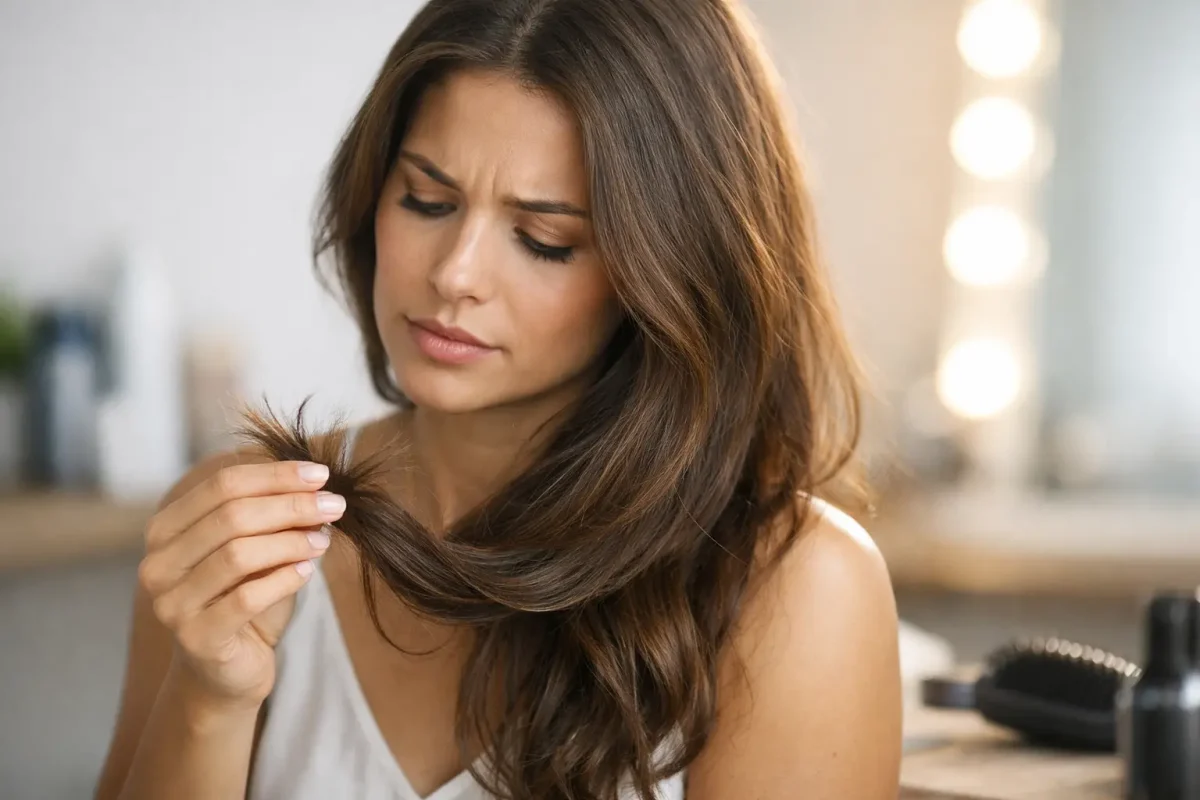
That short, uneven halo around your part line is not always new growth. Sometimes it is hair breakage – strands snapping somewhere between the roots and ends after becoming too dry, overworked, or fragile to handle everyday styling. The good news is that breakage can often be reduced without giving up the color, texture, or polished finish you love.
A great cut and a smart care routine work together here. The goal is not to baby your hair into boredom. It is to understand what is putting stress on it, then make a few targeted changes that let your hair look good while it grows stronger.
What Hair Breakage Actually Looks Like
Hair breakage happens when the hair shaft snaps. Unlike shedding, which releases a full strand from the root and often includes a tiny white bulb at one end, broken hair is usually shorter and varies in length. You may notice it around the crown, hairline, nape, or through the ends.
Common signs include rough ends that return soon after a trim, strands that snap while brushing, frizz that will not smooth down, and sections that seem unable to retain length. A ponytail may also look thinner than usual, especially if breakage is concentrated through the mid-lengths.
Breakage does not always mean your hair is severely damaged. Fine hair can be more prone to snapping, and curly or textured hair can experience breakage simply because its bends create natural points of weakness. What matters is whether the problem is becoming more noticeable, spreading through your hair, or making your usual style hard to achieve.
The Most Common Causes of Hair Breakage
Heat that is too hot or too frequent
Hot tools can create beautiful results, but repeated high heat removes moisture and weakens the protective outer layer of the strand. Flat irons, curling irons, and aggressive blow-drying are especially tough on hair that has already been lightened or colored.
You do not need to avoid heat forever. Start by using the lowest setting that gives you the result you want, applying heat protectant every time, and keeping passes with an iron to a minimum. If a section needs five passes to look smooth, it may need a different drying technique, a lighter styling product, or a professional cut to remove compromised ends.
Chemical services without the right aftercare
Balayage, blonding, fashion shades, and color changes can all be done beautifully, but they require a realistic plan for the condition of your hair. Lightening is particularly demanding because it changes the internal structure of the strand. When hair is repeatedly lightened, then exposed to heat and daily friction, breakage can follow.
This does not mean bold color is off the table. It means placement, timing, and maintenance matter. A softer grow-out, strategically placed highlights, or refreshing the tone instead of lightening the whole head may give you the look you want with less stress on the hair.
Tension and friction
A sleek high ponytail may look effortless, but wearing tight styles in the same spot every day puts pressure on the hairline and can snap fragile strands. Extensions, tight braids, clips, and even a rough elastic can cause problems when hair is already weakened.
Friction is quieter but just as real. Rubbing wet hair with a bath towel, sleeping on a rough pillowcase, brushing aggressively, or wearing hair down under bag straps can wear away at the cuticle over time. Small changes, such as using a soft microfiber wrap and switching the position of your part or ponytail, can make a visible difference.
Moisture and protein out of balance
Dry hair is more likely to break, but piling on every treatment in the bathroom is not always the answer. Hair needs moisture for flexibility and protein for support. Too little protein can leave very processed hair feeling stretchy and weak. Too much can leave it stiff, brittle, and prone to snapping.
The right balance depends on your hair history. If your hair feels mushy when wet, has been heavily lightened, and stretches more than usual, a targeted strengthening treatment may help. If it feels hard, straw-like, and resistant to movement, focus on moisture and gentler styling instead. A stylist can help you work out which issue you are actually seeing.
How to Reduce Hair Breakage at Home
Start with your wash day. Use lukewarm water rather than very hot water, and shampoo the scalp without scrubbing the lengths into a tangle. Let the rinse carry cleanser through the ends, then use conditioner from mid-length to ends. Detangle slowly with a wide-tooth comb or a brush designed for wet hair, beginning at the ends and moving upward.
After washing, press out water instead of twisting or rubbing. Wet hair has more stretch and is easier to damage, so this is not the moment for a rushed ponytail or vigorous brushing. Apply a leave-in conditioner or lightweight cream if your hair needs slip, then add heat protectant before blow-drying.
For daily styling, think less about perfection and more about repeatable habits. A soft blowout with the right brush may last several days and reduce the need for daily straightening. Wearing a loose braid at night can limit tangling for longer hair. If your ends catch on clothing or look feathery no matter what you apply, a trim is usually more useful than another serum.
It also helps to pause the cycle of constant correction. When breakage is noticeable, avoid trying to fix it with more at-home bleach, permanent color, or high-heat styling. Give your hair a few weeks of lower stress while you assess what is causing the damage.
Why Regular Trims Help You Keep Length
It can feel backward to cut your hair when you are trying to grow it. But split ends do not repair themselves. They can travel upward, causing a longer portion of the strand to split and eventually snap. Removing damaged ends early helps preserve the healthier length above them.
The schedule depends on your haircut, color history, and styling routine. A blunt bob needs regular shaping to stay crisp, while long layers may allow more time between appointments. If you color frequently or use hot tools often, smaller, regular trims are usually easier on your overall length than waiting until the ends feel beyond saving.
A professional cut can also make breakage less obvious while the hair recovers. Thoughtful layers, a stronger perimeter, or a new shape can remove the most fragile areas without taking away the style you love.
When It Is Time for Professional Advice
If your hair is breaking near the scalp, coming out in clumps, or changing suddenly without an obvious styling or color reason, seek advice from a medical professional. Hair can be affected by stress, medications, hormonal shifts, nutrition, and scalp conditions, and a salon appointment is not a substitute for medical care.
For color-related damage, uneven breakage, or a routine that no longer works, a stylist can give you a clearer plan. That may include adjusting your color service, choosing a more suitable cut, recommending the right treatment category, or showing you a gentler way to style your hair at home. The best plan is personal: what works for a low-maintenance brunette may not suit someone maintaining bright blonde or vivid fashion color.
Healthy hair is not hair that never sees a curling iron or a color bowl. It is hair treated with enough care, strategy, and maintenance to keep doing what you ask of it. Book an appointment at Twisted Scissors in Shop 4, 17 Blackwood Street, Mitchelton.