
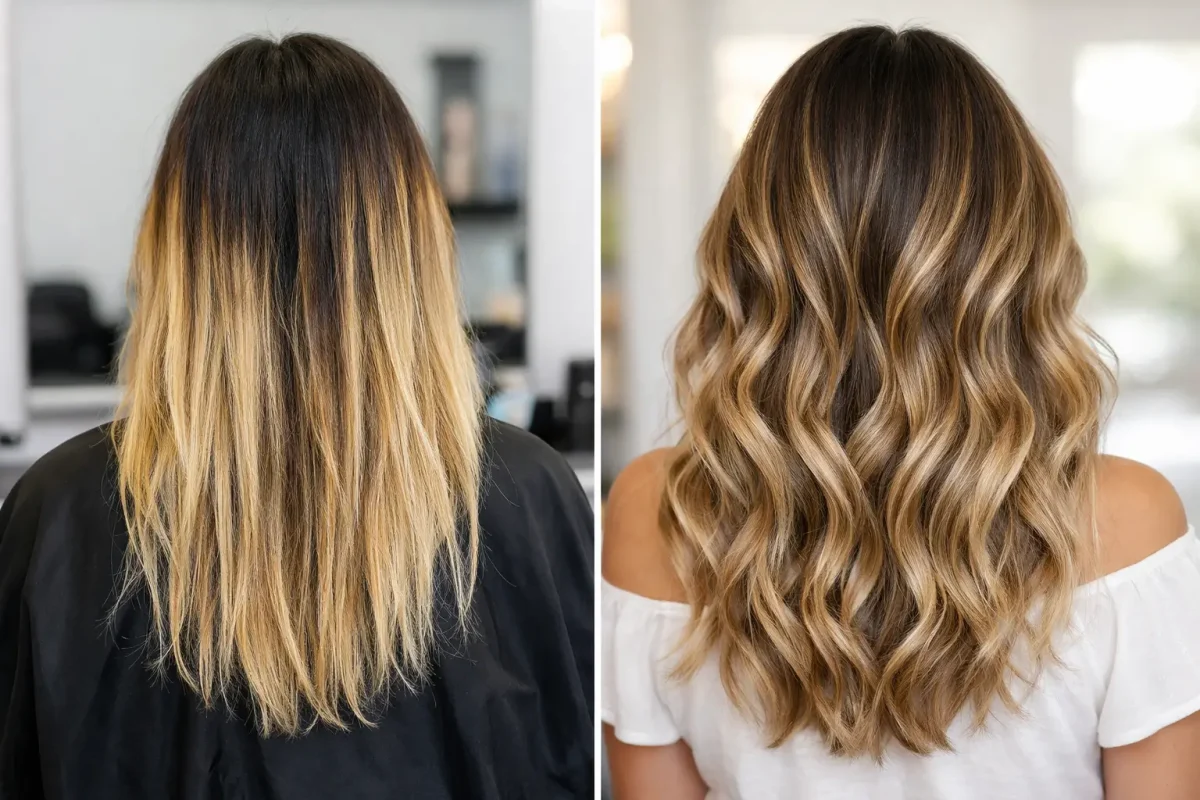
A balayage that looked effortless in the inspiration photo can feel very different when the blend is stripy, the ends are overly light, or warm orange tones appear where soft beige was expected. A balayage correction before after transformation can be dramatic, but the best result is not always about making hair lighter in one appointment. It is about restoring a believable blend, improving the tone, and keeping the hair in good enough condition to look beautiful after the salon visit.
Corrective color is highly individual. The starting point matters just as much as the goal, which is why a realistic plan will always beat a rushed attempt to copy a photo exactly.
What a balayage correction really changes
Balayage is meant to create soft movement from deeper roots through lighter mids and ends. When it goes wrong, the issue is often less about the shade itself and more about the transition. Harsh lines, uneven saturation, chunky pieces, root bands, or an abrupt contrast can make the color feel disconnected from the haircut and natural base.
A professional correction may involve softening those visible lines, breaking up heavy sections, adding depth back into overly light areas, or carefully lifting darker patches so the whole look reads as one intentional color. Sometimes the most satisfying “after” image is softer and slightly deeper than a client first imagined. That is not a compromise. In many cases, it is the route to a more expensive-looking, wearable balayage.
Tone is another major part of the change. Brassy gold, orange, or yellow can distract from an otherwise lovely placement. A toner or gloss can neutralize unwanted warmth, but it cannot permanently change the underlying level of lift. If hair has only lifted to orange, layering on an ash toner may make it look muted briefly, then fade warm again. A skilled colorist considers both the visible tone and what the hair can safely handle next.
Why the before picture matters as much as the after
A correction begins with an honest assessment. Hair history tells a colorist what may be hiding beneath the surface: old permanent color, box dye, dark glosses, previous highlights, fashion shades, mineral buildup, and uneven porosity can all affect the result.
Two people can show the same balayage reference photo and need completely different services. One may need a gentle refresh with face-framing brightness and a toner. Another may need depth painted back through the mids, targeted lightening in dark bands, and a second appointment to reach the desired level safely.
This is why a true before-and-after should never be judged only by how light the final hair is. Look for a cleaner blend, intentional dimension, balanced warmth or coolness, and ends that still have shine and movement. Healthy-looking hair is part of a successful correction, not an optional extra.
Common reasons balayage needs correcting
At-home color is a frequent complication because it can process unevenly and create unpredictable bands. Even when a store-bought shade looks close to the desired result at first, it may leave behind artificial pigment that makes future lightening more difficult.
Salon color can also need adjusting. Balayage may grow out beautifully, but repeated lightening without enough depth can leave the ends pale, flat, and fragile. A change in personal style can be another reason. Someone who once loved a high-contrast, bright look may now want a more natural root melt and softer ribboning.
Water quality, heat styling, sun exposure, and unsuitable home care also affect how a balayage wears between appointments. Brisbane’s bright weather can reveal warmth quickly, particularly in porous hair. That does not mean the original color was wrong. It means the maintenance plan may need to change.
Balayage correction before after: what happens in the chair
The appointment should start with a consultation, not a bowl of color. Your stylist will look at the hair in natural light where possible, assess elasticity and dryness, ask about your color history, and talk through what bothers you most about the current result. Bring a few reference images, but explain what you like in each one. Is it the brightness around the face, the cool beige tone, the low-maintenance root, or the amount of contrast?
From there, the correction can take several directions. If the hair is too warm but the placement is good, a gloss may be enough to refine the finish. If there are distinct stripes, fine lowlights or a root shadow can soften the contrast and rebuild dimension. If the hair has dark patches or uneven lift, targeted foils or hand-painted lightener may be used only where needed rather than overprocessing the whole head.
A bond-supporting treatment may be recommended during a lightening service, especially when the hair has been colored repeatedly. It will not erase damage, but it can support the hair through the chemical process and improve the feel of the finished result. A trim can also make a real difference when ends are dry or transparent. Color looks more polished when the shape of the cut supports it.
The service can take longer than a standard color appointment because placement has to be precise. Corrective work is not the time to rush through every section with the same formula. Careful sectioning, selective application, processing checks, tonal refinement, and a finishing style all contribute to the final blend.
Can the result be achieved in one appointment?
Sometimes, yes. If the correction is mainly tonal or involves adding depth to a balayage that is too light, one visit can create a significant change. If the goal requires removing dark artificial pigment, lifting through previous color, or repairing severe banding, it may be safer to work in stages.
A staged plan protects the integrity of the hair and often produces a more refined final result. The first appointment may focus on removing the most obvious lines, balancing warmth, and improving condition. The next visit can add more brightness once the hair has had time to recover. Patience is especially worthwhile when the goal is a pale blonde, cool beige, or high-contrast balayage from a darker or heavily colored starting point.
Be cautious with promises of an instant, extreme transformation. The most flattering correction is one that looks good at every stage, rather than looking perfect for one day and feeling dry or uneven afterward.
How to make the after result last
Corrective balayage deserves a home routine that protects the investment. Use professional color-safe shampoo and conditioner suited to your hair’s needs, and keep purple or blue shampoo occasional rather than automatic. These products can help control brassiness, but overuse may leave very porous areas looking dull, smoky, or uneven.
Heat protection is essential before blow-drying, curling, or straightening. Wash hair in lukewarm water when practical, and use a nourishing mask when the lengths feel dry. If your new balayage includes a gloss or toner, expect the tone to shift gradually between appointments. Booking a gloss refresh before the color looks noticeably brassy can keep the finish polished without needing more lightening.
The right timing depends on your color, haircut, and lifestyle. Some balayage clients enjoy a low-maintenance look for months, while others prefer face-framing brightness and tonal refreshes more often. There is no single schedule that works for every head of hair.
Choose progress over a perfect filter
The most useful balayage correction before-and-after photos show more than a dramatic contrast. They show hair that looks dimensional in different lighting, a blend that grows out softly, and a tone that suits the person wearing it. Your ideal result should work with your natural base, your daily styling habits, and the level of upkeep you actually want.
When you are clear about the goal and open about your hair history, corrective color becomes far less intimidating. A thoughtful plan can take hair from patchy, brassy, or over-lightened to balanced, modern, and confidently yours.
Book an appointment at Twisted Scissors in Shop 4, 17 Blackwood Street, Mitchelton.