
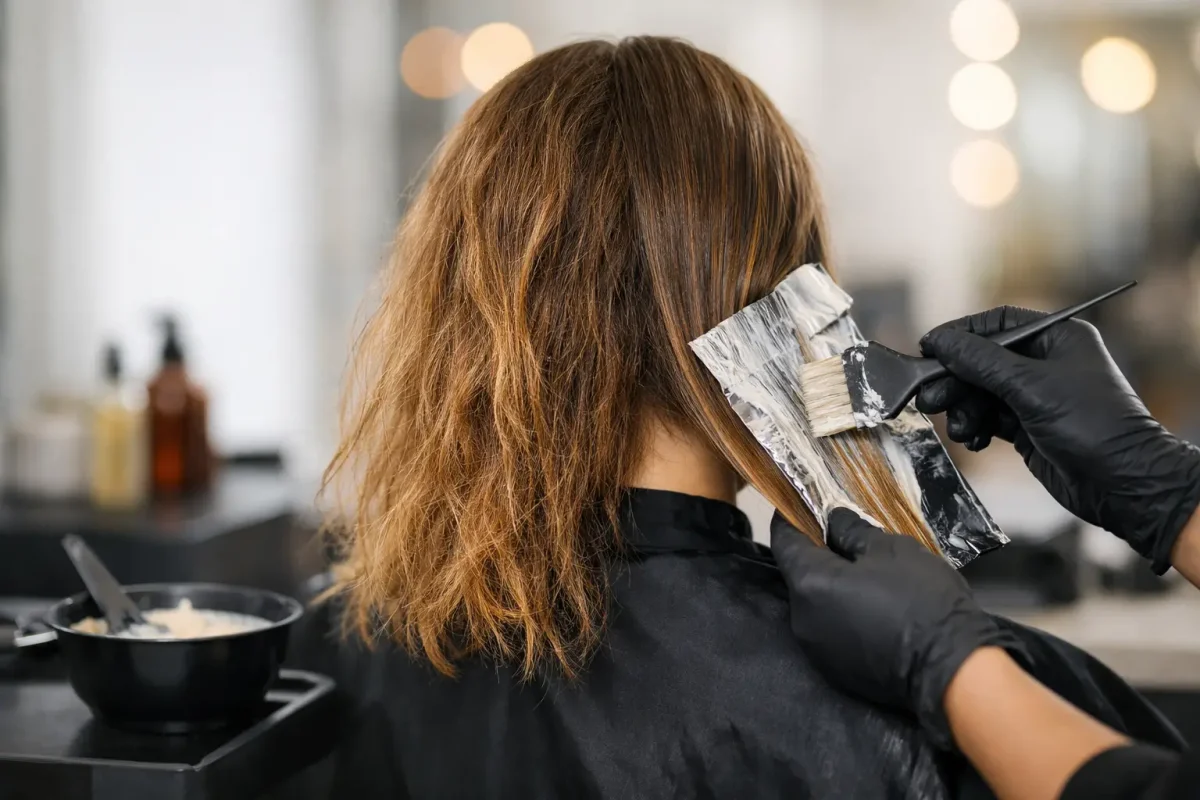
You finally booked the color appointment, then noticed the warning signs in the mirror – dry ends, rough texture, snap-prone strands, and faded shine. So, can damaged hair be colored? Sometimes yes, sometimes not yet, and the right answer depends on what kind of damage you are dealing with, how strong your hair still is, and what result you want.
This is where honest advice matters more than wishful thinking. Hair can be dry, porous, overprocessed, heat-stressed, or chemically compromised, and those are not all the same thing. Some damaged hair can handle gentle color with the right formula and technique. Some needs a repair-first plan before any more chemical service touches it.
Can damaged hair be colored without making it worse?
Yes, damaged hair can sometimes be colored without pushing it over the edge, but only if the service is matched to the hair’s actual condition. That usually means choosing lower-risk options, adjusting expectations, and avoiding the kind of appointment that asks fragile hair to do too much in one day.
If your hair is mainly dry, dull, or a bit rough from heat styling, a professional color service may still be realistic. If it stretches when wet, breaks easily, feels gummy, or has uneven bands from previous chemical work, the situation is more serious. In those cases, color may still be possible, but the safest version often looks different from what you first had in mind.
The biggest mistake is treating all damage like a minor inconvenience. Hair that is mildly stressed can often be worked with. Hair that is structurally weakened needs a more careful approach because color does not just sit on top of the strand. It changes the hair, and damaged hair has less margin for error.
What kind of damage matters most?
When stylists assess whether damaged hair can be colored, they are not only looking at how it looks. They are looking at how it behaves. Porosity, elasticity, density, previous bleach history, and the condition of the mid-lengths and ends all matter.
Dry hair is not automatically too damaged to color. A lot of people confuse dryness with severe chemical damage, and they are not always the same. Dry hair may need moisture support and a gentler formula, but it can still be strong enough for a well-planned service.
Bleach damage is a different story. If hair has been repeatedly lightened, especially with overlapping bleach or at-home color corrections, the cuticle may already be compromised. That is when you start seeing excessive tangling, split ends traveling upward, frizz that does not smooth out, and breakage that seems to happen for no reason.
Heat damage also changes the game. Hair that has been flat-ironed heavily can lose flexibility and become brittle. Add more chemical stress on top, and the hair may not respond evenly to color. One section might grab too dark, another might fade fast, and the ends may look more worn after the appointment.
When coloring damaged hair is usually safer
The safest color appointments for damaged hair are usually the ones that add tone, richness, or dimension without aggressive lifting. That could mean going darker, refreshing faded lengths, blending greys with a gentle approach, or using placement techniques that avoid saturating every fragile strand.
A gloss or toner is often a smarter choice than a major transformation. These services can improve shine, soften unwanted tones, and make hair look healthier without asking it to survive a heavy lightening process. If your goal is to feel polished again, that can be enough to make a big difference.
Partial color work can also be safer than an all-over service. Sometimes the best option is to leave the weakest ends alone, focus on healthier sections, or create a result that looks intentional while protecting the most vulnerable areas.
This is where salon technique matters. Formula choice, processing time, sectioning, developer strength, and where the color is applied first all affect how damaged hair holds up.
When it is better to wait
There are times when the best appointment is not a color appointment. If your hair is snapping off during brushing, turning gummy when wet, or breaking in short pieces around the crown or hairline, adding more chemical processing can make the problem much harder to fix.
If you recently had a bad bleach experience, multiple box dye applications, or an at-home color remover mishap, your hair may need a recovery window. That does not mean giving up on your color goals. It means building a better path to them.
Waiting can actually protect the final result. Hair that is too compromised rarely holds color beautifully. It can process unevenly, fade patchy, and lose condition fast. Taking a few weeks to trim damaged ends, use strengthening care, and stabilize the hair often leads to a better color outcome later.
What to avoid if your hair is already damaged
The riskiest plan is usually going lighter fast. Bleach is the most demanding chemical service for compromised hair, especially if you want several levels of lift or are trying to remove old dark dye. Even when the before-and-after inspiration looks tempting, severely damaged hair may not be able to get there in one step safely.
Box dye is another common problem. It feels like the easier option, but damaged hair often grabs home color unevenly. That can leave the ends darker, flatter, or muddier than the roots, which creates a bigger correction job later.
Stacking services is also where people get into trouble. If your hair is fragile, doing color right after a chemical straightening service, perm, or repeated bleaching session can be too much. Hair does not care about your schedule. If it needs a pause, it needs a pause.
How a stylist protects damaged hair during color
A professional approach starts with saying no to the wrong plan. That may not be the answer clients hope for, but it is often what saves the hair. Once the condition is assessed, the service can be tailored around what the hair can realistically handle.
That might mean using a gentler formula, lowering the developer strength, avoiding previously lightened sections, or choosing a dimensional result instead of solid all-over lightness. It can also mean trimming first so the most compromised ends are not carrying the whole service.
Processing should be watched closely. Damaged hair can take color quickly in some areas and resist it in others. Timing is not one-size-fits-all. Neither is aftercare. If your hair is already vulnerable, what you do after the appointment matters just as much as what happens in the chair.
Aftercare makes or breaks the result
If you color damaged hair and then go back to high heat, harsh shampoos, and rough brushing, the result will not last well. Color-treated damaged hair needs a routine that supports both strength and softness.
Use a shampoo and conditioner made for color-treated hair, keep hot tools on a lower setting, and do not skip regular trims. A weekly mask can help with softness, but if your hair is chemically stressed, you may also need protein support. The balance matters because too much moisture can leave some hair limp, while too much protein can make it feel stiff.
Try to be realistic about washing, too. If you can stretch wash days a bit and avoid constant heat styling, your color usually looks better for longer. Small habits add up fast when hair is fragile.
The result you want may need a different route
Sometimes the real question is not can damaged hair be colored. It is can damaged hair be colored the exact way you originally imagined. Those are two different things.
You may be able to tone, deepen, blend, or soften your current color now, but need more time before going platinum, pastel, or dramatically lighter. That is not settling. It is choosing a plan that keeps your hair on your head and moving toward your goal in a way that still looks good in the meantime.
Healthy-looking hair always makes color look more expensive. Even bold fashion shades and high-impact blondes look better when the hair has shine, movement, and enough integrity to hold the tone properly. Sometimes the smartest color decision is the one that protects future options.
If your hair feels compromised, get it assessed before committing to a major change. The right service should make your hair look better, not leave you wondering how much breakage is too much. If you want expert advice on coloring damaged hair, book an appointment at Twisted Scissors in Bridgeman Downs.