
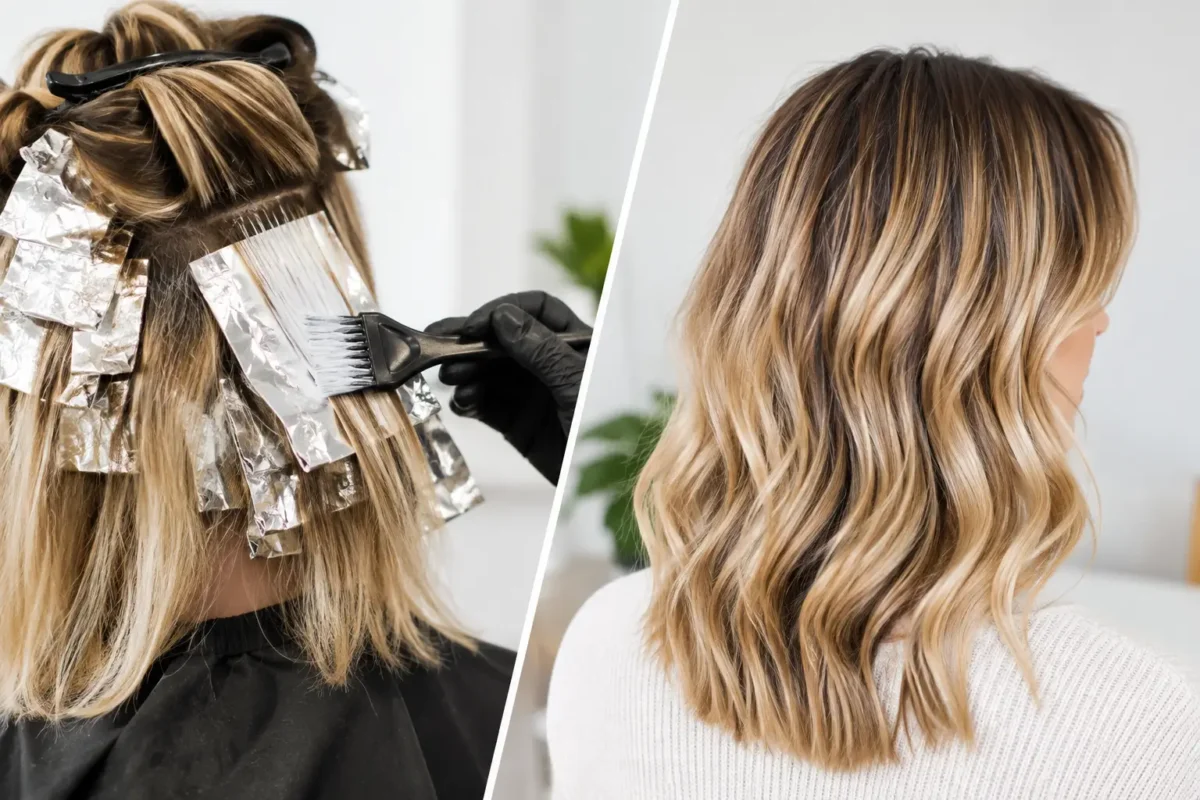
You can bring two beautiful inspiration photos to the salon and still need two completely different color services. That is where foils vs balayage becomes more than a trend question. Both can create lighter, dimensional hair, but the placement, brightness, grow-out, maintenance, and final feel are very different.
The right choice is not simply about which look is more popular. It comes down to your starting color, previous color history, how light you want to go, how often you want salon appointments, and whether you love a polished all-over brightness or a softer lived-in blend. A personalized consultation matters because the best result should suit both your vision and your real routine.
Foils vs Balayage: The Core Difference
Foils use precisely sectioned strands of hair that are painted with lightener or color, then wrapped in foil. The foil holds warmth and separates the hair from surrounding sections, allowing the stylist to create more controlled lift. This technique can be fine and delicate, bold and bright, or anything in between.
Balayage is a freehand painting technique. Color is applied across the surface of selected sections, usually with a softer transition from the root area into lighter mids and ends. The result is designed to look sun-kissed, dimensional, and naturally blended rather than striped or uniformly highlighted.
Neither technique is automatically better. Think of foils as a method for precision and brightness, while balayage is often chosen for softness and an effortless grow-out. Your stylist may also combine them. Many of the most natural-looking blondes use foils around the face and through finer sections, with balayage-painted pieces to keep the overall effect airy and modern.
Choose Foils When You Want Noticeable Brightness
Foils are an excellent choice when your goal is to become significantly lighter, especially if your natural hair is dark or you have previously colored hair. Because the foil retains heat and keeps lightener moist for longer, it can usually lift more effectively than open-air painting alone.
This makes foils particularly useful if you want a brighter blonde, a high-contrast dimensional brunette, or a more consistent lightness from closer to the root through the lengths. They are also ideal for detailed color placement. Fine baby lights can create a very soft result, while fuller woven sections can make a stronger statement.
Foils may suit you if you want:
- A lighter overall result in one appointment
- Brightness that starts closer to the roots
- More even lift through the hair
- Strong face-framing highlights or a bold money piece
- Better correction of unwanted bands or uneven previous color
That does not mean foils have to look obvious. Modern foil work can be beautifully blended. A skilled stylist can vary the size of each section, leave depth between highlights, shadow the root, and tone the hair to create a polished finish with movement rather than a solid block of blonde.
The trade-off is maintenance. Traditional root-to-end highlights can show a regrowth line sooner, particularly on naturally dark hair or when the contrast is high. A root melt or lowlights can soften this, but clients who love very bright foils often return for refresh appointments more regularly.
Choose Balayage for a Soft, Lived-In Finish
Balayage is often the favorite for clients who want lightness without the feeling of a major root commitment. It is painted to blend with your base color, which means the root area usually stays deeper and the lightest pieces sit through the mids, ends, and around the face.
The finish can be subtle, such as caramel ribbons on brunette hair, or much brighter with creamy blonde ends. What makes balayage recognizable is not a specific shade. It is the graduated placement and diffused transition.
This technique works beautifully when you want your color to grow out gracefully. Since there is no hard line of lightness placed directly at the scalp, you can often go longer between major color appointments. That can make balayage a practical option if your schedule is busy or you prefer a lower-maintenance color plan.
Balayage does have limits, particularly when you want a very light blonde result. On darker hair, open-air balayage may develop warmer than expected because it does not have the same enclosed lift as foils. It can also take more than one appointment to build a very bright result while keeping the hair in good condition.
A good balayage should never look like random painted patches. It requires intentional placement based on your haircut, natural movement, density, and where the light would flatter your face. On a layered lob, soft painted ribbons can emphasize texture. On long hair, a more blended sweep can create gorgeous movement without taking away from the richness at the root.
Your Starting Hair Matters More Than the Inspiration Photo
Hair history changes the answer to foils vs balayage quickly. Virgin hair, previously highlighted hair, dark permanent color, box dye, fashion shades, and old bands of color will all respond differently to lightener.
If your hair has been colored dark in the past, a balayage photo with pale blonde ends may not be achievable safely in one visit. Lightener has to work through the existing artificial pigment first, and pushing too hard can compromise the condition of the hair. In this situation, foil placement may give your stylist more control while gradually building lightness, or a warm, dimensional balayage may be the most realistic first step.
If you already have blonde highlights but feel too solid or stripey, a balayage approach can be used to reconnect the color and create a softer blend. Your stylist might add lowlights, deepen the root area, and paint selected ends to make the overall color feel more expensive and less overworked.
The condition of your hair also matters. Fine, fragile, or heavily processed hair may need a gentler approach, fewer lightened sections, or a staged plan. Healthy-looking color is always more flattering than chasing one overly light appointment that leaves the ends dry and vulnerable.
Maintenance, Time, and Budget
Balayage is often described as low-maintenance, but that does not mean no-maintenance. The lighter pieces can still become warm or brassy over time, and blonde hair benefits from the right home care. Toner refreshes, gloss services, hydrating treatments, and heat protection all help preserve shine and keep the color looking intentional.
Foils can require more frequent touch-ups if you prefer a bright root-to-end look, though the timing varies. Fine, blended foil work with a root shadow may be refreshed less often than a classic high-contrast highlight. Your haircut also plays a role. Short styles can reveal regrowth sooner, while long, layered hair can disguise it more easily.
Appointment length is another practical factor. Both services can take several hours when lightening, toning, cutting, and styling are involved. Corrective work or a large change will take longer than a subtle refresh. During your consultation, be honest about your color history and your ideal maintenance schedule. That helps your stylist recommend a plan that works for your hair and your calendar, not just your saved photos.
The Best Option May Be a Blend of Both
You do not always have to choose one technique exclusively. A foilayage service combines foil brightness with hand-painted softness. Foils can be used to lift darker or resistant areas, while balayage placement keeps the finish dimensional and diffused. Add a root melt and a custom toner, and the result can be bright without looking harsh.
Face-framing pieces are another useful middle ground. A few brighter foils around the hairline can make your complexion pop, while balayage through the rest of the hair keeps the grow-out soft. This is especially flattering if you want a noticeable change but are not ready for a full high-maintenance blonde routine.
The most flattering color is one that reflects your style, works with your natural base, and still feels good weeks after your appointment. Bring your inspiration photos, share what you like and dislike about your current color, and be open to a professional recommendation that protects the condition of your hair.
When you are ready to create a color plan that feels like you, book an appointment at Twisted Scissors in Shop 4, 17 Blackwood Street, Mitchelton.