Ladies Haircut Albany Creek: What to Ask For
Ladies Haircut Albany Creek: What to Ask For
A great haircut usually looks obvious after the fact. Your hair sits better, styling takes less effort, and suddenly your usual routine works again. If you are looking for a ladies haircut Albany Creek locals can wear every day, the real goal is not just a fresh shape. It is finding a cut that suits your hair texture, your face shape, and how much time you actually want to spend styling it.
That is where many salon visits either go very right or very wrong. A photo can help, but it does not tell the full story. The same bob can look polished and sharp on one person, soft and effortless on another, and high-maintenance on someone whose hair naturally bends in all the wrong places. A good haircut starts with a style you like, but it only works when it is adjusted to your hair and your lifestyle.
What makes a ladies haircut feel right for Albany Creek clients
The best cuts are not always the most dramatic ones. Sometimes the most flattering change is taking weight out of thick hair so it moves better, reshaping grown-out layers, or refining the front around the cheekbones and jawline. Those details are what make a haircut feel expensive, even when the overall style looks simple.
A lot depends on your natural hair pattern. Fine hair usually benefits from structure and a clean outline, while thick hair often needs internal weight removed so it does not feel bulky. Curved ends, blunt edges, invisible layers, or a softer fringe can each change the result more than people expect.
This is also why asking for a cut by name is only the starting point. A lob, shag, or pixie sounds specific, but each one has multiple versions. Some are wash-and-go friendly. Others need heat styling to look like the picture you saved.
Ladies haircut Albany Creek trends that still work in real life
Trend awareness matters, but wearable hair matters more. The styles getting the most attention right now tend to work because they are versatile, not because they are extreme.
The bob that can be sleek or undone
A modern bob is still one of the strongest options if you want shape and polish. It can sit at the jaw, skim the chin, or drop a little longer for a softer effect. The main trade-off is maintenance. A precise bob usually needs regular reshaping, especially if you like the line to stay crisp.
For fine or medium hair, a bob can make the hair look fuller. For very thick hair, it often needs texturizing in the right places so it does not kick out or sit too heavy.
The lob for flexibility
If you want movement but are not ready for a shorter cut, a lob is often the easiest middle ground. It gives you enough length to tie back, still feels current, and can be styled smooth, waved, or tucked behind the ears without losing shape.
This cut suits a lot of face shapes because the length can be adjusted slightly above or below the collarbone. It is also one of the safer choices if you want a noticeable change without committing to a short crop.
Soft layers that do not look dated
Layers have come back in a much better way. Instead of obvious choppy sections, the most flattering version is softer and more blended. These layers add movement, take out heaviness, and help hair hold shape without giving that overly feathered finish people worry about.
They are especially useful if your hair feels flat through the crown or too dense through the ends. The key is balance. Too many layers can thin out the perimeter and make styling harder, especially on finer hair.
Fringe and bangs with a plan
A fringe can completely shift your look, but it is one of the most personal choices in haircutting. Curtain bangs, bottleneck bangs, and softer face-framing pieces are popular because they grow out better than a heavy blunt fringe. That matters if you do not want trims every few weeks.
Still, bangs are not low effort for everyone. If your hairline has strong cowlicks or your mornings are rushed, it is worth being honest about that before committing.
What to ask for at your haircut appointment
The difference between a haircut you love and one you tolerate often comes down to the consultation. You do not need salon language. You just need to explain the right things.
Start with your everyday reality. Say whether you air dry, blow dry, use hot tools, or mostly tie your hair up. Mention what annoys you now. Maybe the ends feel heavy, the front falls flat, your current layers flick out, or your style only looks good on wash day. Those details are more useful than saying you want something fresh.
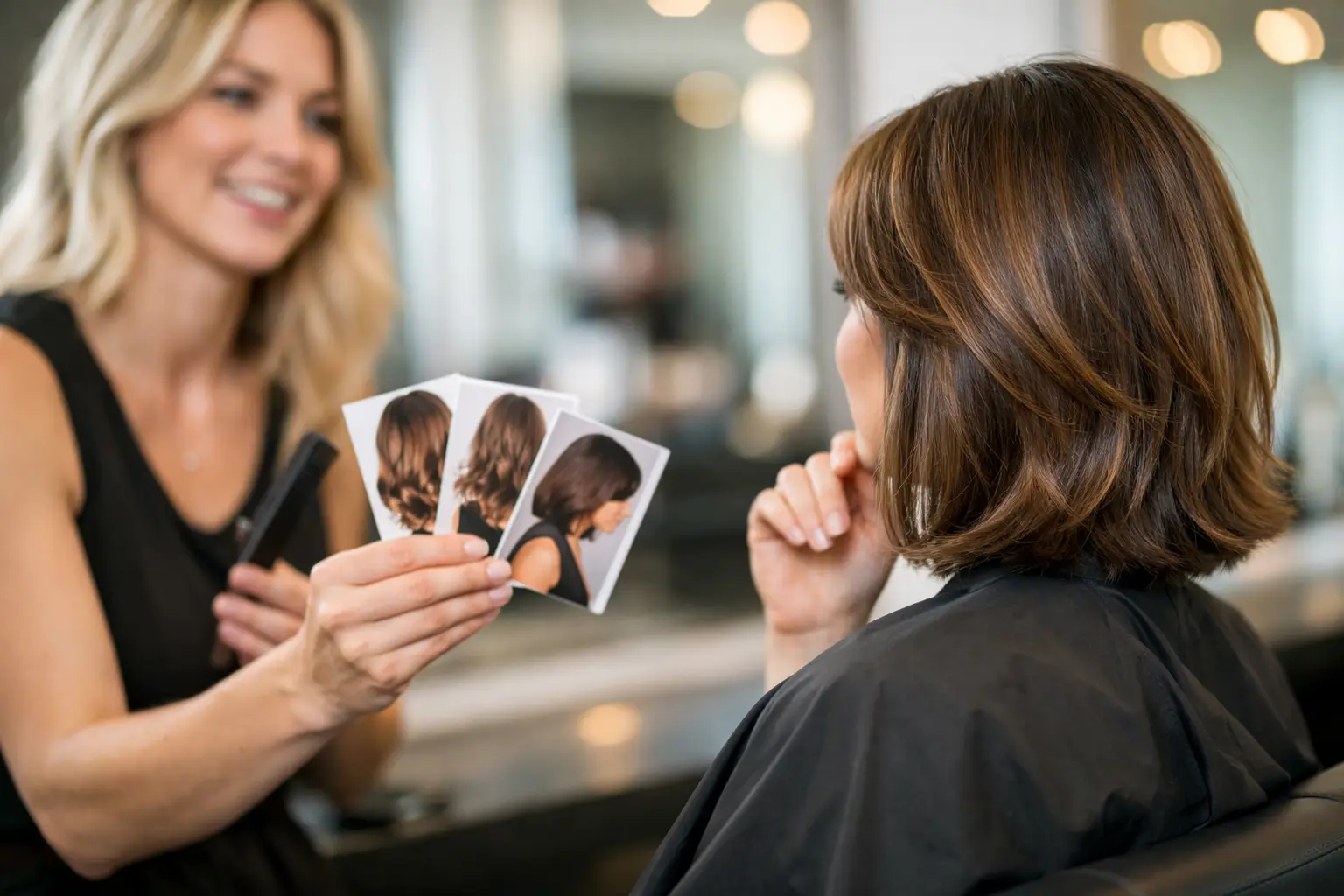
Photos are helpful too, but use them as a guide rather than a demand. If you bring inspiration, point out exactly what you like. It might be the length, the fullness, the fringe shape, or the softness around the face. Often the photo as a whole is not right, but one or two features in it absolutely are.
It also helps to ask what the cut will look like without styling. That is an underrated question. A style can look amazing after a blowout, but you should still know how it will behave on a regular Tuesday when you have ten minutes to get ready.
Matching the cut to your hair type
No haircut exists in a vacuum. Texture changes everything.
Fine hair usually needs a shape that protects fullness. That often means stronger lines, a more solid perimeter, and carefully placed layers instead of a lot of razored texture. Too much softness can make the ends look sparse.
Thick hair benefits from smart weight removal, but not all thinning methods are equal. Over-texturizing can create puffiness or strange short pieces that stick out as the cut grows. Done well, removing bulk should make thick hair easier to control while keeping the shape looking intentional.
Wavy hair sits somewhere in between. It can look amazing with movement and face framing, but it needs room for its natural pattern. A cut that fights the wave usually takes more effort every morning. A cut that works with it often looks better with less styling.
If your hair is damaged from lightening, heat, or previous color work, that affects the plan too. In that case, the best haircut is often one that keeps enough density through the ends so the hair looks healthier overall. Taking off length can help, but structure matters just as much.
Maintenance matters more than people think
One of the biggest mistakes Albany Creek clients can make when choosing a haircut is planning for the first day instead of the next eight weeks. A haircut should still make sense after it settles in.
Shorter precision styles usually need more frequent appointments to keep their shape. Longer cuts with softer layers give you a bit more flexibility. Fringes sit in their own category because they often need attention sooner than the rest of the haircut.
This does not mean low maintenance is always better. It just means the right cut is the one that fits your schedule. If you love styling your hair, a more detailed shape can be worth it. If you want to wash, dry, and move on, the haircut should support that.
The same goes for styling products. Some cuts come alive with a smoothing cream or texture spray. Others are at their best with a round brush and a blow dryer. There is nothing wrong with either option, but it helps to know what you are signing up for before the first snip.
When it is time to change your haircut
If your current style feels heavy, flat, shapeless, or harder to manage than it used to be, that is usually a sign it needs more than a trim. Hair changes over time because your routine changes, your color changes, and even the way you want to present yourself changes.
Sometimes the right move is subtle. Cleaning up the perimeter, adding face-framing pieces, or shifting the length slightly can bring everything back into balance. Other times, a stronger reset is what makes the biggest difference.
A good haircut should give you confidence when you leave the salon, but it should also hold up in normal life. It should make your hair feel like it is finally working with you instead of against you. If you are ready for that kind of change, book an appointment at Twisted Scissors in Mitchelton.