Box Dye Color Correction Example
Box Dye Color Correction Example
You wanted a quick refresh and ended up with dark bands, hot roots, and ends that look flat in some lights and orange in others. That is exactly why a box dye color correction example is so useful. Seeing how a real correction works makes it easier to understand why salon color behaves differently, and why fixing at-home color is rarely as simple as putting another shade over the top.
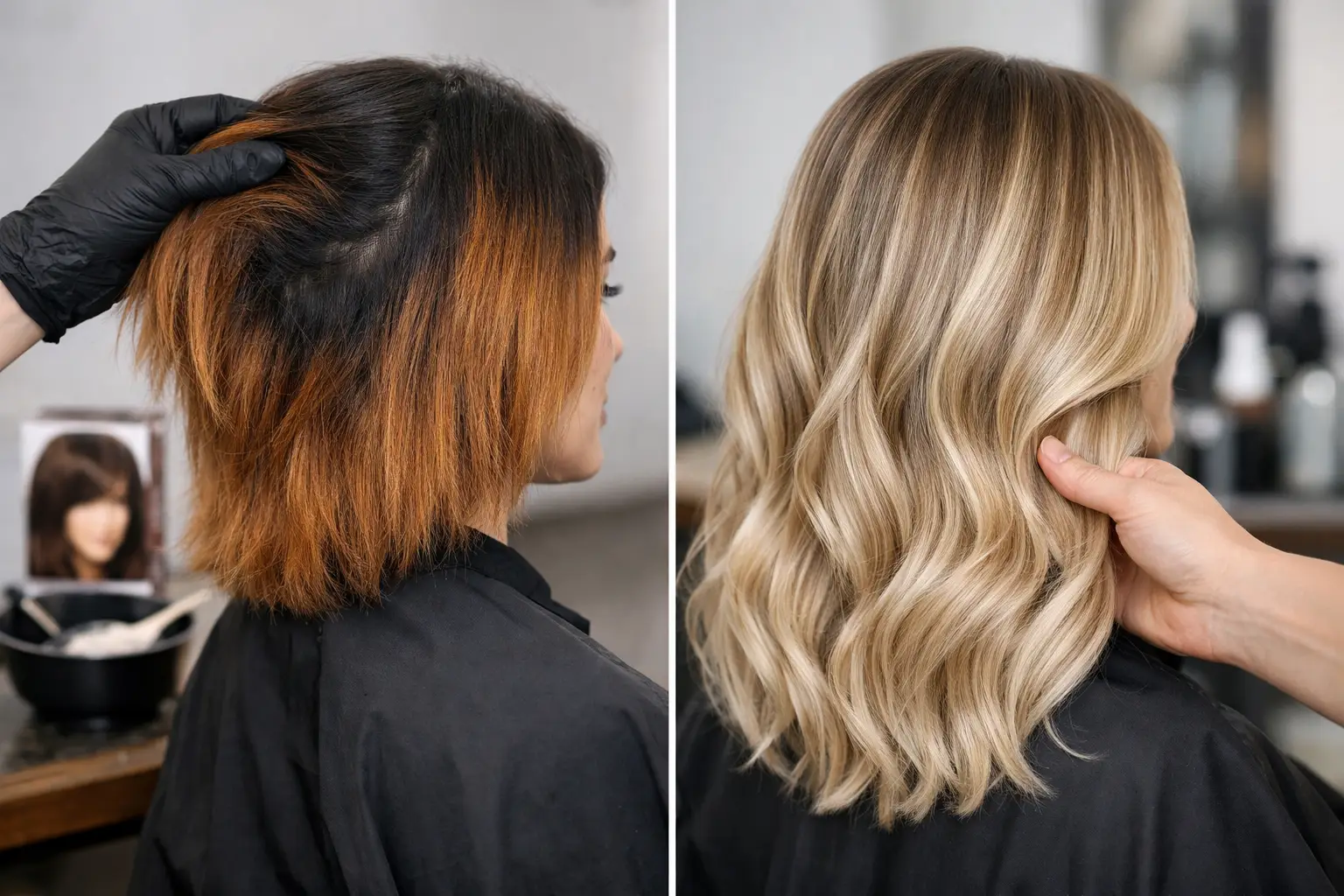
A real box dye color correction example
Let’s look at a common salon scenario. A client starts with naturally medium brown hair and a few older highlights through the mid-lengths and ends. She uses a dark ash blonde box dye because the picture on the front looks soft, cool, and expensive. Instead, her roots grab warmer than expected, the highlighted areas turn muddy, and the porous ends go several shades darker.
A few weeks later, she tries to fix the warmth at home with another box color, this time in a cooler brown. Now the root area is dense and slightly brassy, the mid-lengths are uneven, and the ends are almost black in places. In daylight, you can see three different colors through the hair. This is the kind of correction that sounds simple when you describe it in one sentence, but it needs a careful plan.
The first thing a stylist sees is not just the wrong shade. We see uneven porosity, overlapping pigment, artificial color buildup, and different levels of lift from scalp to ends. Box dye does not apply itself evenly, even when the instructions make it sound foolproof. Hair that has been highlighted, heat styled, or previously colored will absorb dye differently from untouched regrowth.
Why box dye creates such mixed results
The biggest problem with box dye is that it is designed for the broadest possible range of hair types. It has to work well enough for many starting points, so the developer strength and pigment load are generalized rather than tailored. That is convenient, but not precise.
When you color at home, you are usually applying one formula from roots to ends. Your hair is not one even canvas. The new growth near the scalp processes faster because of body heat. The mid-lengths may already hold old salon color or old box dye. The ends are often more porous, especially if they have ever been lightened. One formula across all of that can create darker ends, brighter roots, or patchy warmth.
Ash shades are another common trap. Many people choose ash because they want to cancel warmth, but cool box dyes can turn drab on porous hair while still leaving orange undertones underneath. So the result can be both too warm and too dull at the same time.
What a stylist assesses first
Before any correction starts, a good stylist looks at the hair in sections, not as one single problem. We check the natural level at the root, the amount of artificial pigment sitting in the hair, the degree of warmth showing through, and the condition of the strands.
That condition piece matters. If the hair feels stretchy, rough, or overly porous, the correction plan may need to be slower. Sometimes the safest path is not one dramatic appointment. It may be a staged approach that improves the color significantly now, then fine-tunes it later without pushing the hair too far.
How this box dye color correction example gets fixed
In the example above, the goal is not just to make the color prettier. The goal is to create an even base and protect the integrity of the hair. That usually starts with a strand test and a realistic conversation about what is achievable in one session.
If the ends are overloaded with dark artificial pigment, those pieces may need a gentle color remover or a controlled lightening service to shift the buildup. The roots, where warmth is strongest, might need a different formula entirely. The mid-lengths may need balancing rather than more lift.
This is why salon color correction often uses multiple formulas in one appointment. A stylist might treat the darker ends one way, the warm roots another way, and tone the whole result afterward to pull everything into a more natural finish. It is technical work, but when it is done well, it should not look technical. It should just look expensive and even.
In this case, a likely correction path would be to first remove as much artificial dark pigment from the ends as the hair can safely handle. Then the warm root area is softened and refined with targeted lightening or color balancing, depending on how strong the underlying orange or gold is. Once the levels are more consistent, the entire head is toned into a shade that suits the client’s skin tone and maintenance preference.
That final part is important. A neutral beige brunette, a soft mocha, and a cool mushroom brown may all solve the technical issue, but they do not create the same look. Good correction is both chemistry and style.
Why putting another box dye on top usually makes it worse
It is tempting to think one more box will even everything out. Usually it adds more pigment where the hair is already too dark and does almost nothing where the hair needs actual lifting or correction.
Color does not lift color in the simple way most people hope. If your ends are dark from repeated dye, another brown or blonde box color will not magically brighten them into balance. More often, it packs in extra pigment and makes future correction harder.
The same goes for trying to cancel orange with a cooler shade from the drugstore. If the underlying warmth is too strong, the cool tone may not neutralize it properly. Instead, you can end up with muddy brown over a bright orange base, which looks flat in one area and brassy in another.
The trade-off between speed and hair health
This is the part many people do not hear enough about. Yes, a strong correction can shift a lot of unwanted color in one visit. But every corrective process needs to respect the condition of the hair.
If your hair has several layers of box dye plus previous lightening, chasing a dramatic result too quickly can leave you with dryness, breakage, or a color that fades unevenly. Sometimes the smartest correction is a softer, more strategic one that gets you back to a wearable, polished shade first. Then, once the hair is healthier and more predictable, you can move closer to your long-term goal.
That is not a compromise in a bad way. It is smart color planning.
What clients usually learn from a correction
Most people come in thinking the problem is the wrong shade. By the end of the appointment, they realize the real issue was inconsistency. Uneven saturation, overlapping applications, hidden old pigment, and porous ends create the kind of result box dye cannot account for.
They also learn that inspiration photos do not show the starting point behind the final result. A soft beige blonde on the front of a box does not tell you whether the model began as a natural level 8 with virgin hair, or whether her hair was professionally pre-lightened and toned. That missing context matters.
Another big takeaway is maintenance. Once a correction is complete, the right toner, gloss, touch-up timing, and home care routine keep the hair looking intentional instead of accidental. Without that plan, even a beautiful correction can drift back into patchiness.
When to book help instead of trying one more fix
If your hair has visible bands, very dark ends, bright roots, or a mix of warm and muddy tones, it is time to stop experimenting. The same goes if your hair feels compromised or if you have already used more than one box color trying to correct the first result.
Professional color correction is not about making you feel bad for using box dye. Plenty of people try it because it seems easy, affordable, and convenient. The salon difference is customization. We can adjust formulas, timing, placement, and processing based on what your hair actually needs instead of what a generic kit assumes.
That is why a real box dye color correction example matters. It shows that the fix is rarely one magic shade. It is a series of informed decisions that bring the hair back into balance while keeping the finish modern, flattering, and healthy-looking.
If your color has gone sideways and you want a plan that makes sense for your hair, book an appointment at Twisted Scissors in Mitchelton.