
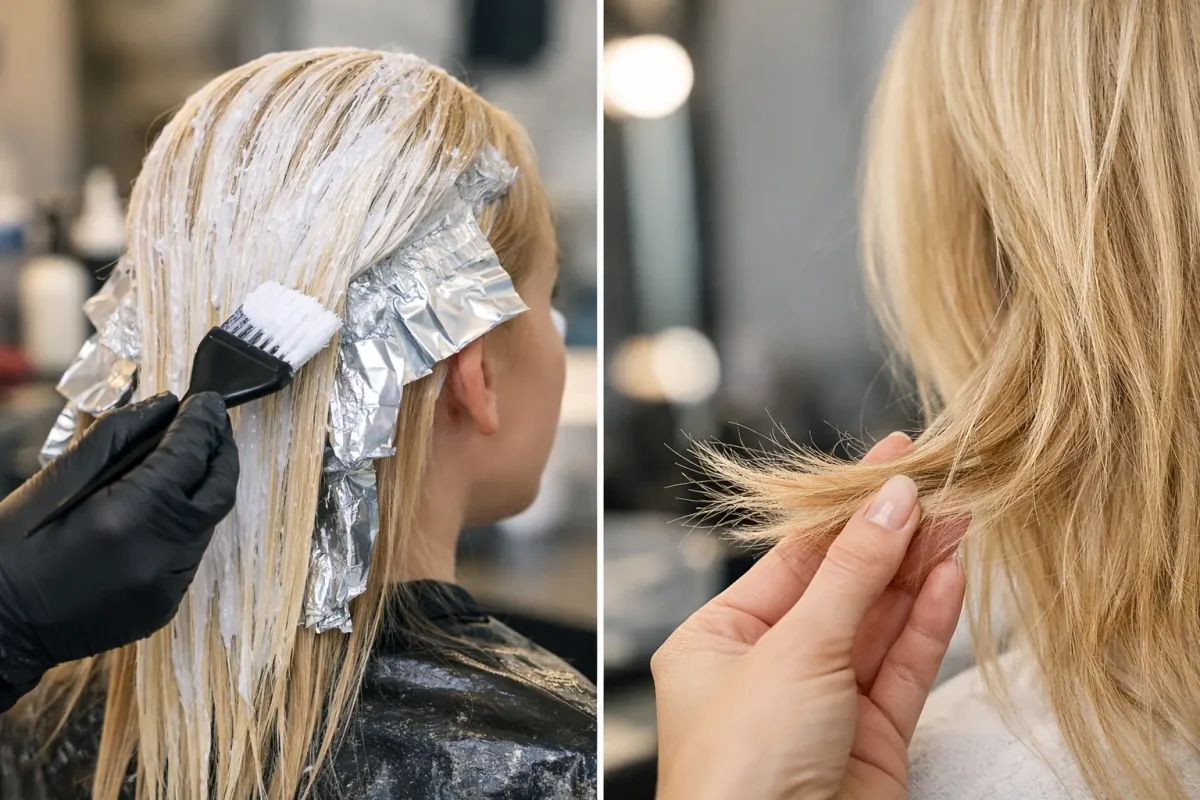
You can usually feel the difference between hair that has been lightened well and hair that has been pushed too far. One still feels soft, moves naturally, and holds a style. The other turns rough, stretchy, dry, or snaps when brushed. So does bleach always damage hair? Technically, bleach changes the hair structure every time it lifts color, but that does not always mean your hair will end up fried, breaking, or beyond saving.
That distinction matters. A lot of people hear “bleach is damaging” and assume every blonde service, balayage, or pastel transformation leads straight to ruined hair. In reality, the result depends on your starting point, your hair history, the strength of the lightener, how long it processes, and whether the person applying it knows when to stop.
Does bleach always damage hair, or is that overstated?
Bleach works by opening the hair cuticle and breaking down the natural pigment inside the strand. That process is not neutral. Hair does not come out exactly the same as it went in. So from a technical point of view, lightening creates some level of structural change every time.
But “damage” is where people get tripped up, because not all damage looks or feels the same. There is a big difference between mild dryness that is manageable with the right care and severe breakage that requires a major cut. Hair can be lightened and still look glossy, feel healthy, and remain strong enough for everyday styling. It just means the service was matched to the hair.
This is why blanket answers are not very helpful. Bleach always alters hair. It does not always destroy it.
What actually determines how much damage bleach causes?
The biggest factor is how much lift you are asking for. Taking dark virgin hair a couple of levels lighter is a very different job from trying to turn previously colored hair into icy blonde in one session. The more pigment you need to remove, the more stress you place on the hair.
Hair history also matters more than many people realize. If your hair has box dye, old highlights, heat damage, chemical straightening, or years of overlapping color, bleach is working on a strand that may already be compromised. Even if the hair looks decent when dry, the internal structure may be weaker than expected.
Application technique plays a huge role too. Well-placed balayage, careful sectioning, controlled saturation, and correct developer choice can make a dramatic difference. So can timing. Leaving bleach on too long, applying it unevenly, or repeatedly overlapping onto already lightened pieces is where things can go downhill fast.
Then there is the condition of the hair before the appointment. Fine hair, porous hair, and hair that tangles easily will usually need a more cautious plan than strong, untouched hair. Healthy expectations are part of healthy hair.
Virgin hair vs previously colored hair
Virgin hair usually gives a stylist more room to work. It tends to lift more predictably because there are no old artificial pigments blocking the process. That does not mean virgin hair is damage-proof, but it often responds better than hair that has been repeatedly dyed.
Previously colored hair is trickier. Old permanent color can lift unevenly, turn warm, or resist lightening. Corrective work often takes multiple appointments, and that slower approach is usually what protects the hair.
Your goal shade matters
Soft caramel ribbons, beige balayage, or a sunlit brunette usually require less force than platinum blonde or a clean pastel base. The paler the end goal, the more the hair has to give up. That is why realistic goal setting matters. Sometimes the healthiest service is not the lightest service.
Signs bleach has gone too far
Healthy-looking lightened hair may feel slightly drier than before, but it should still have bounce and elasticity. When bleach has caused more serious damage, the warning signs are harder to ignore.
Hair may feel gummy when wet, overly stretchy, or rough all the way through. It may tangle constantly, lose shine, or snap at the ends and around the face. Some people notice their curl pattern loosens or becomes frizzy in a way it never did before. Others find their hair suddenly will not hold a smooth blowout or starts shedding short broken pieces.
These are signs that the hair has been compromised beyond ordinary dryness. At that point, more lightening is usually the last thing it needs.
Can you bleach hair safely?
Safer is the better word. There is no version of bleach that acts like a deep conditioner, but there are absolutely safer ways to lighten hair.
A professional approach starts with a real assessment, not guesswork. That includes looking at your natural level, checking for previous color, testing the condition of the mid-lengths and ends, and deciding whether the hair can handle the goal you have in mind. Sometimes the answer is yes. Sometimes it is yes, but not today. Sometimes it is no, and that honesty is what protects the hair.
Controlled lightening also means using the right formula for the service. Full bleach-outs, foils, root retouches, tip-outs, and balayage all place bleach differently and create different levels of stress. A good stylist adjusts the technique instead of forcing every client into the same process.
Spacing out major lightening services can help as well. If your hair needs to move from dark to very light, doing it in stages often preserves more length and softness than trying to get there in one dramatic session.
How to reduce bleach damage before and after your appointment
Preparation helps, but realistic preparation helps more. Washing your hair one or two days before a lightening appointment is fine. Arriving with weeks of heavy oil, product buildup, or random DIY treatments is not a secret protection trick. Clean enough hair gives better, more even results.
What matters most before the appointment is honesty. Tell your stylist if you have used box dye, toners, glosses, keratin treatments, or anything else that changed the hair. That information affects what can be done safely.
After the service, focus on moisture, gentle handling, and heat control. Lightened hair usually benefits from a routine that includes a hydrating conditioner, a leave-in product, and less aggressive hot-tool use. If you wash with very hot water, rip through tangles, or flat iron the same section daily, you make already sensitized hair work even harder.
Regular trims also matter. They do not repair internal damage, but they stop split ends from traveling and keep lightened hair looking polished instead of frayed.
What not to do after bleaching
The biggest mistake is stacking stress on top of stress. Bleaching hair and then immediately using harsh heat, another strong chemical service, or an at-home correction kit is how manageable damage turns into breakage.
This is especially common when the first result is warmer than expected. Freshly lightened hair often needs toning, time, or a follow-up plan, not panic. Trying to fix it yourself with more bleach is usually where trouble starts.
Bleach damage is not the same for every hair type
Fine hair often shows stress faster because there is less bulk in each strand. Curly and textured hair can also need more caution because dryness and breakage may be more noticeable when the strand has already been shaped by bends and coils. Long hair has its own challenge too, since the ends may be years older than the roots and have a much longer history of heat and brushing.
That is why personalized color planning matters so much. The same formula and timing that works beautifully on one person can be too aggressive for someone else.
When bleach is worth it and when it is not
Sometimes bleach is absolutely the right call. If you want bright blonde, dimensional highlights, a clean balayage, or a vivid fashion shade that needs a pale base, there is often no other way to get that result. Used well, bleach creates beautiful color work that would be impossible otherwise.
Sometimes it is not worth it, at least not yet. If the hair is already fragile, heavily processed, or breaking, preserving the hair usually needs to come before chasing the lightest possible shade. That might mean choosing a softer blonde, adding dimension without pushing every piece lighter, or taking a slower path over multiple visits.
That is not settling. It is making a smart choice that leaves you with hair you still enjoy wearing.
The best bleach results come from respecting what your hair can realistically handle, not from forcing it to do more than it should. If you want expert advice on lightening, blonding, or creative color, book an appointment at Twisted Scissors in Bridgeman Downs.