
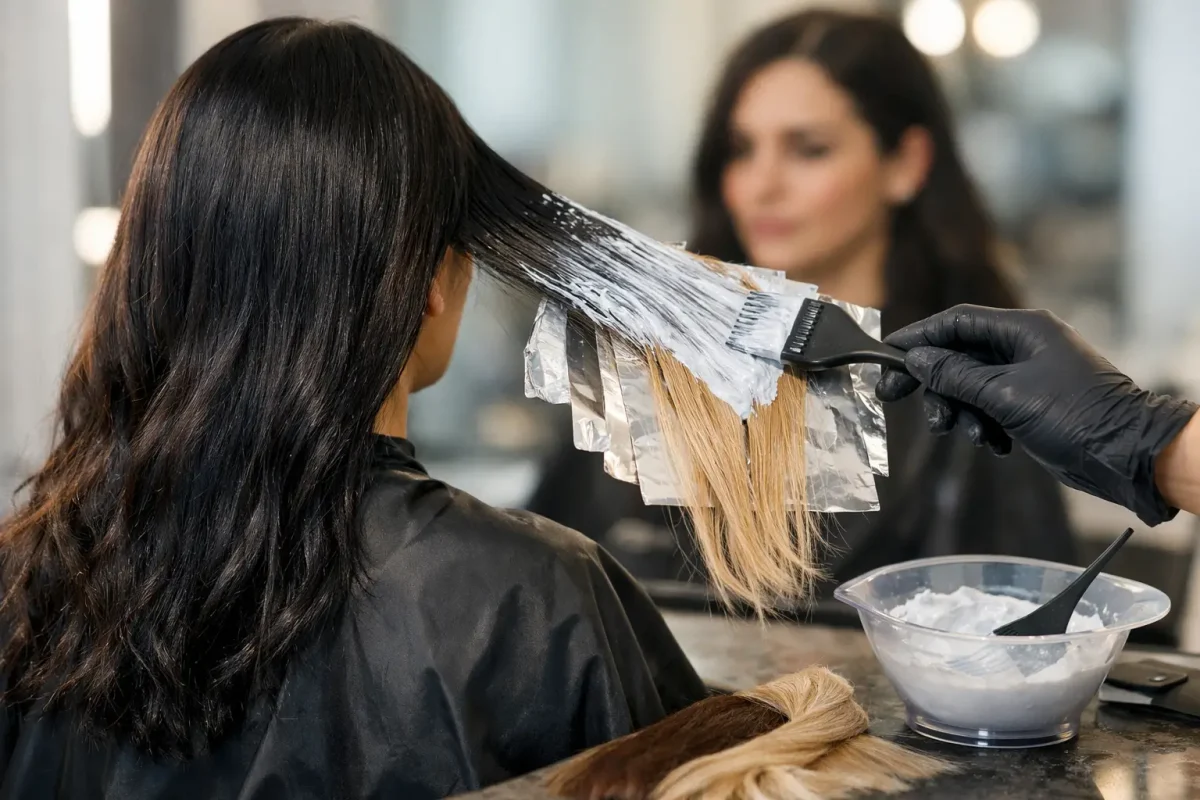
That moment when dark dyed hair starts feeling too heavy, too flat, or just not like you anymore is usually when the real question shows up – how to transition from dark dye without wrecking your hair in the process. The short answer is that going lighter, softer, or more natural is possible, but it rarely happens in one appointment if you want the result to look polished and your hair to stay in good condition.
Dark dye is stubborn for a reason. Whether it is salon color, box dye, semi-permanent buildup, or years of refreshing the same brunette or black shade, those artificial pigments sit deep in the hair and do not always lift evenly. That is why two people can ask for the same end result and need completely different plans.
Why transitioning from dark dye takes strategy
When clients want a change, they often picture the target shade first – a softer brunette, warm caramel, beige blonde, copper, or even a lived-in balayage. What matters just as much is the starting point. Dark dye usually leaves behind underlying warmth as it lifts, which means red, orange, and gold tones are part of the process.
That does not mean something has gone wrong. It means your hair is following the chemistry. If your hair has been colored dark multiple times, the mids and ends often hold more pigment than the root area. That can create patchiness, bands of color, or brighter roots if the transition is rushed.
This is where expectations matter. If your goal is healthy hair with a beautiful finish, patience is usually part of the service.
How to transition from dark dye without overprocessing
The best approach depends on what dark dye you have, how long you have been using it, and where you want to end up. A soft shift to a dimensional brunette is very different from trying to become blonde. One can often happen faster than the other.
In most cases, the first step is not heavy lightening everywhere. It is assessment. A stylist needs to know whether your dark shade is permanent color, demi-permanent color, box dye, henna-like pigment, or layers of multiple formulas over time. Hair porosity, previous bleach, and heat damage also change what is realistic.
A careful transition often starts with one of three routes. The first is a color remover or corrective service to shrink out artificial pigment before lightening. The second is strategic lightening through highlights, balayage, or face-framing pieces to break up the darkness. The third is a slow shift with glosses and tonal changes, especially if you want to soften dark brown into something warmer and more dimensional rather than dramatically lighter.
None of these options is automatically the best one. It depends on your hair history and how much change you want now versus later.
If you want to go a little lighter
This is usually the easiest and healthiest transition. If your current hair is very dark brown or black and you want a medium brunette, chestnut, or warm mocha result, your stylist may not need to push the hair as hard. In some cases, removing old pigment and refining the tone is enough to make the color feel fresher and softer.
Adding subtle dimension can also make a huge difference. Fine highlights or balayage pieces can stop dark dye from looking blocky and create movement without forcing the entire head lighter in one go.
If you want to go significantly lighter
This is where timing matters most. Lifting dark artificial pigment to a blonde or light copper result often takes multiple sessions. Hair usually passes through warm stages first, and trying to jump past them too quickly can lead to breakage, mushy texture, or uneven color correction.
A good stylist will usually build the result in stages. That may mean one appointment focused on removing as much dark pigment as possible, another on controlled lightening, and later appointments on refining tone and brightness. It is not the fastest path, but it is often the one that leaves you with hair that still feels like hair.
What usually happens during the process
If you have never had a color correction before, it helps to know what the appointment plan may look like. Most transitions from dark dye begin with a consultation and strand test, especially if your hair has a box dye history or feels compromised already. This helps predict how the hair will lift and whether it can handle a bigger change.
From there, the service might involve color remover, lightener, toning, root blending, and a treatment. Sometimes the biggest improvement in the first session is not reaching the final shade. It is removing that flat, inky look and creating a more even canvas.
That first session can already look dramatically better, even if it is still warmer or darker than your eventual goal. Think progress, not instant perfection.
The trade-off between speed and hair health
This is the part clients appreciate hearing clearly. Yes, faster results are possible in some cases. No, faster is not always better.
The more aggressively you try to strip out dark dye, the more stress you put on the hair. If your ends are already dry, porous, or previously bleached under the dark color, they may not tolerate strong processing well. You could end up with the lightness you asked for but a texture you hate.
Healthier transitions usually involve accepting some warmth in the early stages, trimming compromised ends when needed, and spacing out appointments so the hair can recover. If your priority is long, shiny, touchable hair, this is usually the smarter trade.
Why box dye history changes everything
Repeated box dye is one of the biggest wild cards in color correction. The pigments are often dense, metallic salts may be present in some formulas, and overlapping applications can create heavy buildup through the lengths. Even when the hair looks evenly dark on the outside, it may lift in several different stages underneath.
That is why professional correction is less about guessing and more about controlled testing. It protects you from surprises and gives a much better chance of an even result.
How to care for your hair between appointments
If you are serious about how to transition from dark dye successfully, what you do at home matters. Hair that is being lifted or corrected needs moisture, protein balance, and less stress from heat and rough handling.
Use salon-quality products made for color-treated hair, and do not wash with harsh cleansers that strip everything out. A hydrating mask helps, but avoid overdoing protein unless your stylist recommends it. Too much protein can make some hair feel stiff and brittle instead of stronger.
Heat styling should be turned down, not cranked up to fix the texture. If your hair is freshly lightened, treat it gently when wet, use heat protection, and keep brushing careful and minimal. Small habits make a real difference over a few months.
Signs your transition plan is working
A successful transition does not always mean you reach your dream color immediately. More often, it means your hair is getting lighter or softer in a controlled way, the tone is becoming more wearable, and the condition is staying good enough to continue.
You should also feel like the plan makes sense. A stylist should be able to explain what is possible now, what needs more time, and what could compromise the result. Honest guidance is a good sign. Promises that sound too easy usually are.
When a softer goal gives the best result
Sometimes the smartest move is not chasing the lightest version of your inspiration photo. A rich dimensional brunette, bronde balayage, or warm caramel blend can look more expensive and more flattering than pushing dark dyed hair to a pale blonde before it is ready.
This is especially true if you want something lower maintenance. Soft dimension grows out better, needs less frequent toning, and often keeps the hair feeling stronger. There is nothing wrong with a major transformation, but there is also a lot to love about a well-planned in-between shade that suits your lifestyle.
Be realistic, but do not settle
Transitioning from dark dye is part chemistry, part technique, and part patience. It is realistic to want a fresh, brighter, softer result. It is also realistic to need a few stages to get there properly.
The best outcomes usually come from working with the hair you have now instead of fighting it. When the process is tailored well, even a difficult color correction can turn into something beautifully wearable at every stage, not just at the end. If you are ready for a change, book an appointment at Twisted Scissors in Bridgeman Downs.