
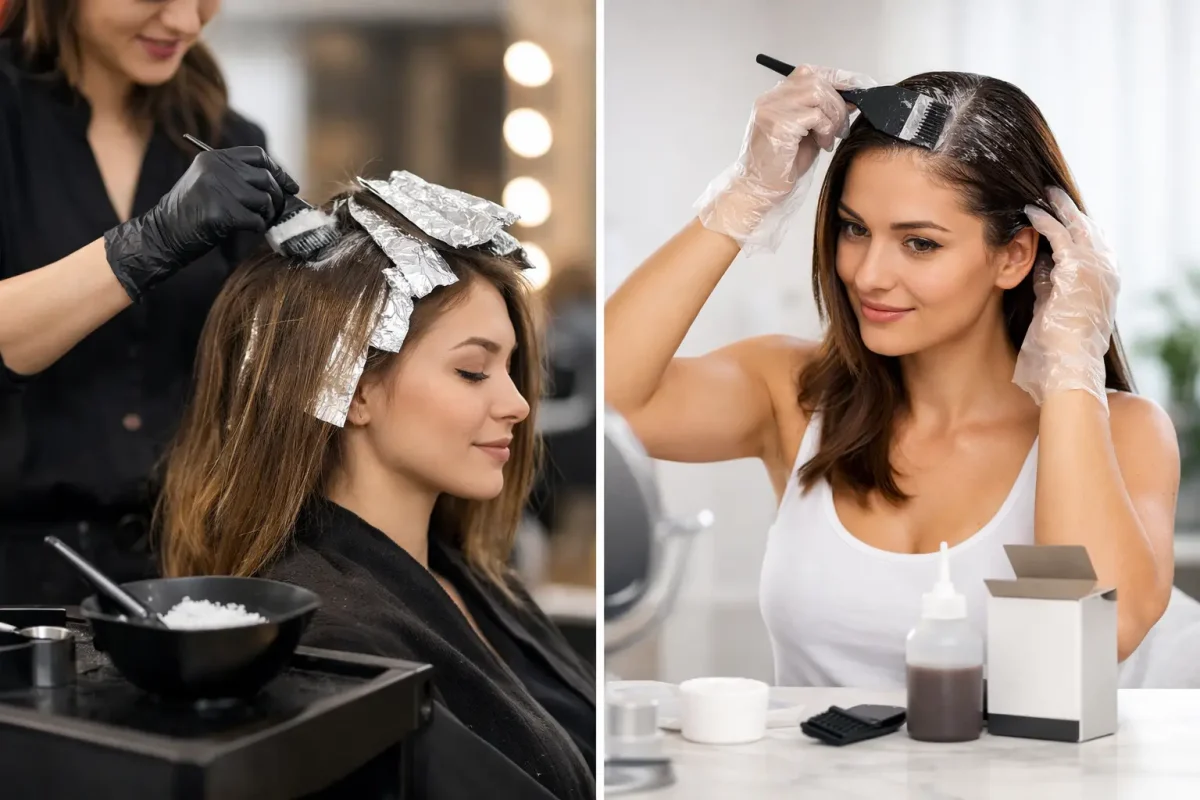
Standing in the hair color aisle with a box in your hand can feel like a quick fix. But when you are weighing salon colour or box dye, the real question is not just price. It is how much control, predictability, and long-term hair health you want from the result.
For some people, box dye seems practical. It is right there, it promises glossy before-and-after photos, and it looks simple enough. The catch is that hair color is chemistry, and chemistry is rarely one-size-fits-all. Your starting shade, previous color history, porosity, gray coverage, and even the condition of your ends all affect the final result.
Salon colour or box dye: what changes the result?
The biggest difference is customization. Box dye is designed to work on a wide range of hair types and shades, which means it has to be stronger and more generalized. A salon color service is mixed for your hair, your goal, and your current condition.
That matters more than most people realize. If your hair is naturally dark and you want to go lighter, a box cannot simply create the cool beige blonde on the front of the packaging. If your ends are porous from past heat styling or previous color, they may grab too much pigment and turn flat or muddy. If you have old box dye underneath, a new color can react in ways that are hard to predict.
A professional colorist looks at the whole picture before mixing anything. That includes your natural base, undertones, gray percentage, processing speed, and how much your hair can realistically handle in one visit. The goal is not just a nice color on the day. It is a result that fades better, feels healthier, and gives you a plan for maintenance.
Why box dye can look uneven
Most at-home dye problems come down to overlap, strength, and unrealistic expectations. People often apply permanent color from roots to ends every time, even though the roots and ends do not need the same formula. Fresh regrowth processes differently from lengths that have already been colored, dried out, or lightened in the past.
This is how you end up with hot roots, dark bands, or overly dull ends. Hot roots happen when the heat from your scalp causes color to process lighter or warmer near the root area. Dark bands happen when permanent color is layered repeatedly over previously colored sections. Dull ends happen when porous hair soaks up pigment and loses shine.
None of this means box dye fails every single time. If someone has healthy virgin hair, wants to stay close to their natural level, and is covering only a small amount of gray, an at-home kit may give a passable result. The issue is that many people are not starting from that ideal scenario.
The cost question is real
Let us be honest – price is the reason this debate keeps coming up. A box dye is cheaper upfront. There is no point pretending otherwise.
But the cheaper option is not always the lower-cost option over time. If the shade turns too dark, too warm, patchy, or flat, correcting it usually costs more than getting it professionally done in the first place. Color correction is more time-consuming because the stylist has to work around uneven buildup, hidden tones, and compromised hair condition.
There is also the maintenance side. Salon color generally ages better because the formula is chosen for your specific goal. That can mean softer regrowth, more dimension, and less need to keep recoloring the full head. A result that grows out well can save both money and frustration.
When salon color makes the biggest difference
Some color goals are especially hard to achieve with a box. If you want balayage, ombre, fashion shades, pastel tones, or a soft dimensional brunette or blonde, salon color is the smarter route. Those looks rely on placement, tone control, and formula choice. They are not just about applying one shade all over.
The same goes for major changes. Going darker sounds simple, but filling the hair correctly and choosing the right undertone makes a huge difference between rich and glossy or flat and inky. Going lighter is even more technical because lift exposes warmth. Controlling that warmth without pushing the hair too far takes experience.
Gray coverage is another area where it depends. Some people do fine with at-home coverage for a while. Others find the color looks too harsh, too solid, or fades unevenly around the hairline. In-salon color can be adjusted to create softer coverage, better blending, or a more natural finish.
Hair health is part of the color result
One of the biggest myths in hair color is that shade is the only thing that matters. In reality, the condition of your hair affects how color looks just as much as the formula does. Dry, porous hair reflects light differently than healthy hair, so even a good shade can look flat if the hair is compromised.
Professional color services tend to factor this in. That might mean a gentler developer, a gloss instead of permanent color on the lengths, or a staged approach instead of trying to force a dramatic result in one session. Those choices protect the feel of the hair while still moving you toward the look you want.
Box dye does not make those decisions for you. It assumes one method for everyone.
Salon colour or box dye for blondes, brunettes, and bold shades
Blondes usually have the least room for error. Lightening exposes yellow, orange, and gold undertones, and toning them requires the right balance. Too much ash can make the hair look dull or greenish. Too much warmth can make it look brassy fast. Box lighteners are especially risky because they can leave patchiness and dryness that are difficult to reverse.
Brunettes often think darker is safer, but that is not always true. Repeated box dye can create a heavy, flat result with no movement. Professional brunette shades are usually more nuanced. They may include warmth, depth, or glossing to keep the color reflective rather than blocky.
Bold shades like copper, red, violet, neon, and pastel are where professional guidance really pays off. These colors depend on the base underneath. If the hair is not lifted evenly first, the final tone will not behave the way you expect. Reds can grab too hard, coppers can go too bright, and pastels can disappear or turn muddy.
What if you already used box dye?
You are not stuck, and you are definitely not the only one. A lot of salon color work begins with fixing previous at-home color. The best next step is usually not another box on top. That tends to create more buildup and make future correction harder.
Instead, it helps to be honest about your color history. Even if it was months ago, that information matters. Hair holds onto artificial pigment longer than people think, especially darker shades. A stylist can work with that history, but only if they know what is there.
Sometimes the fix is simpler than expected, like adding a gloss, softening warmth, or blending banding. Sometimes it takes more than one appointment. That is normal. Healthy progress is usually better than chasing an instant fix that creates more damage.
So which one should you choose?
If your priority is convenience and the change is minimal, box dye may seem tempting. For a small number of people, it can be enough. But if you care about tone, shine, dimension, healthy grow-out, or keeping your hair in good condition, salon color gives you a much better chance of getting what you actually pictured.
That is the part many people miss. Most box dye decisions are based on the color on the carton. Salon decisions are based on your real hair.
The better choice depends on your goals, your current color history, and how much risk you are willing to take. If the stakes feel high because you want a noticeable change, have previous color on your hair, or do not want to deal with correction later, professional color is usually the safer investment.
Good hair color should feel like it suits you, not like you are managing the aftermath of a compromise. If you want expert advice on the best path for your hair, book an appointment at Twisted Scissors in Bridgeman Downs.