How to Stop Hair Snapping Without Losing Style
How to Stop Hair Snapping Without Losing Style
That frustrating moment when your ends snap during brushing is not just a bad hair day. It is your hair telling you that its strength, moisture balance, or daily routine needs attention. Learning how to stop hair snapping starts with identifying what is stressing your strands, then making a few practical changes that protect your length without asking you to give up the color, cut, or polished style you love.
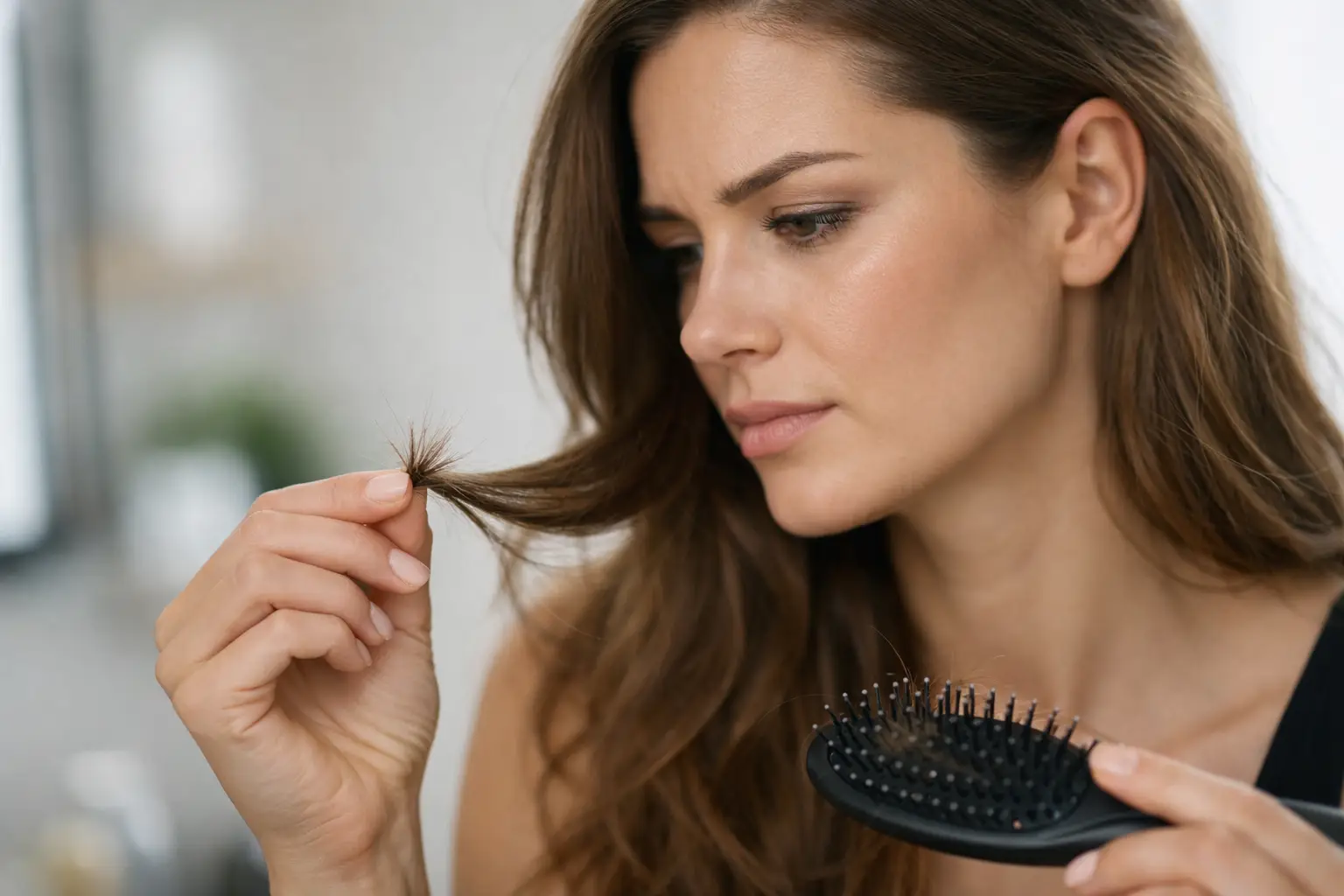
Hair snapping is different from shedding. Shedding happens from the root and is part of the normal growth cycle. Snapping, or breakage, happens along the hair shaft when a strand becomes too weak to handle tension, heat, dryness, or chemical processing. You may notice short, uneven pieces around your crown, frayed ends, more hair in your brush, or lengths that seem unable to grow past a certain point.
Why Hair Snaps in the First Place
Hair is strongest when its outer protective layer, known as the cuticle, lies smooth and intact. Repeated friction, high heat, aggressive detangling, and chemical services can lift or wear away that layer. Once the inner structure is exposed, the strand loses flexibility and can break under everyday pressure.
The cause is rarely just one thing. A blonde client who heat styles every morning may need a different plan from someone whose hair is snapping after frequent tight ponytails. Common triggers include:
- Lightening, coloring, perming, or at-home chemical treatments that have pushed the hair beyond its comfort zone.
- Heat styling without adequate protection, especially repeated passes with a flat iron or curling iron.
- Brushing dry, tangled hair from the roots down or using a brush that catches and pulls.
- Dryness caused by overwashing, harsh cleansers, sun exposure, chlorinated pools, or hard water.
- Tension from tight buns, extensions, clips, elastics, or sleeping with hair tied in the same spot every night.
It can also be a combination of breakage and split ends. A split end cannot be permanently repaired. Products can temporarily smooth its appearance, but the split can continue traveling upward until it is trimmed.
How to Stop Hair Snapping With a Better Routine
The goal is not to pile every repair product onto your bathroom shelf. The goal is to create less damage while giving your hair the moisture, reinforcement, and gentle handling it needs.
Start with a strategic trim
If the ends feel rough, thin, or see-through, a trim is often the fastest way to make hair look healthier. Holding on to severely split ends can make the length appear longer for a few weeks, but it usually leads to more breakage and a choppier result later.
A good cut does not always mean losing inches. A stylist can remove the most fragile ends while preserving as much length as possible, then shape the haircut so it looks intentional and full. Regular small trims are especially useful if you are growing out a bob, maintaining long layers, or refreshing a colored style.
Wash for your hair, not a schedule
Overwashing can leave some hair dry and brittle, while waiting too long between washes can create tangles and buildup that make detangling harder. The right frequency depends on your scalp, texture, activity level, and products.
Use lukewarm water rather than very hot water, and concentrate shampoo on the scalp. Let the suds rinse through the lengths instead of scrubbing the ends. Follow with conditioner from mid-lengths to ends every time you wash. If your hair feels dry after conditioning, leave it on for a few extra minutes before rinsing.
A weekly conditioning mask can make a noticeable difference for thirsty, color-treated, or heat-styled hair. Look for moisture-focused formulas when your strands feel stiff and rough. If your hair has been lightened or feels overly stretchy when wet, a bond-building or protein treatment may help reinforce it. The balance matters: too much protein can make some hair feel rigid, while moisture alone may not be enough for compromised lengths.
Detangle with patience
Most breakage happens when hair is rushed. Never start brushing a knot from the top and pull down. Instead, apply leave-in conditioner or detangling spray, hold the section above the tangle to reduce scalp tension, and work from the ends upward in small sections.
A wide-tooth comb or flexible detangling brush is generally kinder to wet hair than a fine brush. If your hair is very fragile, detangle it while conditioner is still in it during the shower, then blot it dry gently with a soft towel or cotton T-shirt. Vigorous towel rubbing roughs up the cuticle and creates exactly the friction you are trying to avoid.
Make heat styling earn its place
You do not need to abandon your blowout or waves, but heat needs boundaries. Apply a heat protectant evenly before blow-drying, curling, or straightening. Let hair dry partway before using hot tools, and use the lowest temperature that creates the result you want.
Repeatedly going over the same section is a common cause of snapping. Work with clean sections, use one controlled pass where possible, and avoid using a flat iron on hair that still feels damp. If you style daily, consider rotating in lower-heat looks such as a soft braid, a loose claw-clip twist, or an air-dried texture day.
Protect Your Hair Between Appointments
The small habits count. Switch tight elastics for soft scrunchies or snag-free ties, and vary where you place your ponytail or bun. A style that pulls in the same spot every day can create breakage around the hairline and crown.
Sleeping on a smooth pillowcase and loosely braiding longer hair can reduce overnight rubbing and tangling. If you swim regularly, wet your hair with fresh water first, use a protective leave-in product, and rinse promptly after getting out of the pool. Chlorine and sun can be particularly drying on blonde, balayage, and fashion-color hair.
Be realistic about DIY fixes, too. Heavy oils may make ends feel temporarily softer, but they do not repair internal damage. Similarly, trimming your own ends with household scissors can leave a rough edge that splits more easily. A targeted home routine works best alongside a professional cut and a color plan suited to your hair’s current condition.
Be Smart About Color and Chemical Services
Beautiful blonde, dimensional balayage, vivid fashion shades, and major color changes can all be done with hair health in mind, but they require an honest assessment first. If your hair is already snapping, another round of lightening may not be the best immediate move. A stylist may suggest a softer root blend, a gloss, lowlights, or a gradual lightening plan while your lengths recover.
This is not about being told no. It is about choosing the version of your color goal that still leaves you with hair that feels good to touch and is manageable at home. A professional can assess elasticity, porosity, previous color history, and the areas most likely to break before deciding how far to push a service.
When snapping needs professional attention
Book in sooner rather than later if breakage is suddenly severe, concentrated in patches, happening close to the scalp, or paired with scalp irritation. A stylist can help identify mechanical or chemical damage and create a practical recovery plan. If you are also experiencing unusual shedding, soreness, or changes to your scalp, speak with a healthcare professional as well.
Healthy hair is not about perfection or avoiding every styling choice. It is about recognizing when your routine is asking too much of your strands, then giving them better support before a few snapped ends become a bigger setback. Book an appointment at Twisted Scissors in Mitchelton for a personalized cut, color, and hair-health plan.