
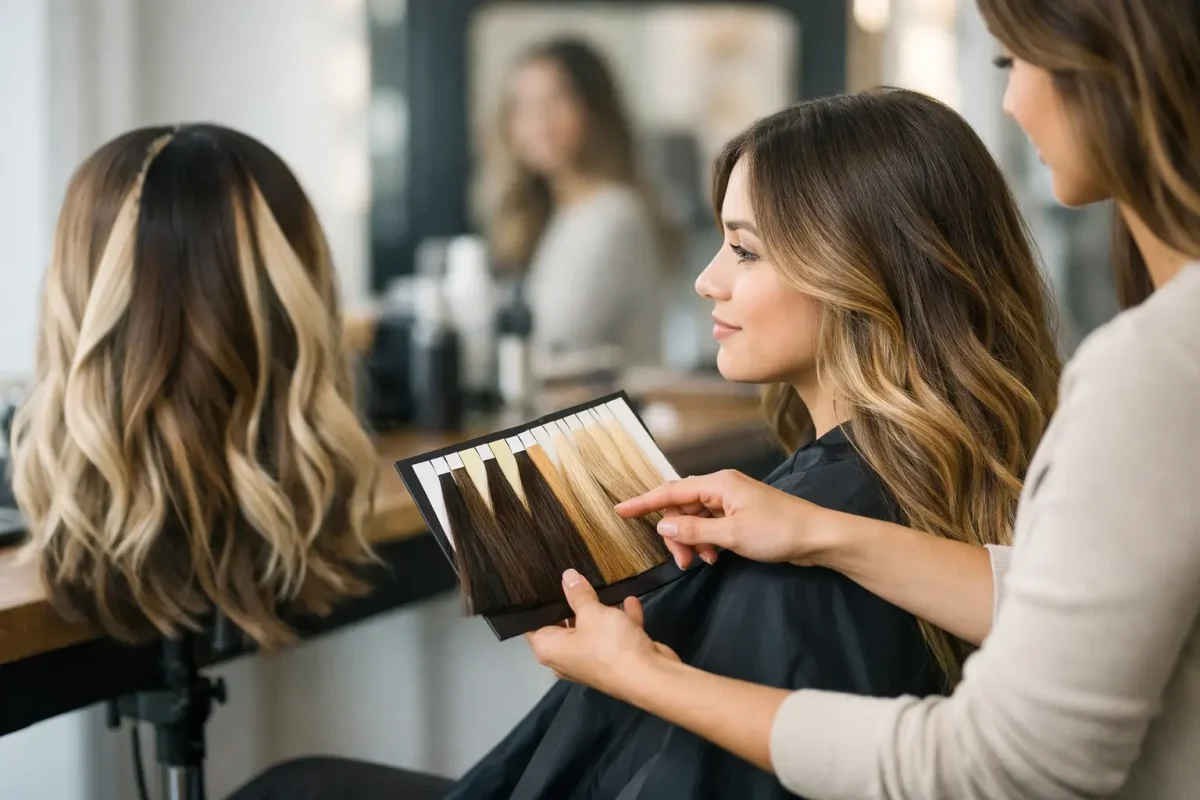
A balayage can be soft and sunlit, bright around the face, or dramatically high-contrast, but the placement is what makes it feel designed for you rather than copied from a photo. Knowing how to choose balayage placement starts with looking beyond the shade itself: where the light begins, how it moves through your haircut, and how much brightness suits your everyday style all matter.
The best balayage should still look beautiful when your hair is in a quick ponytail, styled with waves, or growing out between appointments. That is why a personalized placement plan matters far more than asking for a specific number of foils or a trend name.
Start With the Effect You Want From Your Balayage
Before choosing placement, decide what you want your color to do. Do you want to look subtly brighter without an obvious root line? Do you want your cheekbones and eyes to stand out? Or are you after a noticeable blonding service with contrast and movement?
A low-maintenance balayage usually keeps more of your natural depth through the root area and places lightness from the mid-lengths downward. This gives you a softer grow-out and can be ideal if you prefer fewer color appointments. It is also a great choice for first-time lightening, especially when preserving the condition of the hair is a priority.
For a brighter result, the lightness may begin higher through the crown and around the face. This creates more impact, but it can require toning and refresh appointments more often to keep the color fresh rather than brassy. Neither approach is better. The right choice depends on how polished, bold, or effortless you want your hair to look between salon visits.
How to Choose Balayage Placement for Your Face Shape
Face-framing pieces are often the most noticeable part of a balayage. They can bring light toward the eyes, soften a strong jawline, or add definition around the cheekbones. The goal is not to follow a rigid face-shape rulebook. It is to place brightness where it complements your features and feels like you.
Rounder or fuller face shapes
Keeping a little depth close to the roots at the sides can create a more elongated effect. Brighter pieces placed slightly below the cheekbones and through the lower lengths add vertical movement without making the face appear wider. A strong, chunky money piece can still look fantastic, but it should be balanced with soft blending behind it.
Oval face shapes
Oval faces tend to work well with many balayage patterns. Your stylist can concentrate brightness around the face, through the ends, or evenly through the layers depending on the look you prefer. This is often a great canvas for a bolder face frame or a more dimensional blonde.
Square or heart-shaped face shapes
Soft, diffused brightness around the temples and cheekbones can help create a gentler outline. For a square jaw, avoiding an abrupt horizontal band of color near the jawline usually gives a more fluid result. For a heart-shaped face, a little extra lightness through the mid-lengths and ends can create visual balance below the chin.
These are guides, not limits. Your hairline, parting, features, and personal style will always be more useful than trying to fit into one category.
Let Your Haircut Direct the Color
Balayage needs to work with the shape of your cut. A placement that looks incredible on long, one-length hair can disappear in a shag or look overly striped on a blunt bob. Your stylist should consider where your layers fall and how you normally wear your hair before painting a single section.
Long layers and textured cuts can hold a lot of blended dimension. Lightness can be painted through the surface, underneath selected layers, and at the ends to make movement more visible. When you wave or curl the hair, the different tones reveal themselves naturally.
A blunt bob or lob generally benefits from intentional, clean placement. Too much scattered lightness can make the perimeter look thin or uneven. A softer root melt with brighter ends, plus a few carefully placed pieces around the face, often keeps the cut looking full while still adding dimension.
For bangs or a fringe, the color needs special attention. Brightness can be added delicately through the ends or outer edges, but heavy lightening right at the root may make the fringe look disconnected from the rest of the hair. If you wear a center part, the front sections will be styled very differently than if you switch between a side part and a center part, so mention this during your consultation.
Consider Your Natural Color and Existing History
Your starting point determines how much lightness your hair can comfortably achieve in one session. Dark natural hair can create beautiful caramel, honey, cinnamon, or warm beige balayage without pushing the hair too far. Reaching a very pale blonde from a deep brunette base may be possible over time, but it needs a measured approach to protect the hair.
The same applies to previously colored hair. Old box dye, dark permanent color, uneven bands, and existing highlights all affect where and how a stylist places the balayage. Sometimes the most flattering plan is to prioritize a soft blend and healthy-looking color first, then build toward brighter ends across future appointments.
Warmth is another part of placement. If your hair lifts warm, a stylist may leave strategically placed deeper areas between brighter ribbons. This prevents the overall look from becoming flat and gives the toner a more natural base to work with. A balayage does not need to be icy to look refined. Beige, golden, caramel, copper, and warm brunette tones can look exceptionally polished when they suit the skin tone and natural depth.
Decide Where You Want the Brightness to Show
Think about how you see your own hair most often. The hairline, part, ends, and front sections create different impressions, so a useful consultation includes discussing where you want to notice the color.
If you want brightness every time you look in the mirror, ask about a face frame and lighter pieces near your part. If you love a more understated effect, keep the top layer dimensional and place more lightness through the interior and ends. This can look especially beautiful when your hair moves, without making the roots look dramatically different.
The ends deserve attention too. Heavily saturated ends give a more obvious, beachy balayage effect, while finely feathered ends feel softer and more lived-in. If your ends are dry or fragile, they may not be the right place to chase maximum lightness. Trimming compromised ends and choosing a gentler blend can make the finished color look far more expensive.
Match the Placement to Your Maintenance Routine
Balayage is often described as low maintenance, but that does not mean every balayage has the same upkeep. A subtle, rooted blend may only need occasional glossing and a refresh when you are ready for more brightness. A high-impact blonde with a bright money piece can need toning more regularly, particularly in Brisbane’s sunny weather where warm tones can show through quickly.
Be honest about your routine. If you heat-style frequently, swim often, or prefer to stretch appointments, a softer placement with natural depth is usually the smarter choice. If you enjoy keeping your color very bright and are happy to invest in glosses, treatments, and regular salon care, a lighter, more detailed placement may suit you beautifully.
At home, color-safe shampoo, conditioner, heat protection, and occasional purple or blue toning products can help maintain the tone your stylist created. However, toning shampoo cannot replace thoughtful placement or correct a balayage that has been pushed too light for the hair’s condition.
Bring Inspiration, Then Leave Room for Expertise
Photos are valuable because they show the overall mood you love: soft brunette ribbons, warm golden dimension, a bright blonde halo, or a strong face frame. Bring a few images with hair similar to your natural depth and length where possible. Also point out exactly what you like in each photo, whether it is the root shadow, the brightness near the face, or the blended ends.
Your stylist can then translate that inspiration into a placement that works with your own hair density, previous color, haircut, and lifestyle. The most flattering balayage is rarely an exact replica. It is a version that looks natural on you, wears well, and supports the condition of your hair.
A well-placed balayage should make your color look intentional from every angle, not just in one salon photo. For a tailored color plan that fits your hair and routine, book an appointment at Twisted Scissors in Bridgeman Downs.