
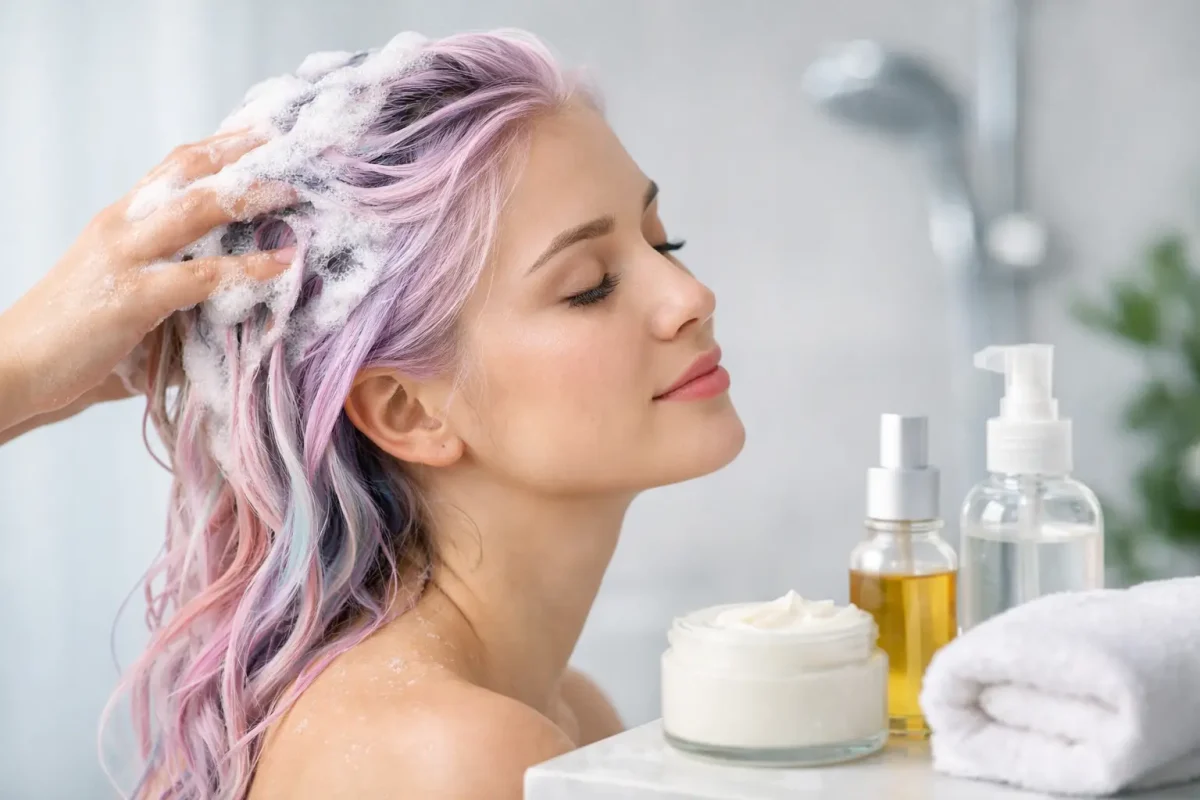
Pastel hair is soft, expressive, and surprisingly high-maintenance. Whether you have a blush pink bob, lavender lengths, or a cool peach balayage, knowing how to care for pastel hair is what separates a fresh, dimensional shade from color that turns dull after a few washes. The goal is not to stop fading completely – pastel dyes are designed to fade gently – but to keep your color looking intentional, healthy, and true to tone for as long as possible.
Why pastel shades fade faster
Pastel color is created with a very low concentration of pigment. Unlike a deep brunette, red, or vivid fashion color, it does not have much pigment available to hold onto the hair. That delicate, translucent finish is exactly what makes pastel hair beautiful, but it also means every shampoo, hot shower, and styling session can make a noticeable difference.
Most pastel shades also need a very light base before application. Hair is commonly lightened to pale blonde first so pink, lilac, mint, blue, or peach can show clearly. Lightened hair can be more porous, particularly through the mid-lengths and ends. Porous hair may grab color quickly, then release it just as fast if it is not cared for properly.
Your starting shade matters too. Soft peach and baby pink often fade warmly, while silver, icy blue, and lavender can lose their cool tone or turn slightly yellow as the underlying blonde shows through. This is normal, not a sign that your color has gone wrong.
How to care for pastel hair between salon visits
The biggest change is simple: wash less often. For many people, two or three washes a week is enough. If your scalp gets oily quickly, stretch your wash days gradually instead of suddenly skipping shampoo for a week. A good dry shampoo can help absorb oil at the roots while leaving the pastel lengths alone.
When you do wash, use cool to lukewarm water. Hot water lifts the hair cuticle and allows pigment to escape more quickly. It can also make lightened hair feel dry, which creates the rough texture that makes pastel tones look less polished. A cooler rinse is one of the easiest ways to extend the life of your color.
Choose a sulfate-free, color-safe shampoo and conditioner designed for color-treated hair. Strong cleansing shampoos, dandruff formulas, clarifying products, and some volumizing shampoos can strip soft color quickly. That does not mean you can never use them, but save clarifying shampoo for when you genuinely need to remove buildup, ideally just before a color refresh rather than right after one.
Be thoughtful with purple shampoo, too. It is helpful for maintaining a pale blonde base, especially under lilac, silver, or blue-based pastels. But it is not automatically right for every pastel shade. Overusing purple shampoo can make pale pink look cooler or murkier, and it may alter peach or coral tones. Your stylist can recommend whether it belongs in your routine and how often to use it.
Protect your color from heat and water
Heat styling does not just affect the condition of your hair. High temperatures can speed up pastel fading and make the surface of lightened hair look dry. Use a heat protectant every time you blow-dry, curl, straighten, or use hot rollers. Keep tools on the lowest effective temperature, especially on bleached ends, and avoid repeatedly passing a flat iron over the same section.
You do not have to give up styling. The better approach is to make heat work smarter. Let hair air-dry partway before blow-drying, use a round brush for a smooth finish instead of relying on a straightener, and choose loose waves over tightly curled, heavily heated styles when you can. A quality haircut also makes a difference here. Healthy, well-shaped ends hold their style better, so you may need less heat to achieve the look you want.
Pool water deserves a little planning. Chlorine and minerals can pull pastel color quickly and sometimes create unwanted tones in very light hair. Before swimming, wet your hair with clean water and apply a leave-in conditioner or lightweight protective treatment. Hair that is already saturated with fresh water is less likely to soak up as much pool water. Wear a swim cap if it suits your plans, then rinse your hair as soon as possible afterward.
Saltwater can be drying as well. If you are heading to the beach, bring a leave-in product and do not leave salt sitting in your hair for the rest of the day. Sun exposure can also fade fashion shades, so a hat is not only a great accessory – it is practical color protection.
Keep lightened hair hydrated, not overloaded
Pastel hair often needs moisture, but it does not need every treatment in your bathroom cabinet at once. Overloading fine or soft-textured hair with rich masks and oils can make it limp, while too much protein can leave it feeling stiff and brittle. The right balance depends on your hair’s texture, lightening history, and how often you use heat.
A hydrating mask once a week is a good starting point for many pastel clients. Focus it through the mid-lengths and ends, where hair is usually the most lightened and most vulnerable to dryness. If your hair feels stretchy when wet, breaks easily, or has lost its usual strength, a bond-building or protein-focused treatment may be useful. If it feels rough, tangles easily, or lacks shine, moisture is often the priority.
Pay attention to how your hair responds rather than following a product schedule blindly. Soft, flexible hair with a healthy shine is the aim. If your hair starts to feel coated, flat, or unusually dry, simplify your routine and ask your stylist what is likely missing.
Refreshing pastel color without creating patchiness
A pastel refresh is part of the look, not a failure of your aftercare. Depending on the shade, your wash routine, hair porosity, and sun exposure, you may want a toner or color refresh every few weeks. Very pale shades can need attention sooner, while deeper pastels may fade more gradually.
Color-depositing conditioners and masks can be useful at home, but they are not interchangeable with professional color. A pink mask may be perfect for maintaining a pink shade, yet it can stain very porous ends more intensely than the roots. A lavender conditioner can also alter a peach or rose tone in ways that are difficult to reverse. If you are using a color-depositing product, choose one that matches your exact shade family and use it sparingly at first.
Avoid reaching for box dye when your pastel starts fading unevenly. Pastel color usually sits on a carefully prepared blonde base, and an at-home formula can create banding, muddy tones, or unnecessary damage. A professional refresh allows the formula to be adjusted for the way your individual hair has faded. That is especially valuable if you have a mix of highlights, balayage, previously lightened ends, or more than one pastel tone.
Small habits that make a visible difference
A few everyday adjustments can protect your color more than an expensive shelf of products. Sleep on a silk or satin pillowcase to reduce friction and help prevent tangles. Brush gently from the ends upward, particularly when hair is wet. Use a microfiber towel or soft cotton T-shirt to blot excess water instead of rough towel-drying.
It also helps to keep hair away from unnecessary friction. Loose braids, low buns, and soft scrunchies are kinder than tight elastics when you are exercising or sleeping. If you wear your hair up often, change the placement so the same area is not constantly stressed or rubbed.
Most importantly, expect pastel hair to evolve. A soft pink may become a pretty blush, a lavender may fade to a silvery blonde, and peach may settle into a warm creamy tone. Sometimes that lived-in fade is beautiful. Other times, you may prefer to refresh it before an event, holiday, or change of season. The best pastel plan is one that suits your lifestyle, maintenance preference, and willingness to visit the salon for touch-ups.
Pastel hair should feel fun to wear, not stressful to maintain, so book an appointment at Twisted Scissors in Bridgeman Downs for a personalized color plan and aftercare advice that works for your hair.