
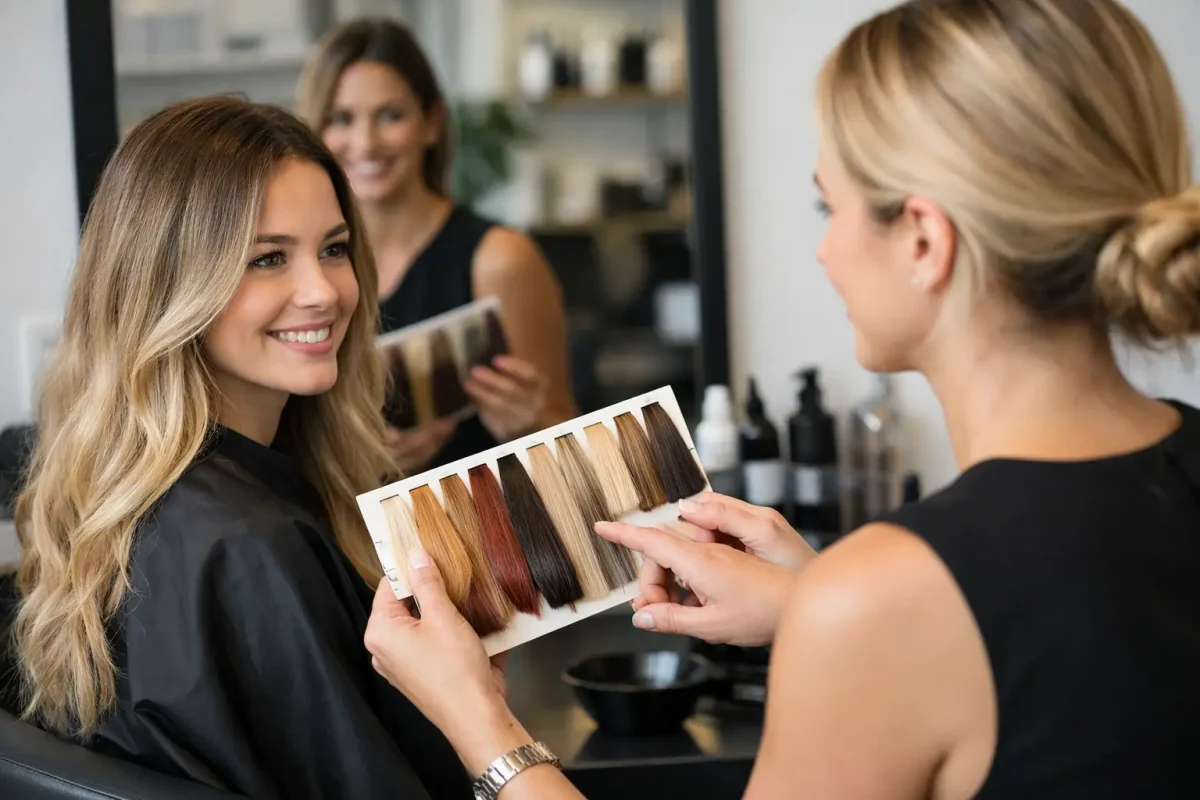
A great color appointment starts long before the first bowl is mixed. A Brisbane hair colour consultation is where a stylist turns a saved inspiration photo, a vague “I want a change,” or a color correction concern into a realistic plan that suits your hair, lifestyle, and personal style.
It is not a quick formality before the appointment. It is the part that helps prevent unwanted warmth, patchy lifting, surprise maintenance, and a result that looks beautiful for one week but feels difficult to live with afterward. Whether you are considering soft balayage, a rich brunette refresh, bright copper, icy blonde, or a fashion shade, the right conversation makes the finished color far more predictable.
What happens in a hair color consultation?
Your stylist begins by getting to know the hair you have now, not just the color you would like to have. That means looking at your natural base, previous salon color, at-home dye history, highlights, gray coverage, condition, texture, density, and how your hair responds to lightening.
This matters because hair color has a history. Dark box dye, old highlights, toner buildup, mineral deposits, and previous fashion colors can all affect how evenly the hair lifts and which shades are achievable in one visit. Being completely honest about your color history gives your stylist the information needed to protect your hair and plan accurately. There is no judgment – only better decisions.
You will also talk about the look you want. Inspiration photos are helpful, especially when you bring a few images rather than relying on one perfectly filtered picture. A stylist can spot the details that make a photo appealing: perhaps it is the soft root, the brightness around the face, the depth through the ends, or the way the shade works with a particular haircut.
The questions that shape your result
A thoughtful consultation often covers more than “light or dark?” Your stylist may ask how often you style your hair, whether you wear it straight or wavy, how much time you spend outdoors, and how often you are happy to return for maintenance. Those answers influence the technique just as much as the color itself.
For example, a high-impact platinum blonde needs regular toning and root appointments. A lived-in blonde, dimensional brunette, or soft balayage can offer a gentler grow-out line and more flexibility between visits. Neither option is better. The right choice depends on whether you prefer a dramatic, polished finish or a lower-maintenance color that still looks intentional as it grows.
Why your skin tone is only part of the picture
Many clients arrive asking whether they are “warm” or “cool,” and undertones can be useful. Gold, caramel, honey, copper, ash, beige, chocolate, and violet tones each create a different effect against the skin. But choosing a flattering shade is not as simple as following a color chart.
Your natural depth, eye color, makeup preferences, wardrobe, and confidence level all matter. So does contrast. A soft, low-contrast look can feel natural and understated, while brighter face-framing pieces or a darker base can create more definition. Someone who usually wears bold eyeliner may love a cool, high-contrast blonde, while another person may feel most like herself with warm, blended ribbons of color.
A consultation gives you room to talk about the feeling you want from your hair. Do you want it to look sun-kissed, expensive, edgy, softer, brighter, or more expressive? Those words often help more than asking for a specific formula.
Setting realistic expectations without taking away the fun
The most useful part of a professional color consultation is clarity. If your goal is achievable in one appointment, your stylist can explain the technique, timing, and aftercare involved. If it needs multiple sessions, you should know that upfront too.
Going from very dark hair to a pale blonde, for instance, is a process. Lifting too aggressively can compromise strength, shine, and elasticity. A staged plan may include gradual lightening, strategic placement, toning, trims, and home care designed to keep the hair in good condition along the way.
This is not a lesser result. It is a smarter route to the color you want. Healthy hair reflects light better, holds tone more beautifully, and gives your stylist a stronger foundation for future color work.
Color correction can also require patience. Uneven bands, unwanted orange tones, overly dark ends, or color that has grabbed in porous areas are all fixable in many cases, but the process varies. Sometimes the best first appointment is about evening out the canvas and restoring condition, with the final target shade planned for later.
Maintenance, budget, and the details worth discussing
The color you choose should fit your real life, including your calendar and budget. During a Brisbane hair colour consultation, ask what maintenance will look like after the appointment. You deserve to understand not only the initial service, but the rhythm of future visits and the products that will help preserve your result at home.
Discuss whether you will need regular root coverage, glossing, toning, partial highlighting, or a full refresh. Bright blondes and vivid fashion colors generally need more frequent upkeep than blended dimensional looks. Red and copper tones can fade quickly, while cool shades may need purple or blue-toning products to stay balanced. Even low-maintenance color benefits from the right shampoo, conditioner, heat protection, and a little care around chlorine and sun exposure.
It is also worth talking about how your haircut supports the color. Layers can show off ribbons of balayage and movement, while a sharp bob can make a glossy all-over color look especially striking. Face-framing brightness may be placed differently around bangs, a pixie cut, or long layers. Color and cut work best when they are planned together rather than treated as separate decisions.
How to prepare for your appointment
Come with clean, dry hair unless you have been advised otherwise, and bring clear photos in natural-looking light where possible. Try to include photos of colors you do not like as well. Knowing that you want brightness but dislike chunky highlights, or love warmth but do not want an orange finish, gives your stylist useful direction.
Be ready to share your full color history, including at-home dyes, henna, color-depositing masks, and recent chemical services. If you are planning a major change, a strand test may be recommended. This small step can reveal how the hair will lift and help guide a safer, more accurate service plan.
Most of all, give yourself permission to ask questions. Ask what you can realistically achieve that day, how long the service will take, what the grow-out will look like, and what you should use at home. A good consultation should leave you excited, informed, and comfortable with the plan.
Your color should feel like you
The best salon color is not simply the shade trending on social media. It is the one that works with your features, your hair’s condition, and the version of yourself you want to see in the mirror. Sometimes that means a subtle gloss that makes your natural color look richer. Sometimes it means a carefully built blonde transformation or a bold pastel that makes a statement.
A personalized consultation creates the space for both creativity and sensible hair care. You can bring the big idea, while your stylist brings the technical knowledge to make it wearable, healthy, and beautifully considered. Book an appointment at Twisted Scissors in Bridgeman Downs to start your next color change with a plan that feels right for you.